Light has a stubborn habit: bend it one way, and it splits into a rainbow. That's useful for prisms, but terrible for cameras, sensors, and the optical tech we're building into everything from smartphones to autonomous vehicles.
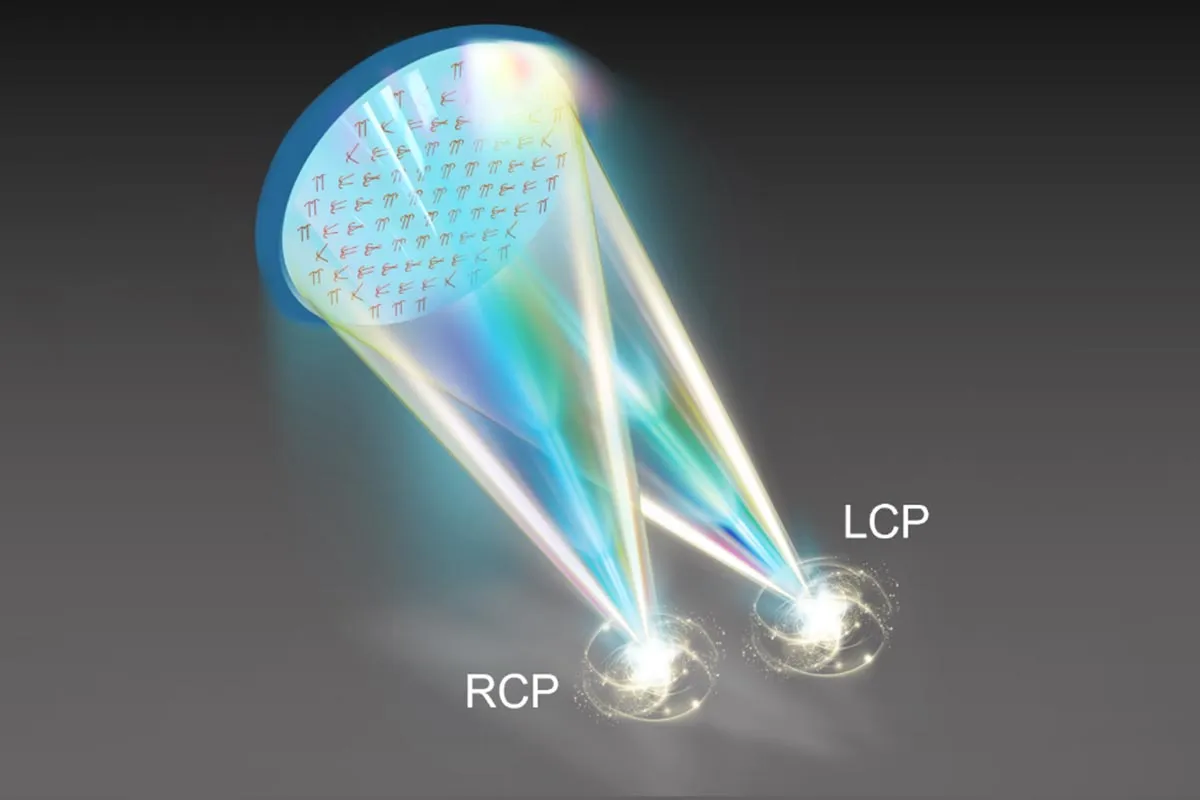
Researchers at Nanjing University just found a way to break that rule. They've created a paper-thin surface that can split light into two completely independent paths—without the usual color distortion that comes along for the ride.
The problem they solved is real and practical. When light travels through a lens or bounces off a curved surface, different wavelengths (colors) bend at slightly different angles. This is called dispersion, and it's why cheap camera lenses create fuzzy colored halos around bright objects. For precision imaging, sensing, and future optical devices, this chromatic aberration is a major headache. Scale it up to multi-spectral sensing—where you need to track dozens of wavelengths simultaneously—and the problem gets exponentially worse.
We're a new kind of news feed.
Regular news is designed to drain you. We're a non-profit built to restore you. Every story we publish is scored for impact, progress, and hope.
Start Your News DetoxMost existing solutions can handle one type of light path. But the Nanjing team wanted something more ambitious: independent control of two different light polarizations (essentially, two different "spin states" of light) without losing color clarity for either one. That's the breakthrough.
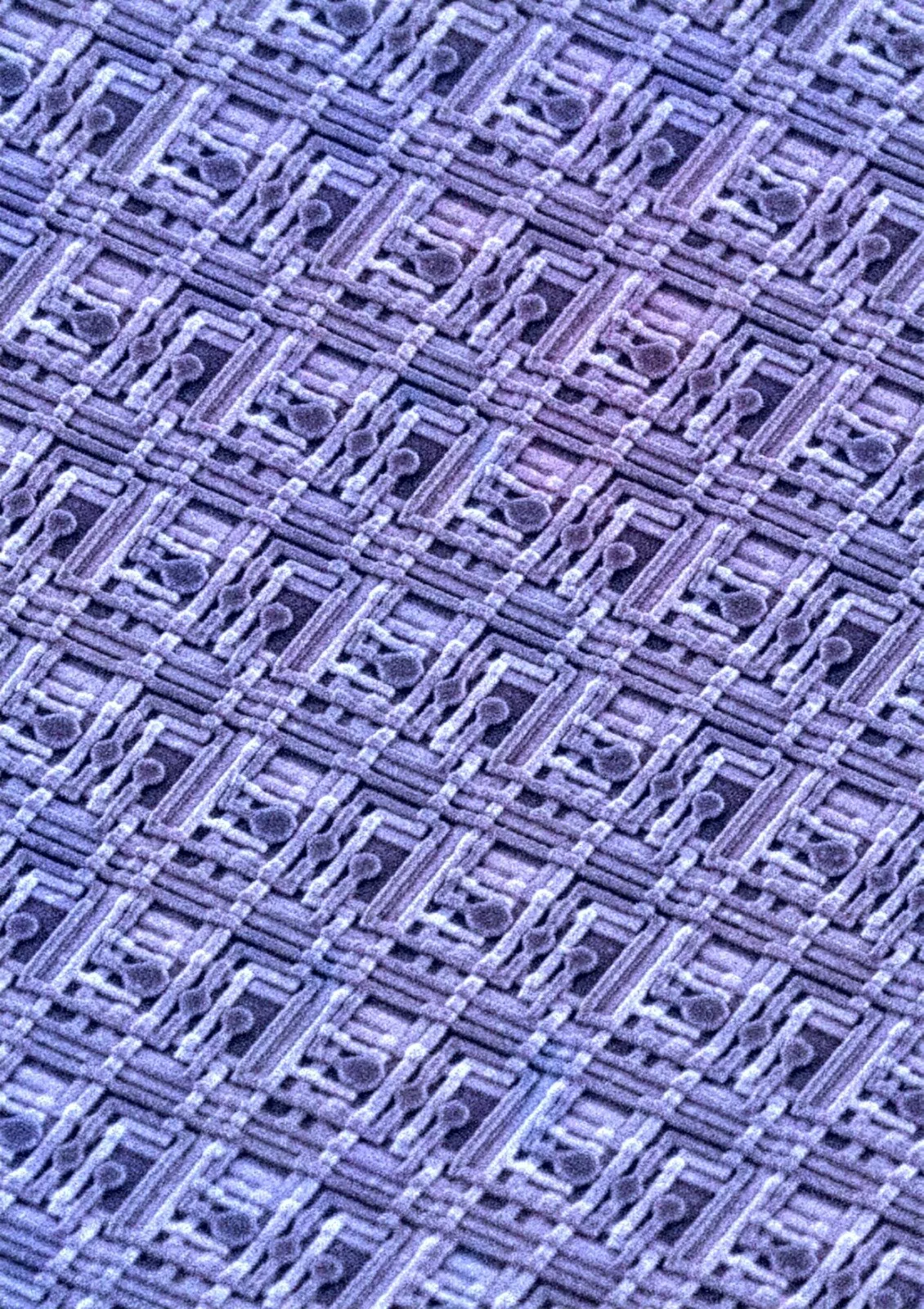
They did it using what they call a hybrid-phase approach—essentially combining two different ways of manipulating light geometry in a single ultra-thin metasurface (a sheet of precisely engineered microscopic structures). One technique, called Aharonov–Anandan phasing, acts like a traffic controller, directing left-spinning and right-spinning light waves onto completely separate paths. The other, Pancharatnam–Berry phasing, fine-tunes the range of angles available for steering.
Together, these work in parallel: one handles the separation, the other handles the fine detail. The result is that each polarization can be bent, focused, or steered independently across a broad range of colors without degrading image quality.
The team tested the concept in the microwave range (8–12 GHz) and pushed it further into terahertz frequencies (0.8–1.2 THz), proving the method works across different parts of the electromagnetic spectrum. The real payoff comes when this scales down to visible light—the kind you actually see. That opens doors to polarization-multiplexed imaging (getting more information from the same optical system) and compact meta-optical devices that could replace bulky traditional optics.
What makes this significant is the elegance of the solution. Instead of stacking multiple layers or building in complex optical elements, they've done it all in a single flat sheet. That's the kind of advance that turns laboratory curiosity into something manufacturable and practical. The next step is optimizing these designs for visible wavelengths and real-world systems—work that's already underway.