For three decades, the cliffs of Dorset have been a scene of quiet, hopeful anticipation. Volunteers, armed with binoculars and an almost absurd level of patience, have been scanning the coastline for a sight that seemed lost to time: a baby puffin.
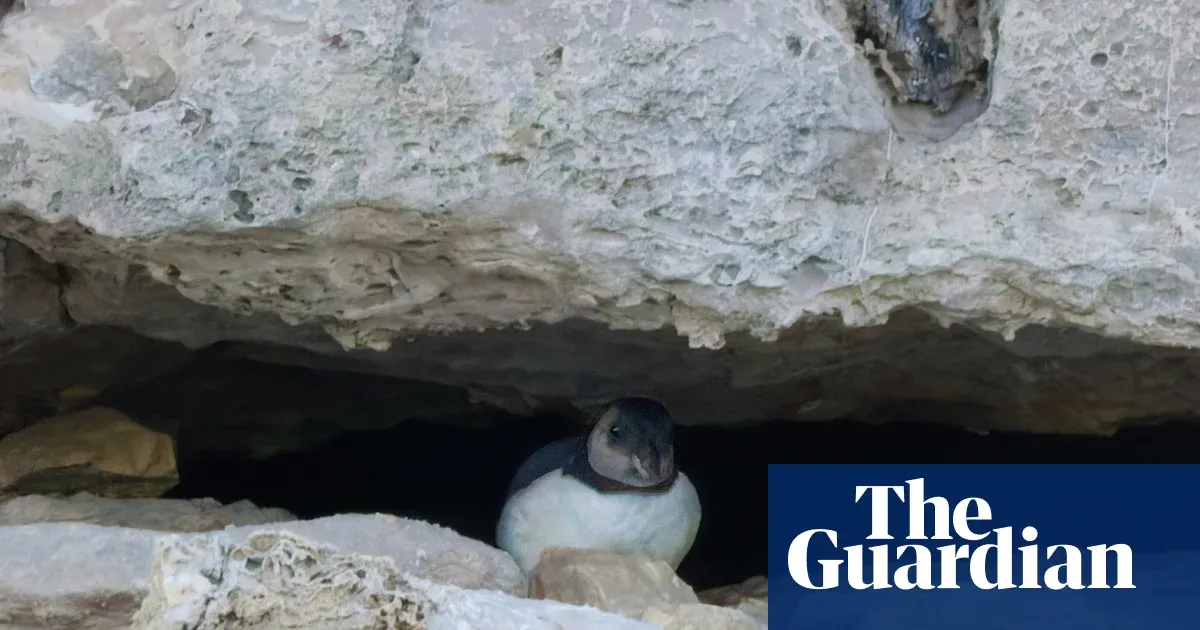
Then, near Swanage, it happened. A tiny puffling, a feathered beacon of pure, unadulterated joy, was spotted. It's the first time in thirty years a baby puffin has graced the Purbeck coast. Let that satisfying number sink in.
Richard Caldow, a marine ornithologist who probably has "thrilled by birds" tattooed on his soul, called it "a great thrill." He's not wrong. While one puffling won't single-handedly save the entire colony, it's a hell of a lot better than zero. And sometimes, zero is exactly what you get.
We're a new kind of news feed.
Regular news is designed to drain you. We're a non-profit built to restore you. Every story we publish is scored for impact, progress, and hope.
Start Your News DetoxThe Long Wait for a Tiny Bird
This stretch of the Purbeck coast is basically the last stand for mainland southern England's puffins. Back in the 1950s, a respectable 80 pairs called it home. By recent counts, that number had plummeted to a heartbreaking three. No fledglings had been seen in all that time, leading to very real fears that the colony was simply... gone.
Thirteen dedicated volunteers spent 15 weeks this summer monitoring those treacherous, hard-to-reach ledges. Because apparently, that's what it takes. In April, six adult puffins were spotted. Soon after, the volunteers noticed puffins ferrying fish to at least two nesting spots, hinting that perhaps, just perhaps, more than one pair was trying their luck.
Most of the fish deliveries stopped after June 12th, which is ornithologist-speak for "some chicks probably didn't make it." But one spot kept getting deliveries. And eventually, a puffling emerged, blinking into the light, ready for its close-up.
Caldow, working with the Purbeck Natural History Forum, said the photo was perfectly timed. The little guy's parents had been feeding it since May 29th. By July 5th, it was 38 days old — prime time for a public appearance, especially with a parent nearby, usually in the evening. So, on July 7th, they chartered a boat. They waited from 4 to 8 PM. Three hours in, just after 7 PM, the puffling popped out from behind its parent. Talk about earning your moment.
Caldow suspects the puffling promptly left that night. Its current whereabouts? Unknown. It's out at sea, alone, because puffin parents, apparently, believe in tough love. It won't return for at least two years and won't breed until 2030 at the earliest. It might come back to Purbeck. It might go full wanderlust and find somewhere new.
For Caldow, with nearly 40 years of coastal bird experience under his belt, the thrill was palpable. It proves that Purbeck puffins can still lay fertile eggs, hatch them, find enough food, and, crucially, avoid becoming someone else's dinner. Which, if you think about it, is both impressive and slightly terrifying.
The Mystery Inside the Crevice
The National Trust, meanwhile, has been playing detective, trying to figure out why the puffin colony has been so tragically chick-less. Suspects include rats, peregrine falcons, and everyone's favorite global villain: climate change.
High-rope experts (because of course, you need high-rope experts for puffin surveillance) installed solar-powered, motion-sensor cameras deep inside the puffins' nesting fissures. We're talking two meters from the entrance, capturing all the drama. After breeding season, volunteers will sift through thousands of images. Thousands. Their dedication is truly something else.
Ben Cooke, the National Trust's rivers and coast project officer, hopes these images will finally reveal the missing pieces of the puzzle: what happens inside those nesting crevices. Because if they can pinpoint why eggs and chicks are vanishing, they can actually do something about it. And for an iconic bird like the puffin, doing everything seems like the least we can do.