For over a decade, researchers have known about MXenes — ultra-thin materials just a few atoms thick that could revolutionize electronics and energy storage. The catch: making them required toxic chemical baths that left their surfaces messy and unpredictable, like trying to build a precision instrument in a sandstorm.
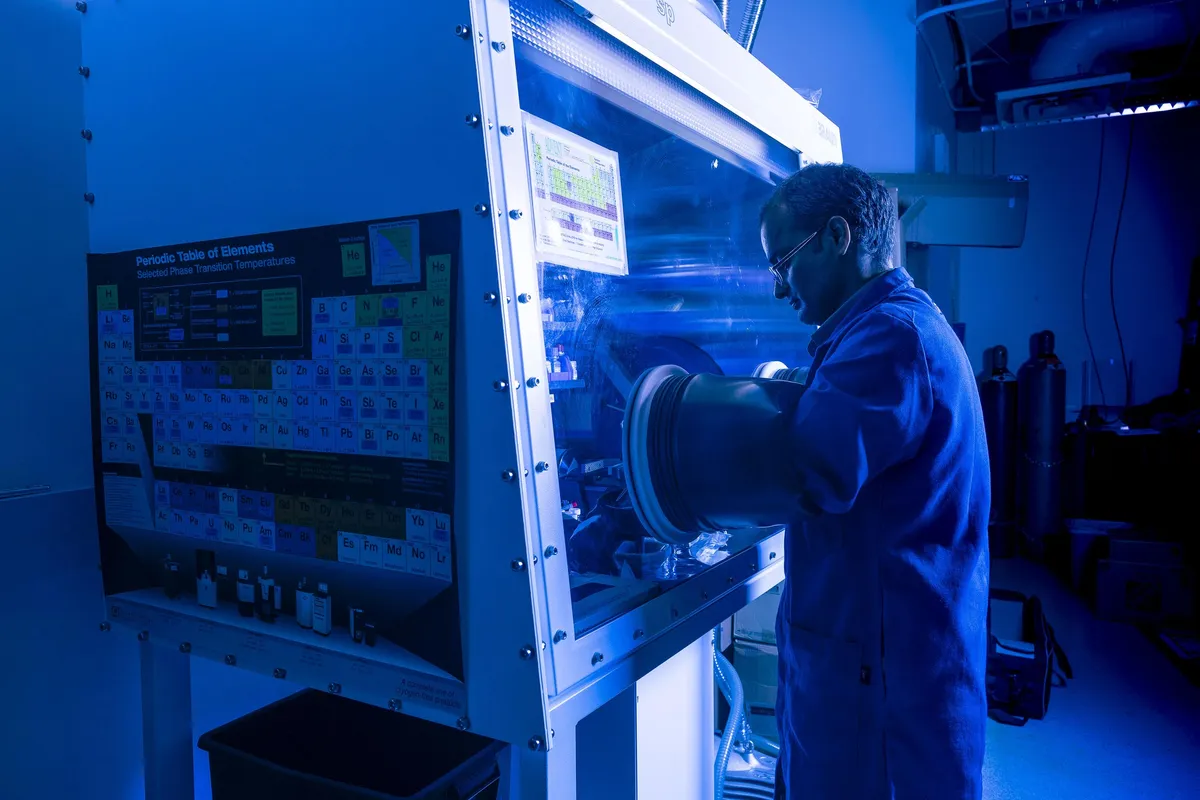
Now a team at Germany's HZDR has found a cleaner path. By swapping harsh chemicals for molten salts and iodine vapor, they can now arrange surface atoms with unprecedented precision — and the results are striking.
Why Surface Order Matters
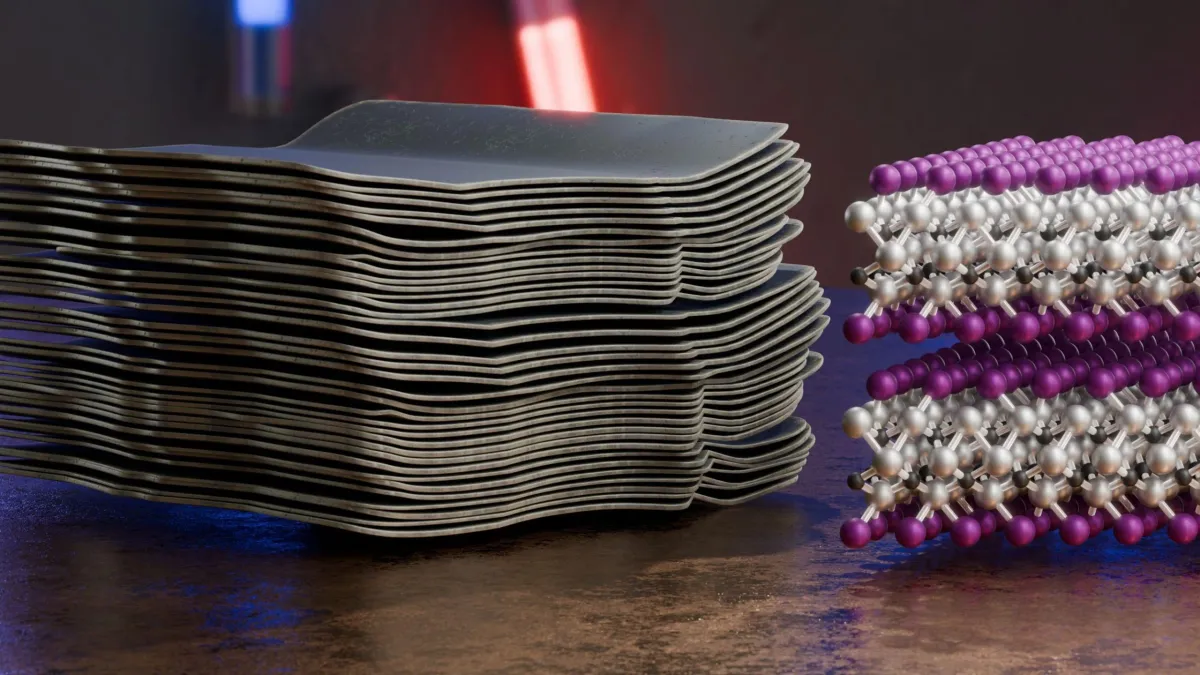
MXenes are sandwiches of transition metals layered with carbon or nitrogen, just atoms thick. What makes them useful or useless comes down to what sticks to their exposed surfaces. "They strongly influence how electrons move through the material, how stable it is, and how it interacts with light, heat, and chemical environments," explains Dr. Mahdi Ghorbani-Asl, who led the research.
We're a new kind of news feed.
Regular news is designed to drain you. We're a non-profit built to restore you. Every story we publish is scored for impact, progress, and hope.
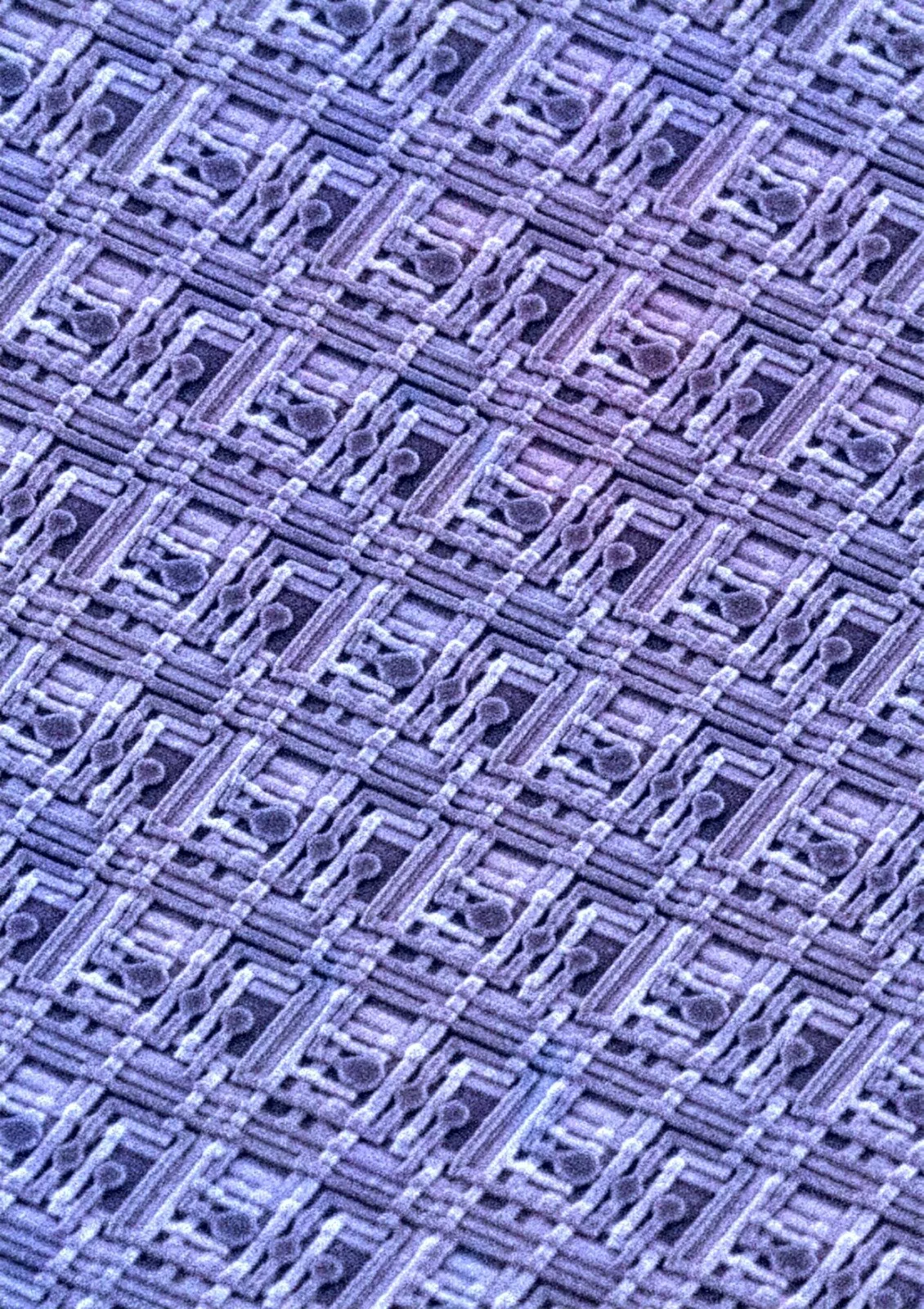
Start Your News DetoxTraditional chemical etching works, but it's messy. Different atoms — oxygen, fluorine, chlorine — randomly scatter across the surface like cars parked haphazardly in a lot. "This atomic disorder limits performance because it traps and scatters electrons, much like potholes slowing traffic on a highway," says Dr. Dongqi Li from TU Dresden.
The new method, called GLS synthesis, flips the script. Instead of etching away unwanted material, researchers start with carefully chosen precursor materials and use molten salts to guide which halogen atoms bond to the surface. The team can select chlorine, bromine, or iodine — and control exactly how they arrange themselves. The result: surfaces so orderly they contain almost no impurities.
The Numbers Tell the Story
To prove the concept works, the researchers made titanium carbide MXenes using both old and new methods. The difference was dramatic. The chlorine-terminated version made via GLS showed a 160-fold increase in electrical conductivity compared to the traditionally made version. Electron mobility — how freely electrons move through the material — jumped nearly fourfold. Even in the terahertz range, used for next-generation wireless, conductivity improved 13-fold.
These aren't incremental gains. They're the kind of improvements that turn a material from "interesting in theory" to "ready for real devices."
The cleaner surfaces also let researchers tune how MXenes interact with electromagnetic waves. Chlorine-terminated versions absorb strongly in the 14-18 GHz range, while bromine and iodine versions absorb at different frequencies. This means the same material family can be customized for radar-absorbing coatings, electromagnetic shielding, or wireless components — just by changing which halogen you use.
Perhaps most promising: the method works across eight different MAX phases, suggesting it's broadly applicable rather than a one-off trick. Researchers can even mix different halide salts to create MXenes with dual or triple halogen terminations in precise ratios, opening a toolkit for designing materials on demand.
What Comes Next
The team sees applications in flexible electronics, high-speed communication, and optoelectronic devices — areas where even small improvements in material performance can unlock entirely new capabilities. For the first time, a synthesis method exists that's both gentle enough to avoid toxic chemicals and precise enough to control what happens at the atomic scale.