Physicists have discovered that two competing forms of disorder, layered together, can actually create order — and unlock new possibilities for quantum technologies.
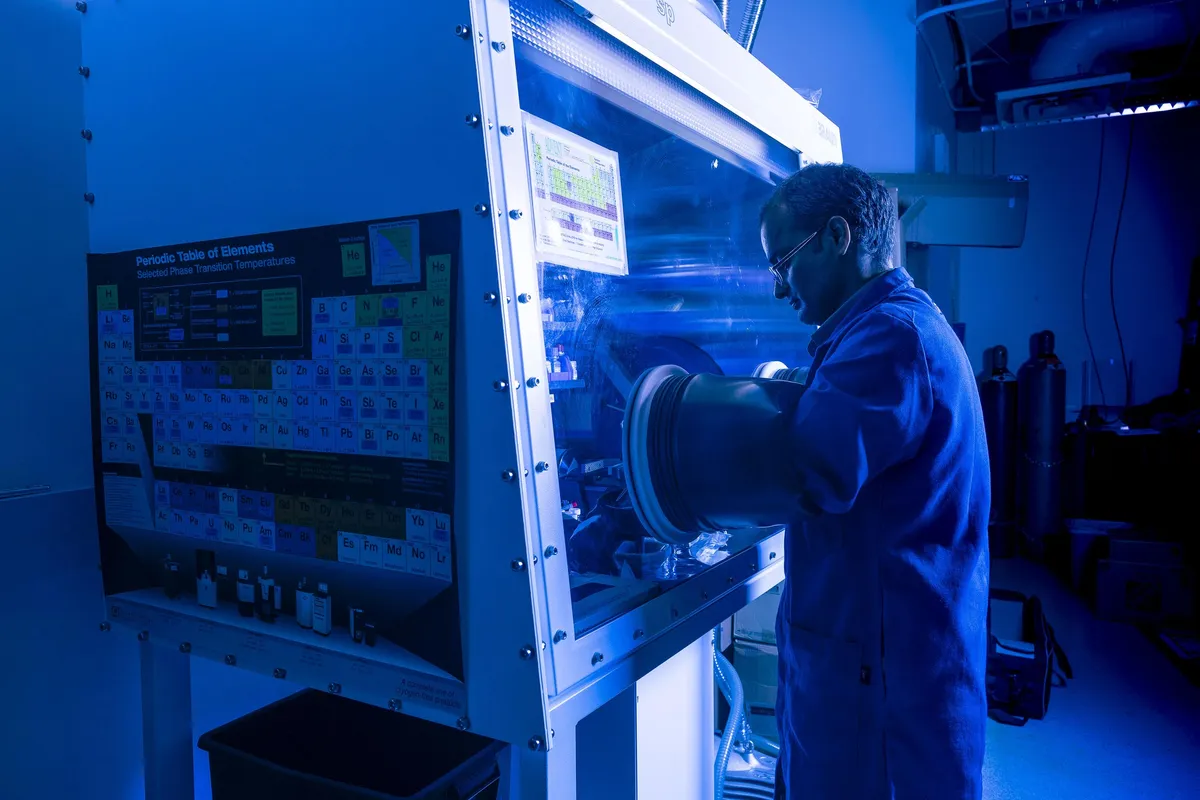
The finding comes from UC Santa Barbara materials scientist Stephen Wilson and his team, who published their work in Nature Materials. They've shown how to deliberately engineer unusual magnetic states by combining two types of "frustration" — a phenomenon where particles can't settle into a single stable arrangement.
Think of frustration like a traffic jam with no good solution. In a material's crystal lattice, magnetic moments (essentially tiny spinning particles) sometimes can't arrange themselves neatly. Instead of one stable pattern, they remain in a constantly shifting, competing state. The same thing happens with electrons trying to form chemical bonds — certain lattice structures, like triangular or honeycomb networks, make it hard for them to settle.
We're a new kind of news feed.
Regular news is designed to drain you. We're a non-profit built to restore you. Every story we publish is scored for impact, progress, and hope.
Start Your News DetoxWhat makes Wilson's discovery unusual is that his team found materials where both types of frustration happen at once. "That's rare," Wilson explains. "And it suggests you could potentially control one frustrated system by tweaking the other."
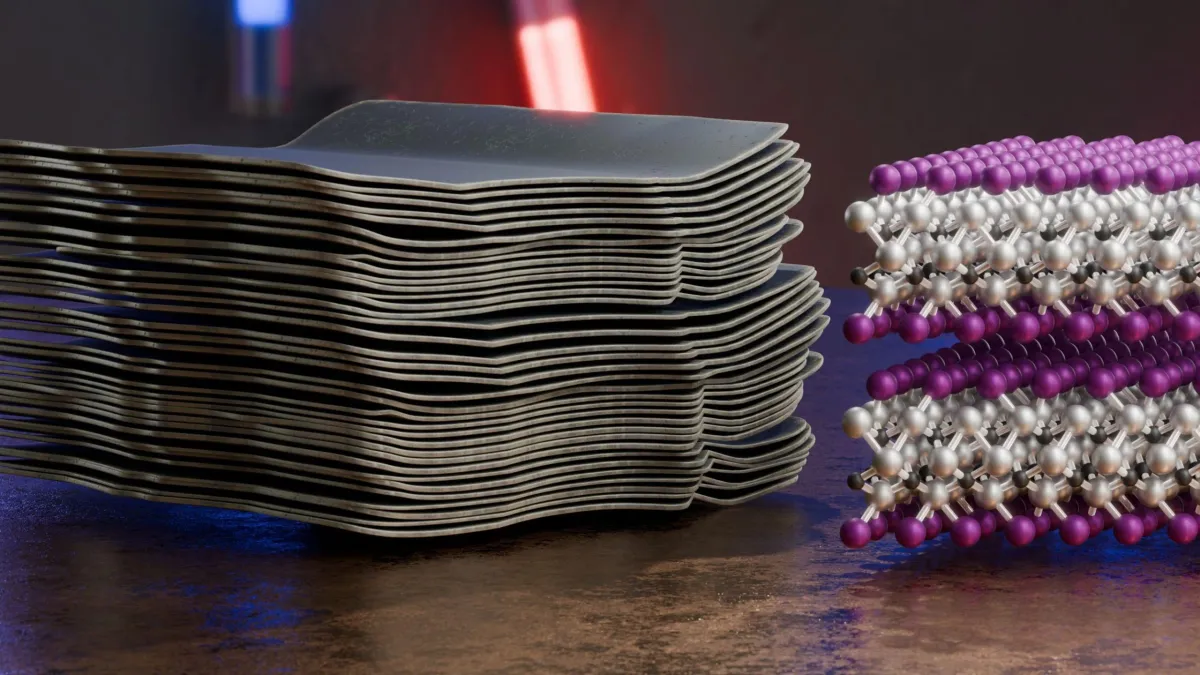
The team built their material using lanthanide elements (the rare-earth metals) arranged in triangular patterns — a setup scientists have spent years perfecting to create exotic magnetic states. But then they embedded this into a crystal lattice that introduced a second layer of frustration from electron bonding. Two competing disorder systems, stacked together.
The potential payoff is significant. If you apply a small push — a magnetic field, or a bit of strain — to one frustrated layer, could it trigger a large response in the other? That would be like gently nudging a locked door and having the whole wall shift. In physics terms, it's called a "ferroic response," and it could let engineers control quantum states with minimal energy input.
Wilson is also exploring whether this coupling between frustrated layers could create "intertwined order" — multiple forms of organization emerging from proximity to each other. That pathway could lead to long-range quantum entanglement, the kind of property that makes quantum computers work.
It's early-stage research, but it points toward a counterintuitive principle: sometimes the most useful materials aren't the perfectly ordered ones. Sometimes you need a little productive frustration.