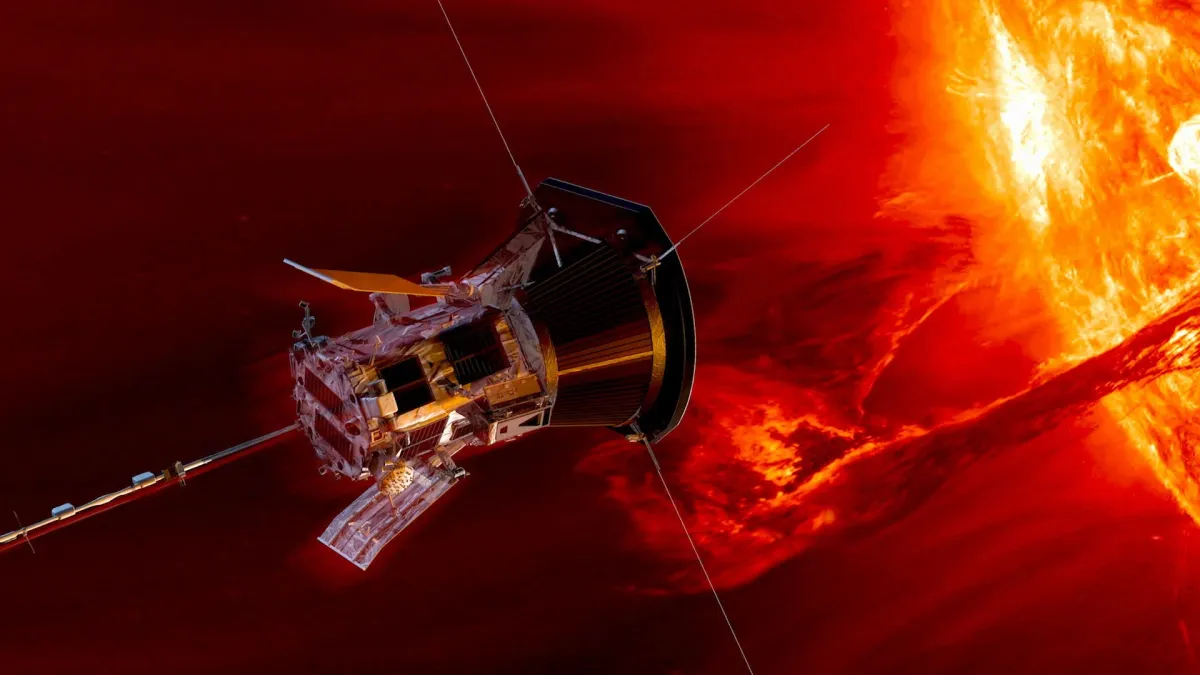
NASA's Parker Solar Probe has ventured closer to the sun than any spacecraft in history—within 3.8 million miles of its surface—and in doing so, it's cracking open one of astronomy's most stubborn puzzles: how the sun's atmosphere gets so impossibly hot.
For decades, scientists have known something doesn't add up. The sun's visible surface, the photosphere, sits at about 10,000 degrees Fahrenheit. But its outer atmosphere, the corona, somehow reaches temperatures exceeding 2 million degrees. It's like standing next to a fire and finding the air around you hotter than the flames themselves. The physics shouldn't work that way, yet it does.
Kristopher Klein, a researcher at the University of Arizona, led a team that used Parker's unprecedented measurements to finally understand what's happening. The spacecraft collects detailed data on charged particles and magnetic fields in the sun's outer layers—information that was simply unavailable before. Klein's team developed a tool called ALPS (Arbitrary Linear Plasma Solver) to analyze the actual particle distributions Parker measured, rather than forcing the data into oversimplified mathematical shapes that scientists had relied on for years.
We're a new kind of news feed.
Regular news is designed to drain you. We're a non-profit built to restore you. Every story we publish is scored for impact, progress, and hope.
Start Your News DetoxWhat This Means for Life on Earth
The practical stakes are higher than pure curiosity. Understanding the sun's atmosphere directly improves our ability to predict space weather events—like coronal mass ejections, when the sun hurls billions of tons of charged particles toward Earth. These eruptions can damage satellites, knock out radio signals, and increase radiation exposure for airline crews on polar routes. When Klein's team better understands how energy moves through the sun's atmosphere, they can forecast more accurately whether these solar explosions will actually reach us and what damage they might cause.
"If we can better understand the sun's atmosphere through which these energetic particles are moving, it improves our ability to forecast how these eruptions from the sun will actually propagate through the solar system and eventually hit and possibly impact the Earth," Klein explained.
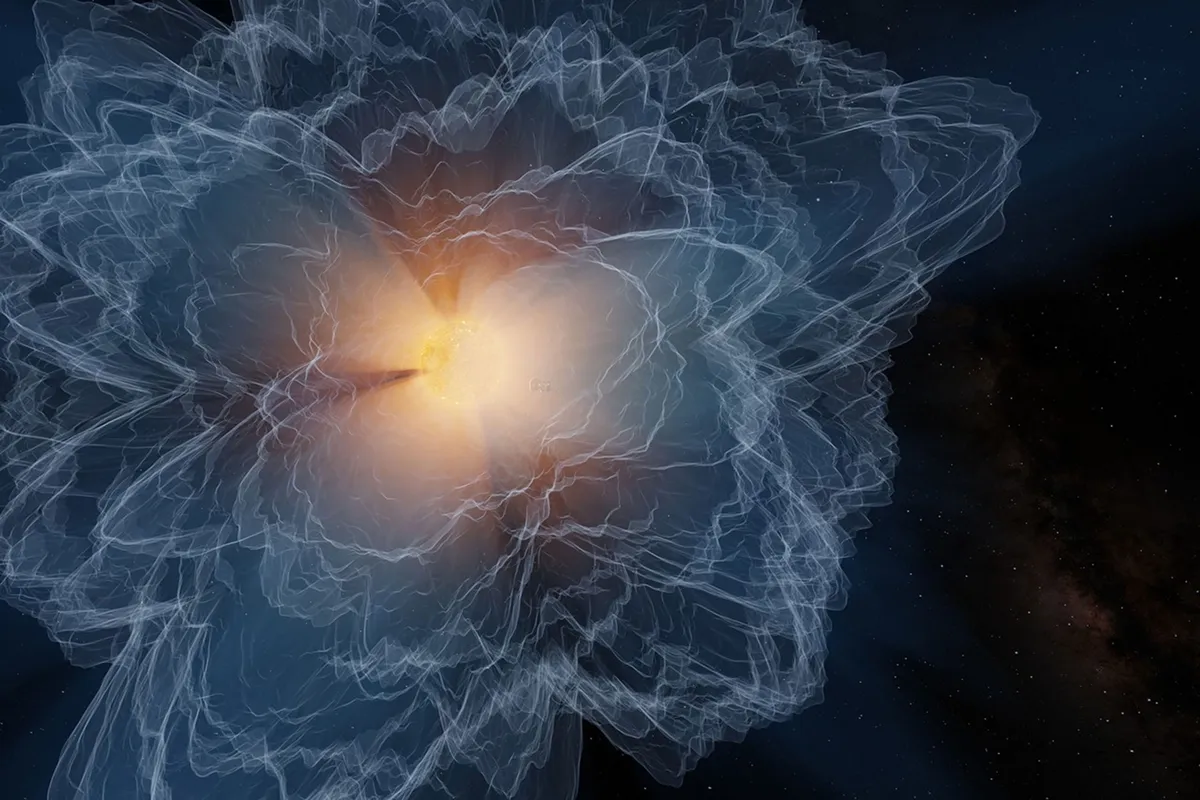
What Parker's data revealed is that the solar wind cools far more slowly as it streams outward than simple physics would predict. This damping effect—where energy dissipates more gradually than expected—was invisible without close-range measurements. It's a key clue that rewrites how scientists think about energy transfer in the sun's outer layers.
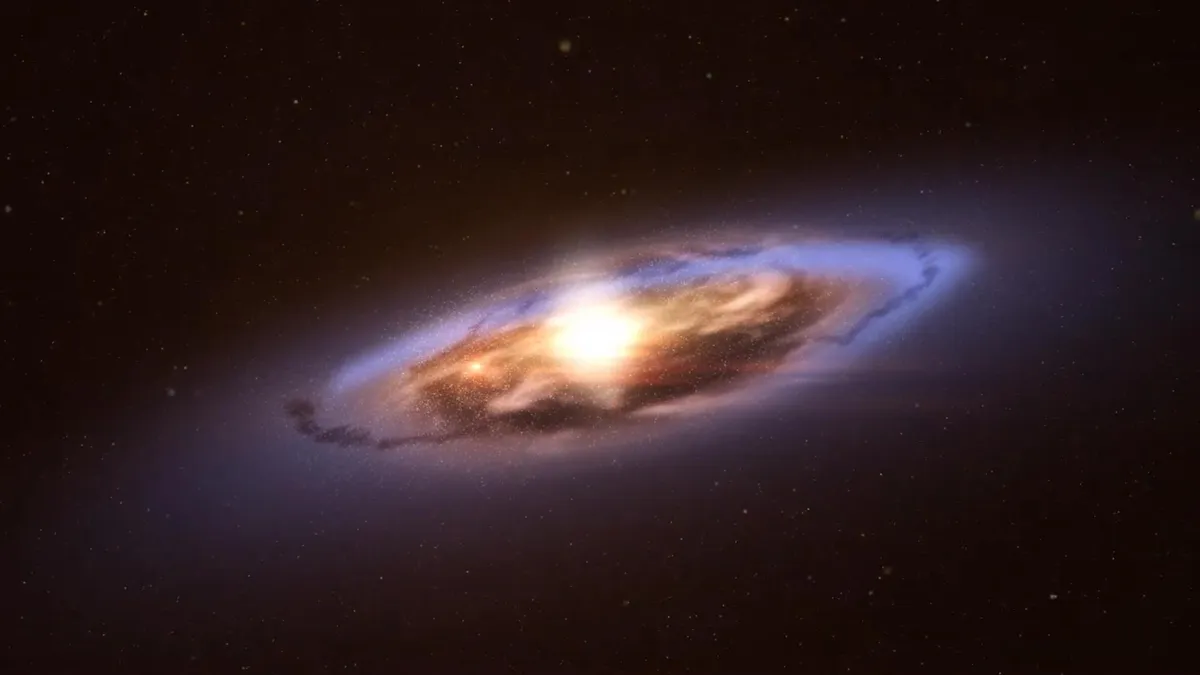
The implications reach far beyond our star. Understanding how plasma behaves near the sun helps explain phenomena around black holes, neutron stars, and interstellar gas clouds. Klein notes that the damping mechanisms discovered in the solar wind could apply to "accretion disks around black holes, neutron stars, and other astrophysical objects." A mystery solved at our doorstep becomes a tool for understanding the universe.
Parker Solar Probe continues its close passes, and each one brings new data. The spacecraft has already rewritten a century of assumptions about how stars work—and there's more to come.