April 6, 2026, marks a major day for human spaceflight. The Artemis II mission is set to break the record for the farthest human travel from Earth. This record was previously held by Apollo 13, which reached 400,171 km (248,655 miles).
Artemis II is expected to reach a maximum distance of 406,773 km (252,760 miles) from Earth. This will happen during a lunar flyby aboard the Orion spacecraft. This means Artemis II will travel about 6,602 km (4,105 miles) further into space than any human before.
NASA's Artemis Program
The Artemis program is NASA's long-term plan to send people back to the moon. This will be the first time since 1972. The goal is to build a permanent base on the moon and prepare for future missions to Mars.
We're a new kind of news feed.
Regular news is designed to drain you. We're a non-profit built to restore you. Every story we publish is scored for impact, progress, and hope.
Start Your News DetoxThe program has five missions: Artemis I, II, III, IV, and V. Artemis I was an uncrewed test flight in November 2022. It lasted 25 days and successfully put the Orion spacecraft into Earth's orbit. This flight provided important data for Artemis II.
About Artemis II
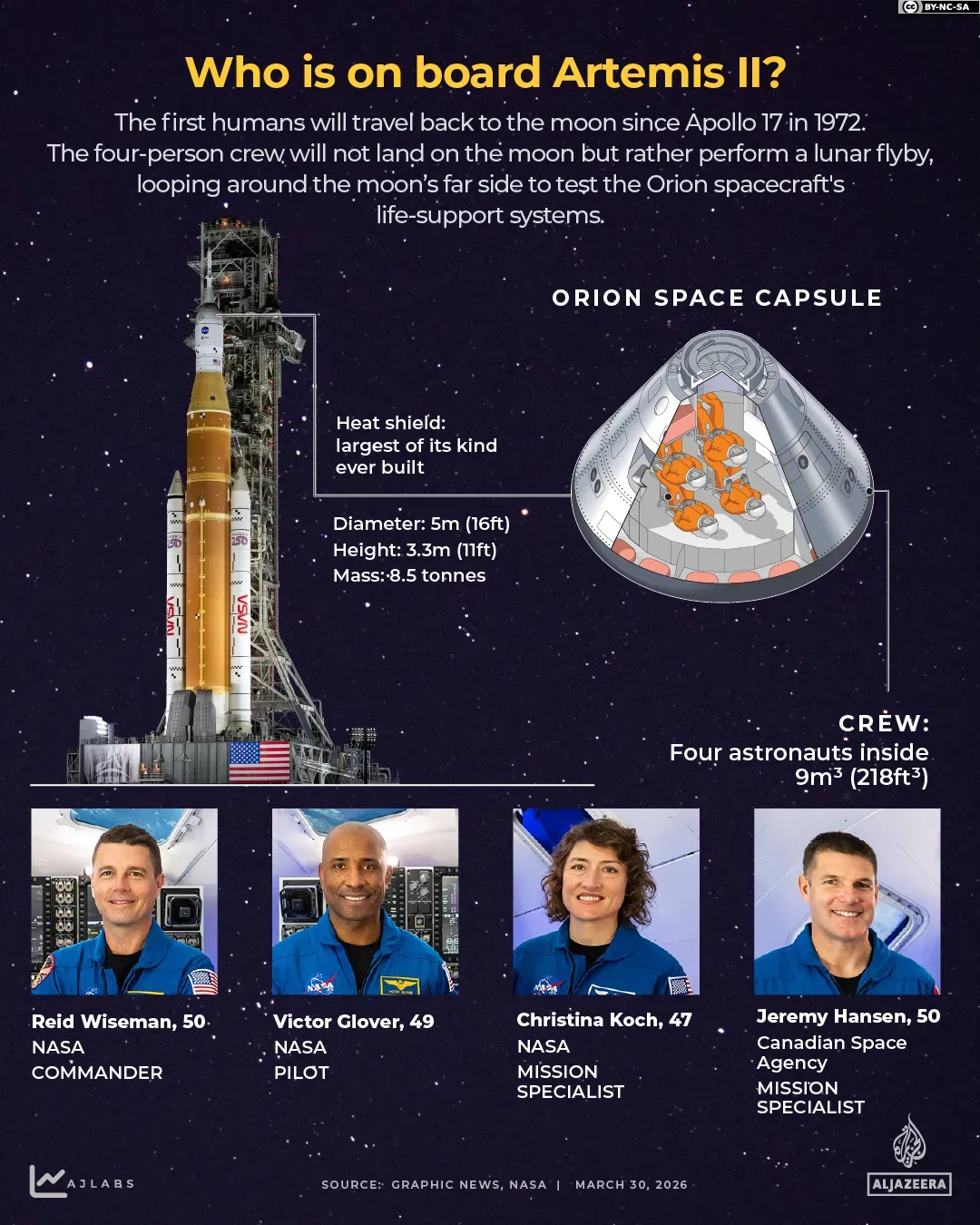
Artemis II is the first human mission of the Artemis program. It launched on April 1 from the Kennedy Space Centre in Florida. Four astronauts are on board for the 10-day mission.
The Artemis II Crew
The four astronauts on Artemis II are:
- Reid Wiseman, 50, commander: A NASA veteran and former International Space Station commander. He leads the mission and has experience in deep spaceflight.
- Victor Glover, 49, pilot: A US Navy aviator and the first Black astronaut on a lunar mission. He previously flew on SpaceX Crew-1.
- Christina Koch, 47, mission specialist: She holds the record for the longest single spaceflight by a woman (328 days). She has done many spacewalks and has expertise in science and deep-space missions.
- Jeremy Hansen, 50, mission specialist: The first Canadian to travel to the moon. He is a former fighter pilot and represents international teamwork in space.
What the Astronauts Will Do
The Artemis II astronauts will check if the spacecraft and its life-support systems are ready for deep-space missions. They will fly the spacecraft manually at times and oversee automated systems. They will also test key functions like propulsion, power, and navigation.
They will also study lunar observations and human health in space. They will practice important steps like changing course, long-distance communication, and managing re-entry and splashdown. This will show that Orion is ready for future missions.
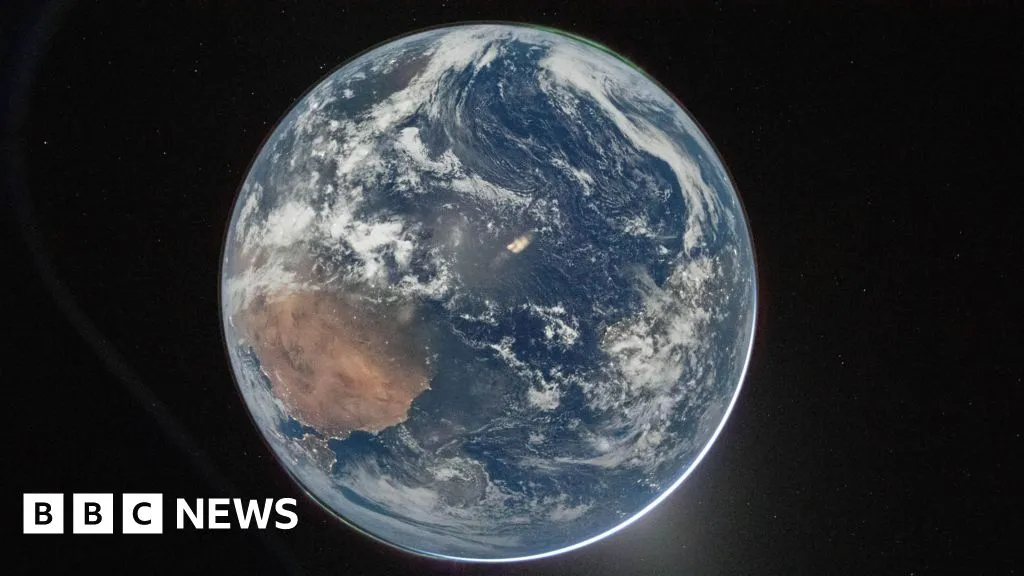
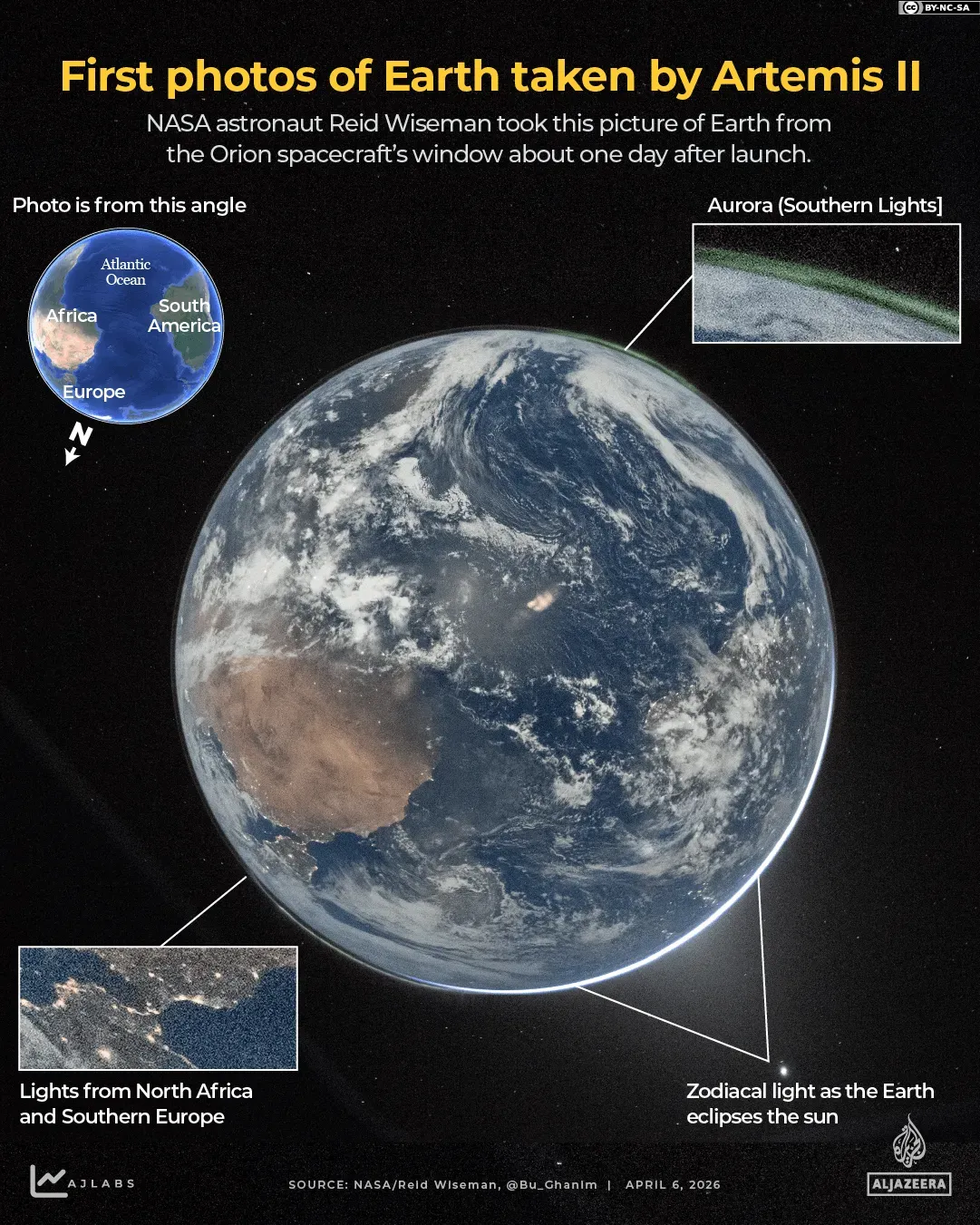
Taking photos is another key task. On April 2, Commander Reid Wiseman took a photo of Earth from Orion, called "Hello, World." Because the spacecraft was rotated, Earth appeared upside down.
The photograph shows:
- The Northern and Southern Aurora Lights with their green glow.
- City lights from Africa, Europe, and South America at night.
- A faint patch of zodiacal light as Earth blocks the sun.
Food Onboard
The Artemis II crew will eat from a menu of 189 shelf-stable items. These include drinks, tortillas, nuts, main dishes like beef brisket and macaroni and cheese, and desserts like cookies and chocolate. These foods are designed to provide the right nutrition and hydration for a lunar mission without resupply.
The Orion spacecraft has no fridge, so only ready-to-eat or rehydratable foods can be taken. The crew will use a water dispenser to rehydrate foods and a small heater to warm them. They must also keep food crumb-free for safety in microgravity.
Return to Earth
NASA's Artemis II mission is scheduled to land in the Pacific Ocean near San Diego on Friday, April 10. After splashdown, helicopters will pick up the crew for medical checkups on the USS John P Murtha. Then, they will travel to NASA's Johnson Space Centre in Houston.
The Moon's Size and Distance
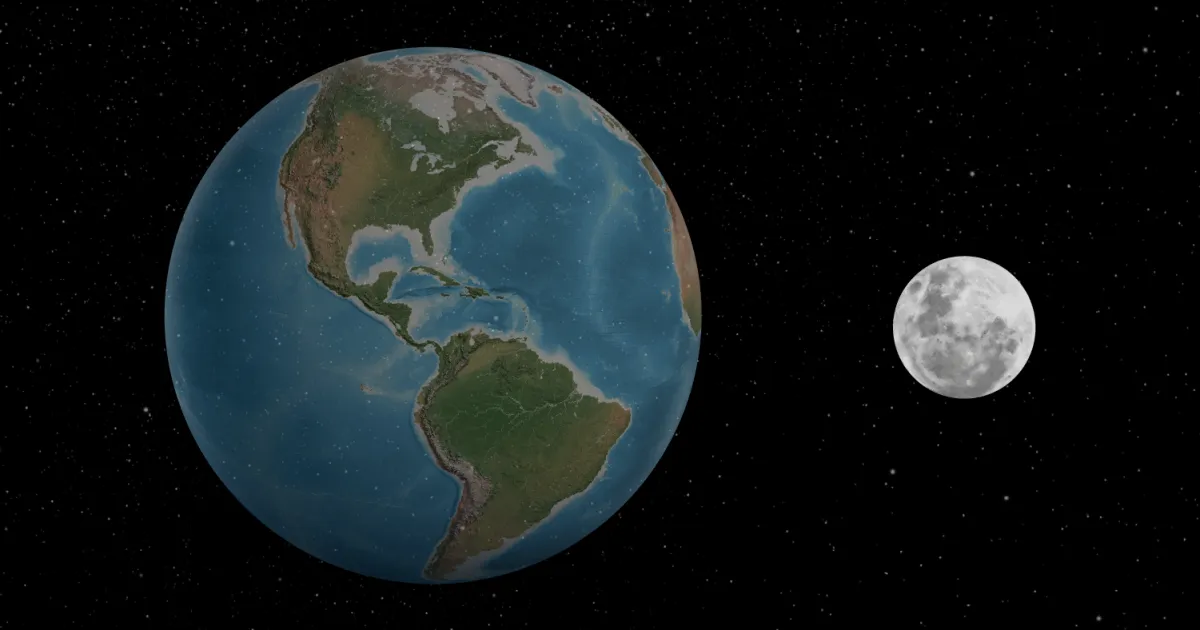
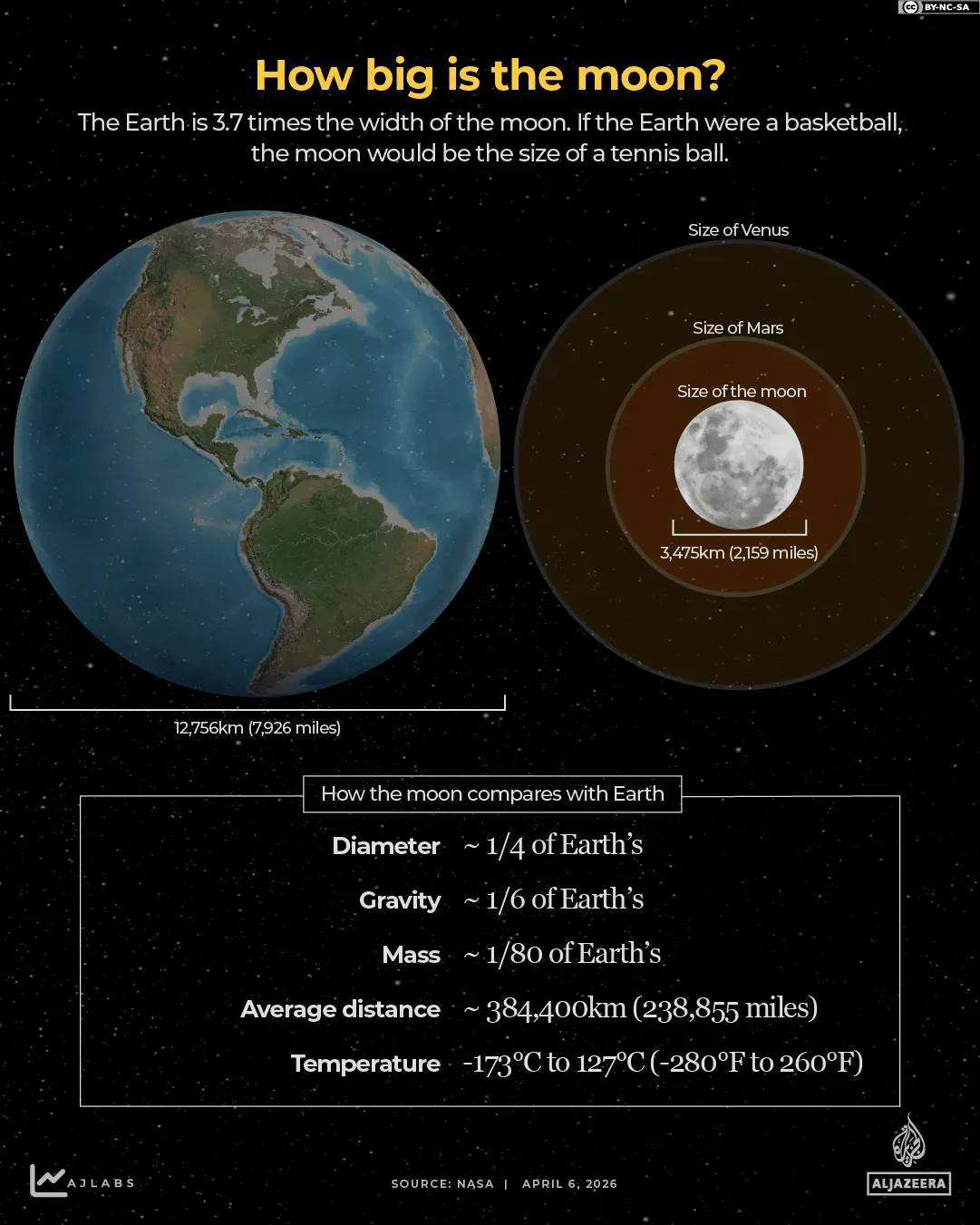
The average distance between Earth and the moon is about 384,400 km (238,855 miles). This is like circling Earth's equator almost 10 times. Earth is about 3.7 times wider than the moon. If Earth were a basketball, the moon would be the size of a tennis ball.
The moon has almost no atmosphere, so its surface temperature changes greatly. It can range from -173°C (-180°F) at night to 127°C (260°F) during the day. This makes it much colder than Earth at night and hotter than boiling water during the day.
The moon's gravity is about one-sixth that of Earth (16-17 percent). So, a person weighing 60 kg (132 lbs) on Earth would weigh about the same as a 10 kg (22 lbs) mass on the moon.
History of Moon Missions
NASA's Apollo program ran from 1961 to 1972, with 33 missions. Eleven of these were crewed, and 22 were uncrewed. Apollo 11 was the most famous, carrying Neil Armstrong and Buzz Aldrin, who were the first people to walk on the moon on July 20, 1969.
Six successful moon landings followed: Apollo 11, 12, 14, 15, 16, and 17. The last people to walk on the moon were Eugene Cernan and Harrison Schmitt on December 14, 1972, during the Apollo 17 mission.
In Greek mythology, Artemis is Apollo's twin sister and the goddess of the moon. This name connects the new program to the original Apollo missions.
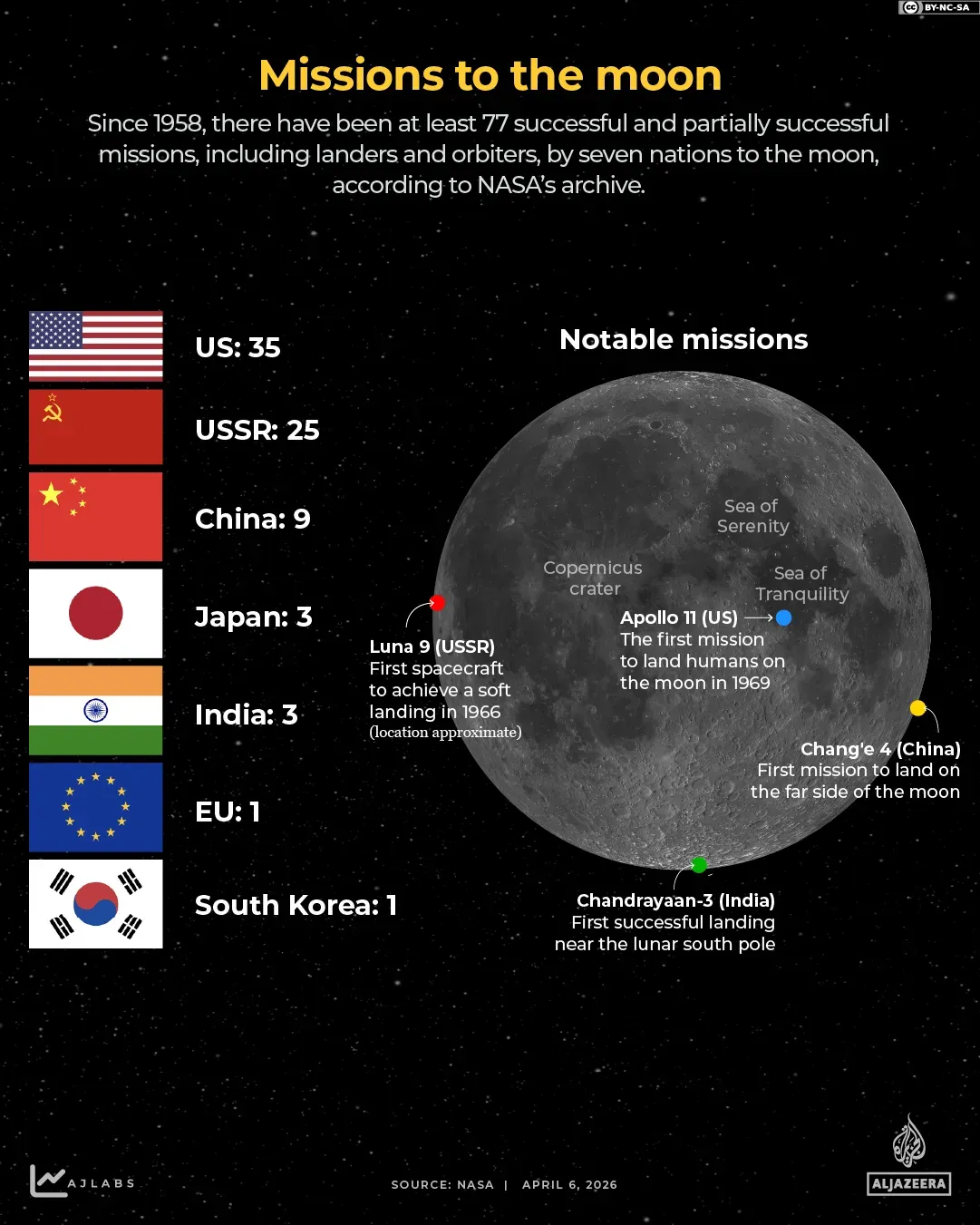
Other countries have also sent notable missions to the moon:
- Luna 9 (USSR, 1966): This was the first spacecraft to soft-land on the moon and send back images.
- Chang’e 4 (China, 2019): This mission achieved the first soft landing and rover deployment on the moon’s far side.
- Chandrayaan-3 (India, 2023): This was the first successful soft landing near the moon’s south polar region, making India the first to reach this area.
The moon's south pole has deep craters that have not seen sunlight for billions of years. Temperatures there can drop to -230°C (-382°F), allowing water ice to remain stable.
Astronauts Who Walked on the Moon
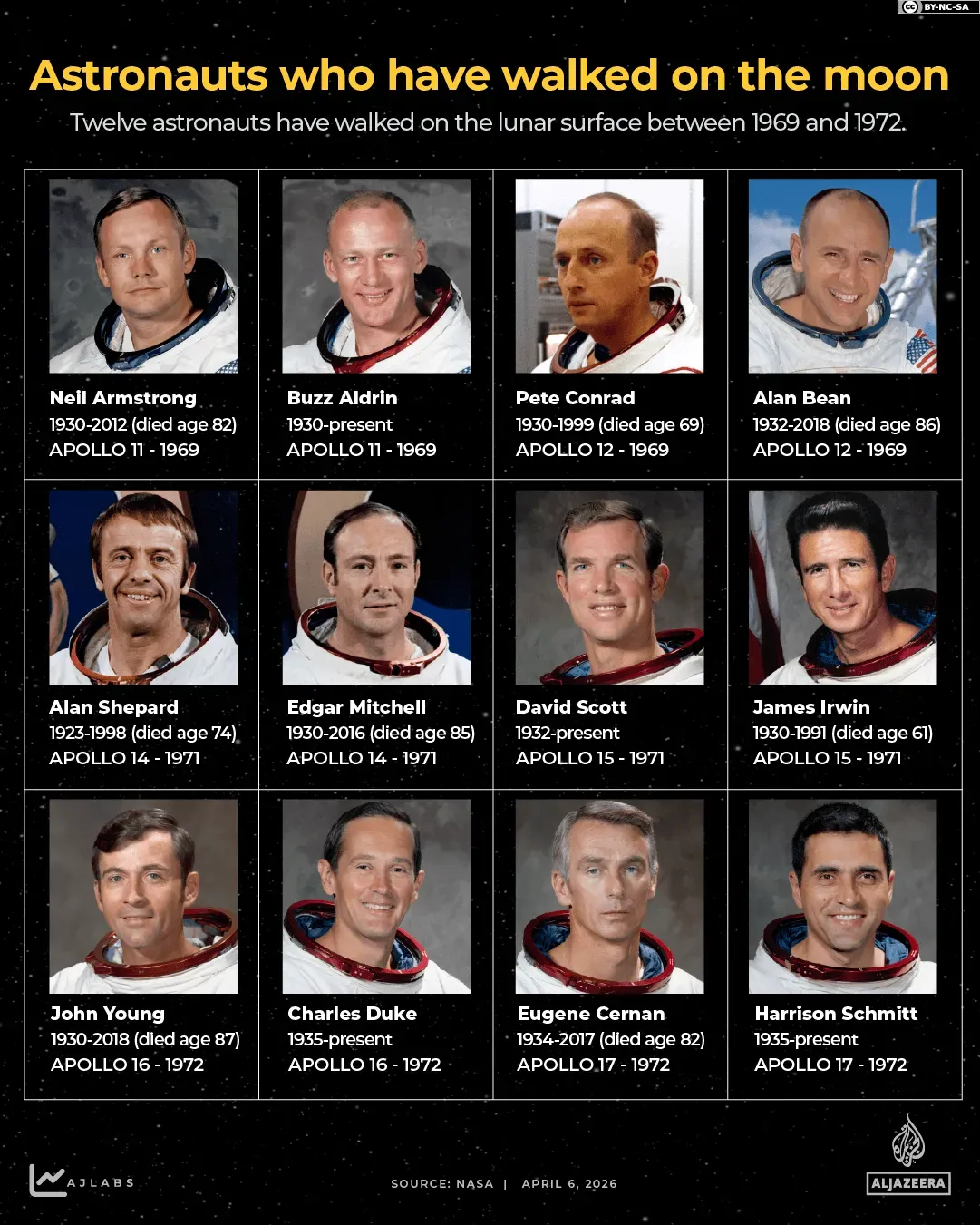
Twelve US astronauts have walked on the moon, all during NASA’s Apollo program (1969–1972):
- Apollo 11 (1969) – Neil Armstrong, Buzz Aldrin: The first humans on the moon.
- Apollo 12 (1969) – Charles “Pete” Conrad, Alan Bean: Achieved a precise landing near the Surveyor 3 probe.
- Apollo 14 (1971) – Alan Shepard, Edgar Mitchell: Shepard famously hit golf balls on the moon.
- Apollo 15 (1971) – David Scott, James Irwin: First mission to use the lunar rover, focusing on geology.
- Apollo 16 (1972) – John Young, Charles Duke: Explored the lunar highlands.
- Apollo 17 (1972) – Eugene Cernan, Harrison Schmitt: The last moonwalkers; Schmitt was the only professional geologist to walk on the moon.
Why NASA is Returning to the Moon
NASA's return to the moon is part of a larger plan. The agency aims to establish a continuous human presence on and around the moon, especially near the lunar south pole, where water ice is believed to exist.
This effort is a stepping stone for future human missions to Mars. The Artemis program also reflects the United States' goal to maintain its leadership in space exploration, especially with growing competition from countries like China.
Upcoming Artemis Missions
Artemis III – 2027
NASA has changed the plan for Artemis III. This mission, set for next year, will not land on the moon. Instead, it will send a crew into low Earth orbit. There, it will test how the Orion spacecraft works with commercial landers from SpaceX and Blue Origin.
Artemis IV – early 2028
This mission is planned to be the first crewed lunar landing since Apollo 17. NASA intends to send its crew into lunar orbit, with two astronauts descending to the lunar south pole.
Artemis V – late 2028
With Artemis V, NASA plans a second crewed lunar landing. This mission will also mark the beginning of a lunar base.