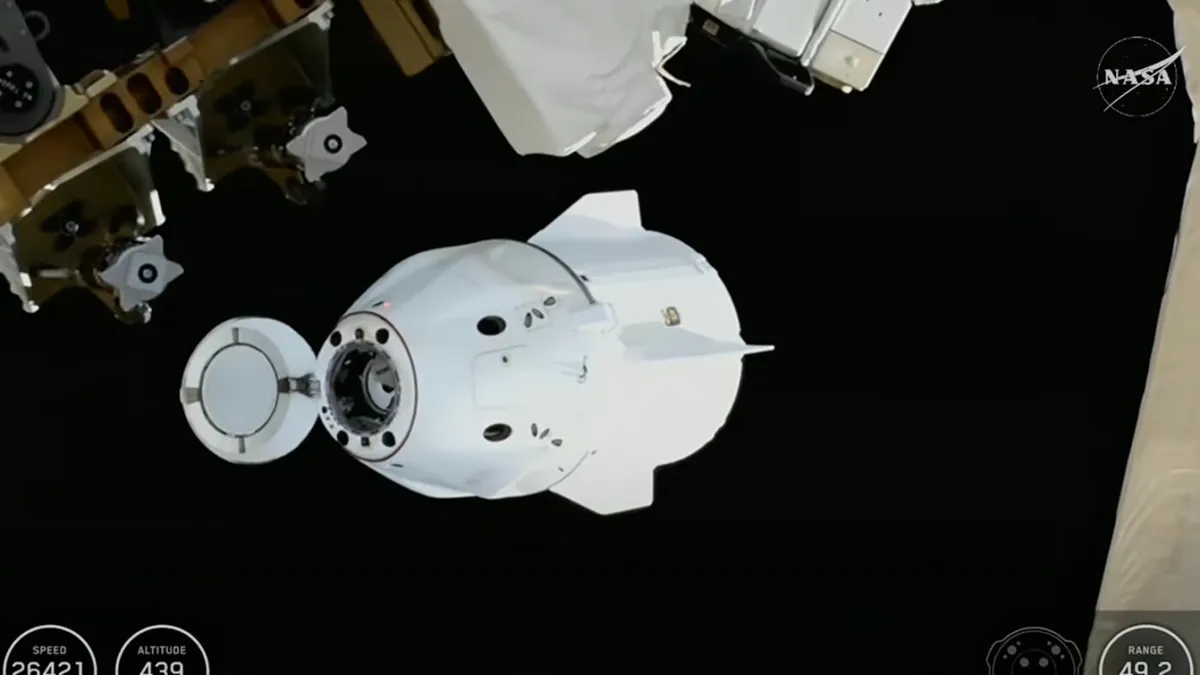
Four astronauts splashed down in the Pacific Ocean off San Diego on Thursday morning, ending NASA's first medical evacuation from the International Space Station. The SpaceX Dragon capsule carrying NASA astronauts Zena Cardman and Mike Fincke, Japanese astronaut Kimiya Yui, and Russian cosmonaut Oleg Platonov touched down at 3:41 a.m. EST beneath a canopy of parachutes after a nearly 10-hour descent from orbit.
One crew member developed a serious but stable medical condition that prompted the decision to cut the mission short by about a month. NASA has kept the astronaut's identity and specific diagnosis private for health reasons. The timing marks a milestone in spaceflight: it's the first time in NASA's history that a medical issue has forced an early end to a crewed mission, and the first evacuation from the station in over 25 years of continuous human occupation.
What Happened and Why
The crew undocked from the station on Wednesday evening as the ISS flew 260 miles south of Australia. Mission control had already cancelled a planned spacewalk the previous Thursday when the medical issue was identified. By the next day, the decision was made: all four would return together. There was no choice in the matter — the Dragon capsule was their only way home, so even the healthy crew members had to come back for the medical evaluation.
We're a new kind of news feed.
Regular news is designed to drain you. We're a non-profit built to restore you. Every story we publish is scored for impact, progress, and hope.
Start Your News DetoxCrew-11 launched on August 1, 2025, from Kennedy Space Center in Florida. Over their 167 days in space, the four completed 2,672 orbits and logged 70.8 million statute miles. That journey, cut short as it was, still represents a significant contribution to the station's research and maintenance operations.
Their early departure leaves the ISS running with a skeleton crew of three: Russian cosmonauts Sergey Kud-Sverchkov and Sergey Mikayev, plus NASA astronaut Christopher Williams. Fewer hands means fewer experiments can run and less maintenance can be performed — the station's operational capacity takes a real hit when the crew drops from six to three.
Relief is on the way. SpaceX's Crew-12 mission is scheduled to launch no earlier than February 15, carrying NASA astronauts Jessica Meir and Jack Hathaway, European Space Agency astronaut Sophie Adenot, and Russian cosmonaut Andrey Fedyaev. The timeline is tight, but the plan is in place to restore the station to full capacity.
What this evacuation actually demonstrates is that the systems designed to handle emergencies in space work. When something went wrong, the decision-making was swift, the protocols held, and four people came home safely.