Most artists don't just ditch their signature style after a decade of painstaking work. But Kyung-Me did exactly that, and it looks less like a pivot and more like a jailbreak.
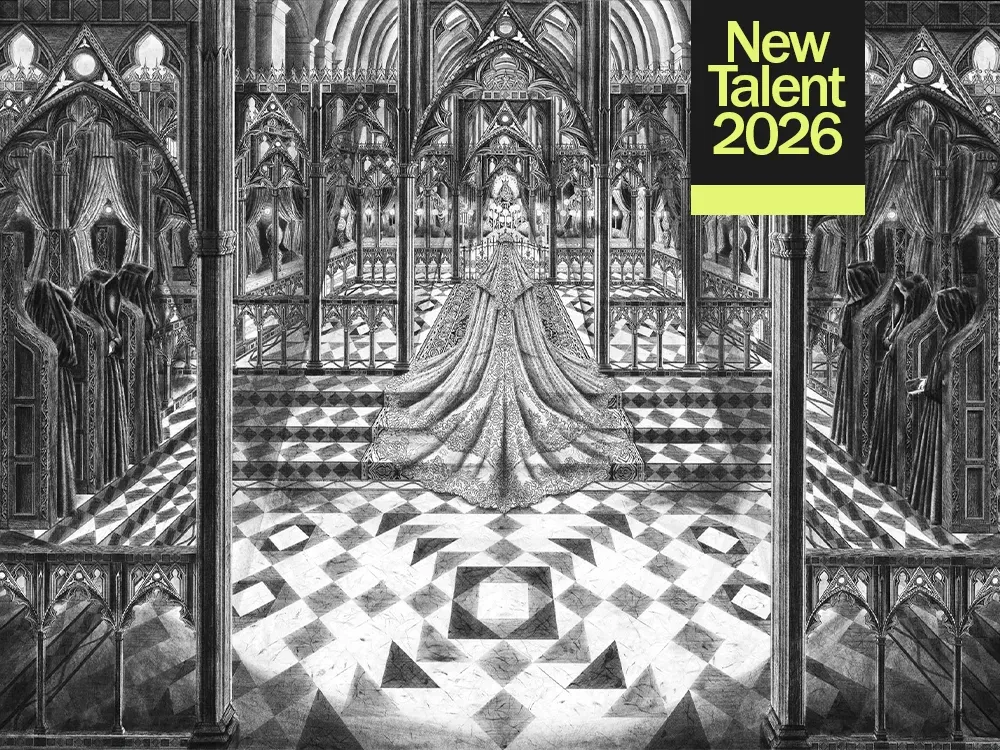
For 12 years, Kyung-Me was obsessed with intricate, black-and-white line drawings. Her inspiration? The 12th-century illustrations from The Tale of Genji, often cited as the world's first novel, penned by a woman. She started by copying these ancient scenes, then dropped them into urban grids, imagining the inner lives of the women within Prince Genji's world.
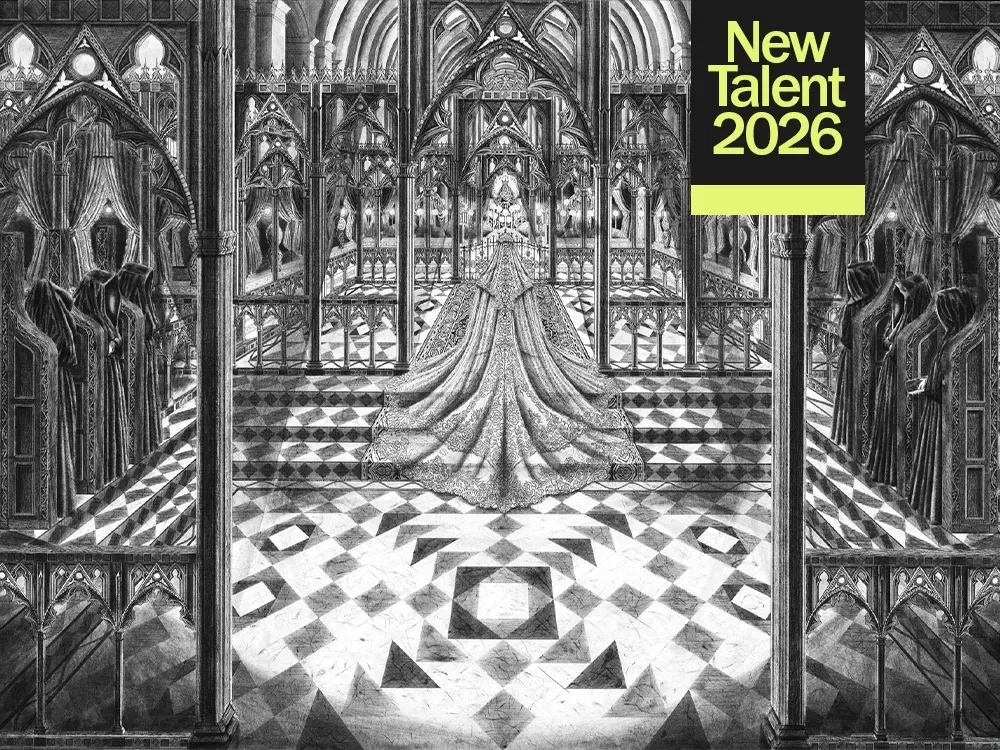
Her pieces, like The Marriage (2022) with its endless Gothic molding, or The Profession (2022) where every tatami thread is meticulously drawn, felt enormous despite their 32-inch width. They were deep, detailed, and utterly captivating, like still frames from a meticulously crafted movie. But there was a catch.
We're a new kind of news feed.
Regular news is designed to drain you. We're a non-profit built to restore you. Every story we publish is scored for impact, progress, and hope.
Start Your News DetoxShe realized she'd spent a decade drawing women isolated in maze-like rooms, and the isolation was starting to rub off. Long hours, an aching arm, and the relentless pursuit of perfection left her feeling just as trapped as her subjects.
A New Brush with Freedom
Kyung-Me decided enough was enough. She wanted to relax her arm, shed the pressure of perfection, and, as she put it, "change everything about myself." So, she took an Asian painting class. Her teacher, Sungsook Setton, introduced her to a philosophy that emphasizes clearing the mind, focusing on breath, and cultivating inner peace. Basically, the opposite of her previous artistic existence.
She started with abstract ink paintings, letting go of control, then added a splash of yellow. It looked like a sunflower, but also a solar eclipse. Since then, sunflowers have become her muse — a symbol of bright and dark energies, a "vessel" for her shifting artistic soul.
Her new paintings are a radical departure: huge, fiery sunflowers, layered with watercolor and ink, painted loosely and quickly. She might paint 50 just to keep one, overcoming the very adult fears of "wasting materials" and making something "ugly." The payoff? Paintings that practically vibrate with life.
And the balance she found in her art? It spilled over into life. She used to shy away from intense emotions. Now, she sees them as fuel, a gift to channel into her vibrant, unapologetically free work. Which, if you think about it, is a pretty brilliant way to break out of a maze.