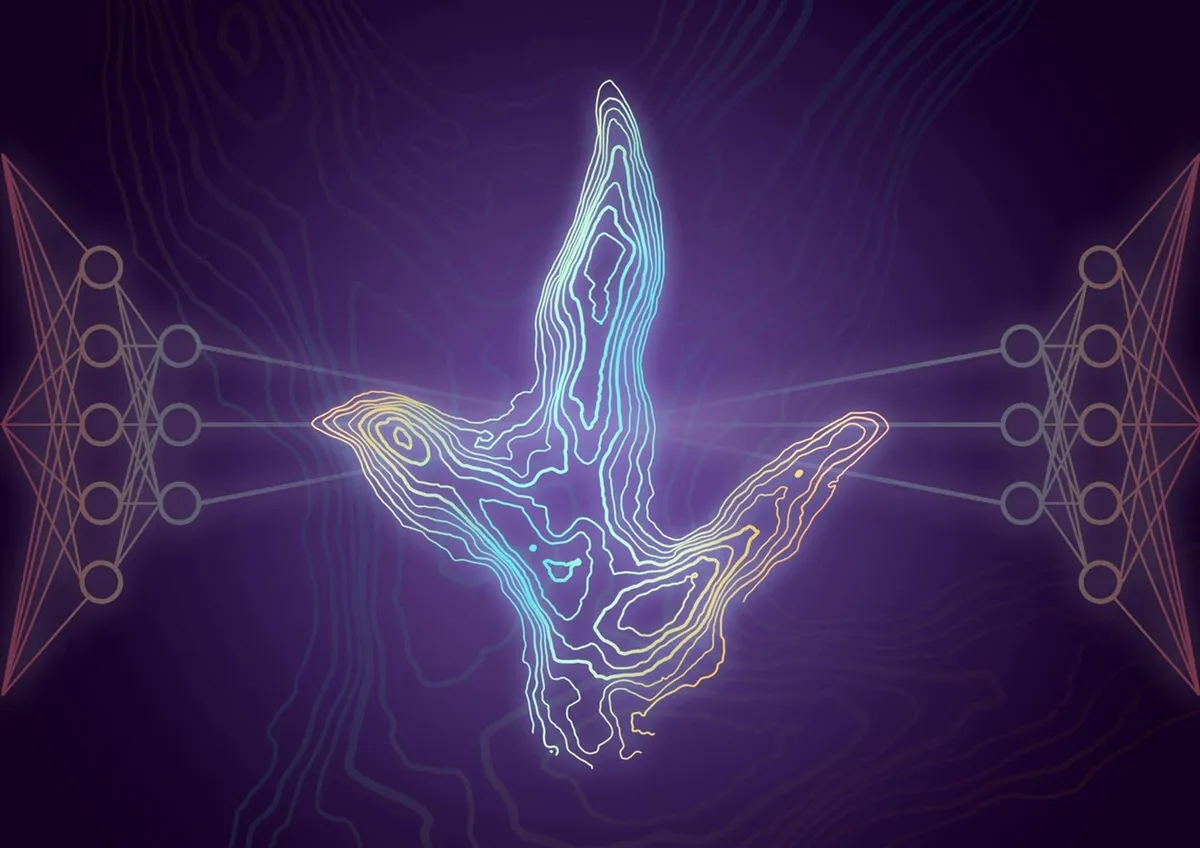
A new artificial intelligence app can identify which dinosaur made a footprint just by looking at a photo. The tool, called DinoTracker, works like a fingerprint scanner for prehistoric creatures—and it's already raising questions about when birds first appeared on Earth.
For over a century, paleontologists have stared at fossilized footprints and argued about what made them. Was it a meat-eater or a plant-eater? A small creature or a giant? The tracks were often too eroded or distorted to say with confidence. But now researchers from the Helmholtz-Zentrum research centre in Berlin and the University of Edinburgh have trained an AI system to read what the rocks have been trying to tell us.
How the System Learned to See
Instead of asking experts to manually catalog thousands of footprints—a process that could accidentally introduce bias—the researchers fed their AI nearly 2,000 real fossil footprints plus millions of simulated versions. The simulations recreated what naturally happens to tracks over millions of years: compression, shifting edges, partial erasure. By seeing this wide range of variation, the system learned to recognize the patterns that matter.
We're a new kind of news feed.
Regular news is designed to drain you. We're a non-profit built to restore you. Every story we publish is scored for impact, progress, and hope.
Start Your News DetoxThe AI focused on eight key features: how far the toes spread, where the heel sat, how much of the foot touched the ground, and how weight distributed across the sole. Once it understood these patterns, it could compare a new footprint to known fossils and identify the likely culprit.
When tested against expert classifications, the algorithm agreed about 90 percent of the time—even on controversial cases that had stumped paleontologists for years.
A Surprise About Bird Origins
The most striking discovery came from footprints over 200 million years old. The AI found strong similarities between some dinosaur tracks and the foot structure of both living birds and extinct bird relatives. This could mean birds evolved tens of millions of years earlier than previously thought—or that some early dinosaurs simply happened to have bird-like feet by coincidence. Either way, it's a lead worth following.
The system also reanalyzed mysterious tracks from the Isle of Skye in Scotland, formed 170 million years ago on the muddy edge of an ancient lagoon. The AI suggests they may have been made by some of the oldest known relatives of duck-billed dinosaurs, making them among the earliest examples of that group ever found.
Opening the Door Wider
What makes this work genuinely useful isn't just the accuracy. It's that anyone with a camera and curiosity can now participate. A field researcher in Mongolia, a student in a museum, a farmer who finds a strange impression in a rock—they can upload a photo to DinoTracker and get a credible answer. The technology democratizes paleontology in a way that traditional expertise never could.
Professor Steve Brusatte of the University of Edinburgh called it "an objective, data-driven way to classify dinosaur footprints—something that has stumped experts for over a century." The real prize, though, might be what else the AI finds as more people start using it. Every new footprint fed into the system makes it smarter.