A 3,300-year-old papyrus scroll reveals something surprisingly modern: ancient Egyptian artists made mistakes, and they had a fix for it.
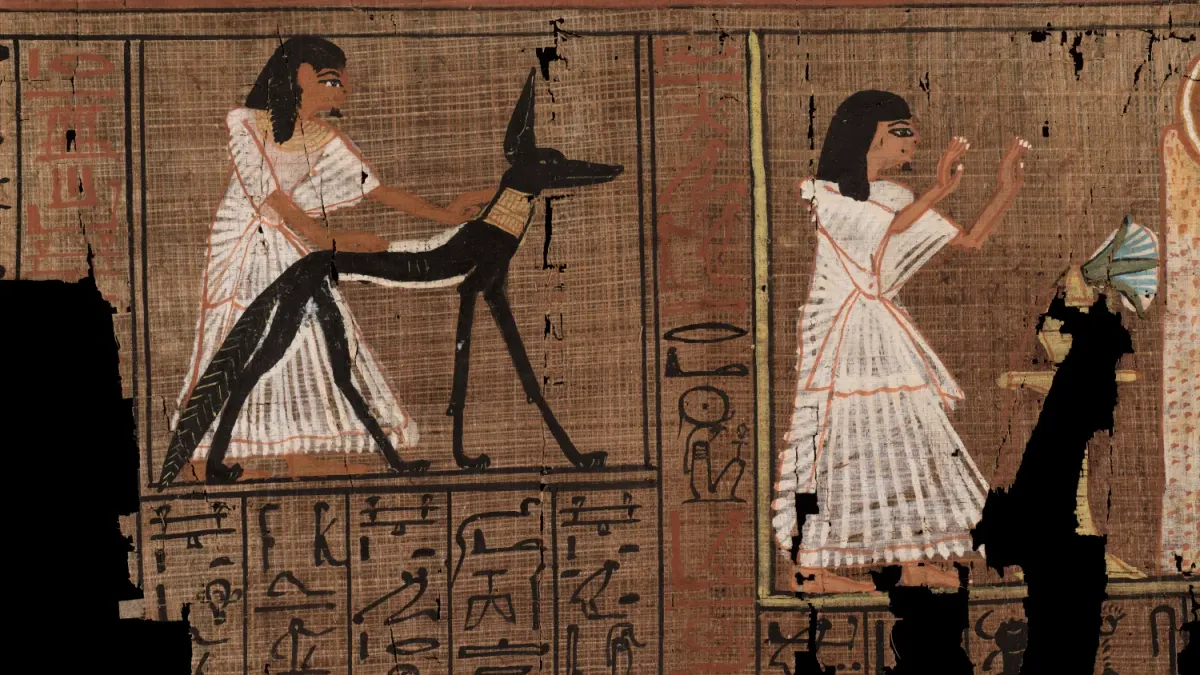
While preparing a copy of the Book of the Dead for an exhibition at the Fitzwilliam Museum in England, curators noticed something odd about a painted jackal. White lines traced along its body and legs suggested the animal had been deliberately slimmed down—someone had painted over the original, thinner version to make it look less heavy.
The jackal appears in a funerary scroll made for Ramose, a royal scribe, meant to guide him through the underworld. In Egyptian belief, the jackal represented Wepwawet, a jackal-headed god who served as pathfinder for armies and guardian of the dead. But apparently, the first artist's proportions didn't quite land.
We're a new kind of news feed.
Regular news is designed to drain you. We're a non-profit built to restore you. Every story we publish is scored for impact, progress, and hope.
Start Your News Detox"It's as if someone saw the original way the jackal was painted and said, 'It's too fat—make it thinner,' so the artist has made a kind of ancient Egyptian correction fluid to fix it," said Helen Strudwick, senior Egyptologist at the museum.
When researchers analyzed the white paint under a 3D digital microscope, they found it wasn't just a hasty cover-up. The mixture combined two minerals—huntite and calcite—with flecks of yellow orpiment pigment added to help the correction blend seamlessly with the pale cream papyrus. It was a deliberate, thoughtful solution to an artistic problem.
What's striking is how universal this impulse turned out to be. Once Strudwick started looking, she found the same technique on other Egyptian documents: the Book of the Dead of Nakht in the British Museum, the Yuya papyrus at the Egyptian Museum in Cairo. "When I've pointed it out to curators, they've been astonished," she said. "It's the kind of thing you don't notice at first."
This discovery quietly humanizes ancient Egypt in a way that polished museum pieces often don't. These weren't infallible artists working with divine inspiration—they were professionals who made judgment calls, received feedback, and adjusted their work. They had bosses who said "make it slimmer." They invented solutions on the fly. The tools and materials were different, but the creative process—the trial, the error, the correction—feels entirely recognizable. Someone 3,300 years ago understood what any writer, designer, or artist knows: the first version is rarely the final one.