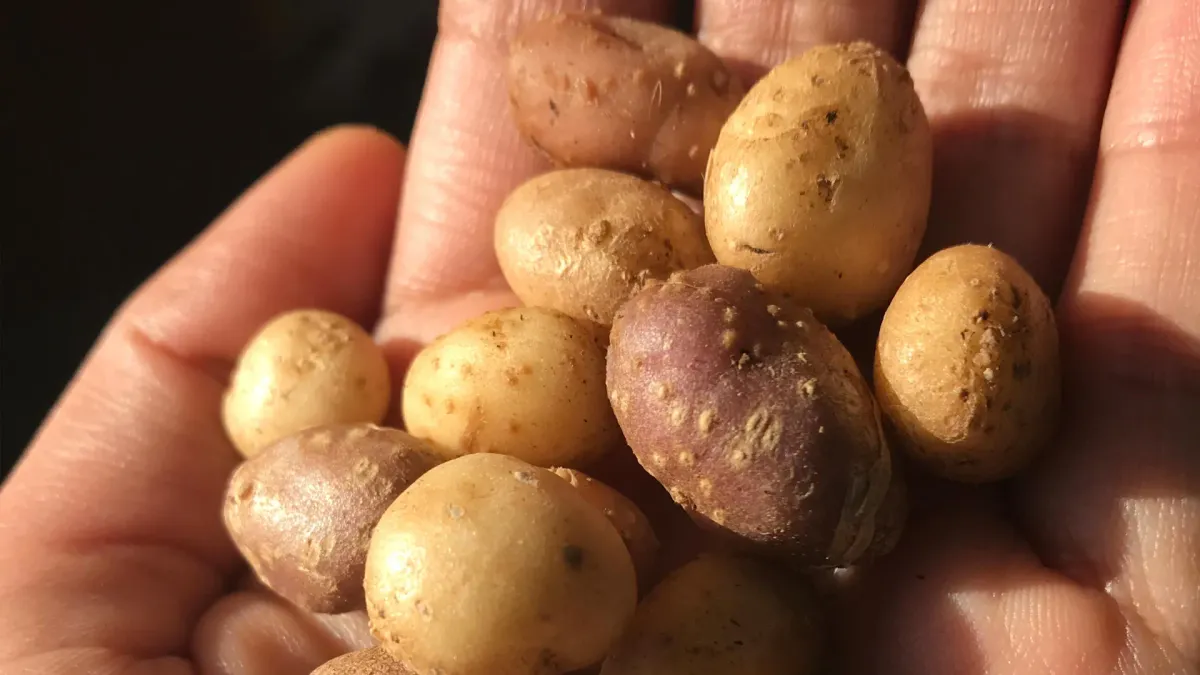
More than 10,000 years ago, Indigenous people living in the southwestern United States did something quietly remarkable: they carried a small, hardy wild potato across vast distances, reshaping where it could grow. That potato, Solanum jamesii, still thrives today across the Four Corners region—from southern Utah and Colorado down into northern Mexico—a living testament to deliberate human cultivation that predates written history.
We know this happened because of stone tools. Researchers examined grinding implements from 14 archaeological sites scattered across several hundred to many thousands of years old. On nine of those sites, they found starch residue from the Four Corners potato. Some evidence reaches back 10,900 years. Most of these locations cluster near the modern northern edge of where the potato naturally grows, along the borders where Colorado, Utah, Arizona, and New Mexico meet.
How We Know They Carried It
Genetic research adds a second layer of confirmation. Living populations of the Four Corners potato in the northern regions show strong genetic signatures suggesting they originated much farther south. People brought them north, extending the plant's range into territories where it wouldn't naturally survive—a hallmark of intentional cultivation.
We're a new kind of news feed.
Regular news is designed to drain you. We're a non-profit built to restore you. Every story we publish is scored for impact, progress, and hope.
Start Your News DetoxWhen a plant gets moved beyond its natural range and used repeatedly over generations, that's early domestication. It happened here thousands of years ago, long before agriculture as we think of it took root in the region.
But the real story isn't just in the archaeology. Researchers interviewed 15 Navajo (Diné) elders, who confirmed what the ground stone tools suggested: the wild potato remains known, eaten, and used for spiritual purposes in their communities today. The plant carries cultural weight that spans millennia.
A Foodway That Traveled Through Stories
As researcher Cynthia Wilson explains, "The mobility of Indigenous foodways was driven by kinship-based practices across the landscape. Indigenous knowledge holders, especially matrilineal women, held on to these seedlings and stories across generations to sustain ties to ancestral land and foodways."
That detail matters. This wasn't random seed dispersal or accidental spread. Women, moving through kinship networks, carried both the physical potato and the knowledge of how to grow it—a living library of cultivation passed through families and generations. The potato became a thread connecting people to land and to each other.
What researchers call an "anthropogenic range"—a distribution shaped by human hands rather than nature alone—is really just the footprint of care. A plant moved north because someone decided it mattered enough to carry. That decision echoed forward 10,000 years, and the Four Corners potato still grows where those ancient travelers planted it.