Sixteen million years ago, the Arabian Sea had more oxygen than it does today—even though Earth was warmer back then. That counterintuitive finding is shifting how scientists think about the future of our oceans.
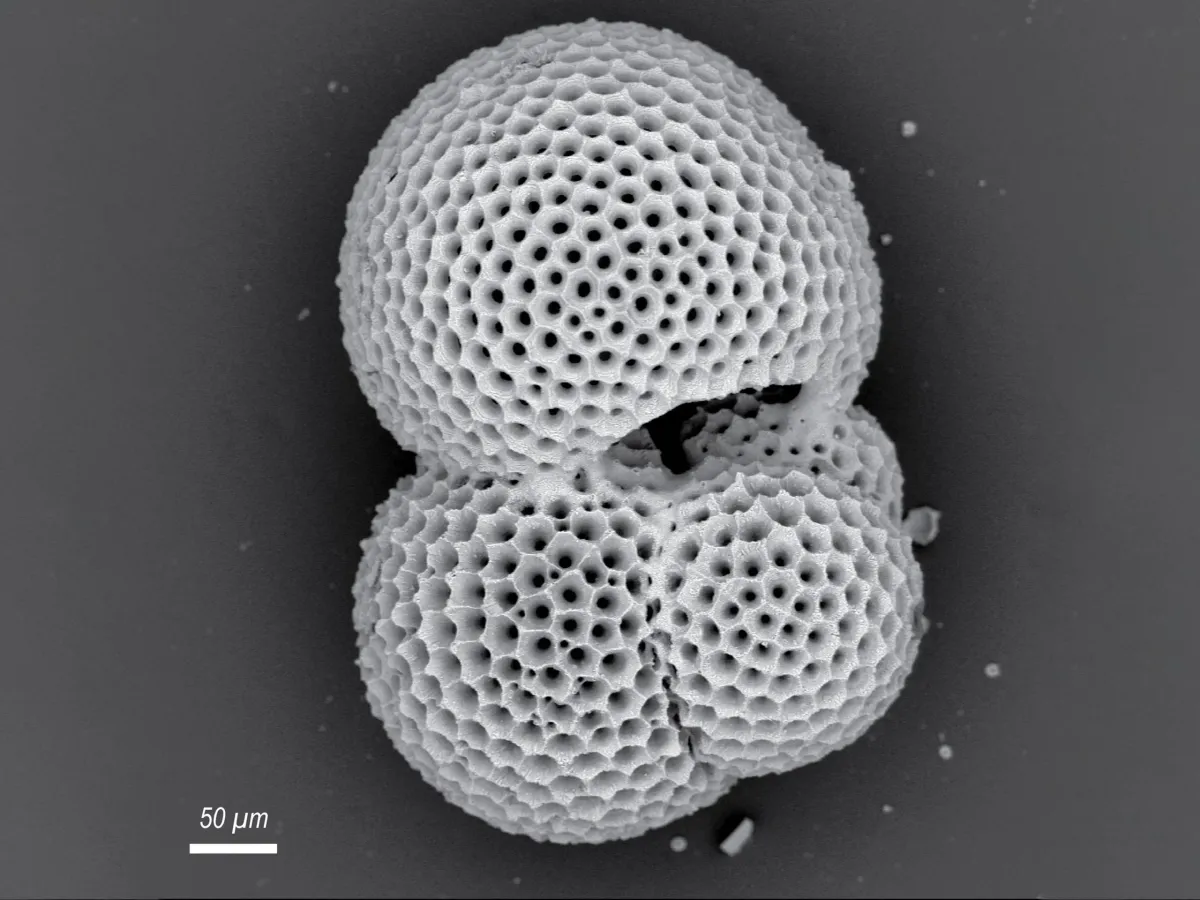
Researchers from the University of Southampton and Rutgers University analyzed fossilized plankton shells to reconstruct oxygen levels across millions of years. What they found challenges the assumption that warming automatically means less ocean oxygen everywhere. Instead, local forces—monsoons, currents, how seas connect to each other—seem to matter just as much as global temperature.
"Oxygen dissolved in our oceans is essential for sustaining marine life," explains Dr. Alexandra Auderset of the University of Southampton. "Over the past 50 years, we've lost two percent of ocean oxygen each decade as global temperatures rise." That's real and measurable. But the ancient record suggests the story might be more complicated than a simple equation of heat equals dead zones.
We're a new kind of news feed.
Regular news is designed to drain you. We're a non-profit built to restore you. Every story we publish is scored for impact, progress, and hope.
Start Your News Detox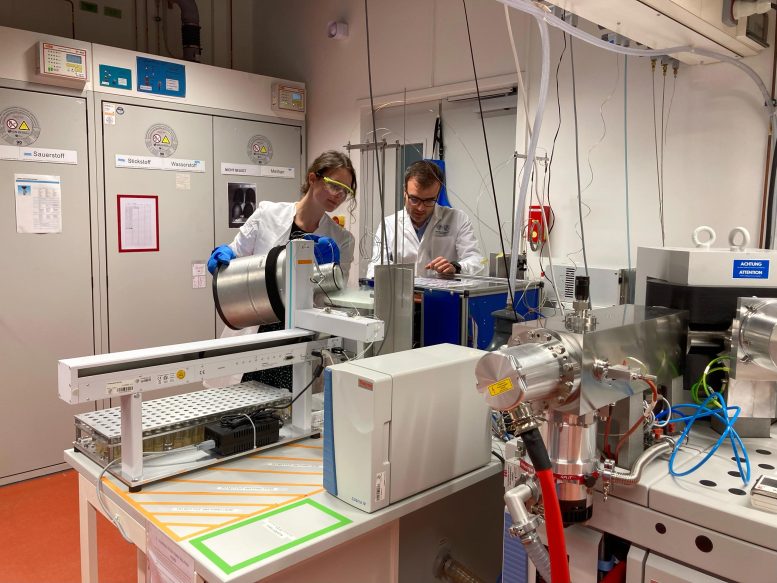
What 19 million years tells us
The team examined microscopic fossilized plankton called foraminifera. Chemical signatures in their shells act like a time capsule, revealing oxygen concentrations in seawater across epochs. They focused on a period called the Miocene Climatic Optimum—roughly 17 to 14 million years ago—when temperatures and atmospheric conditions resembled what climate models predict for after 2100 under high-emissions scenarios.
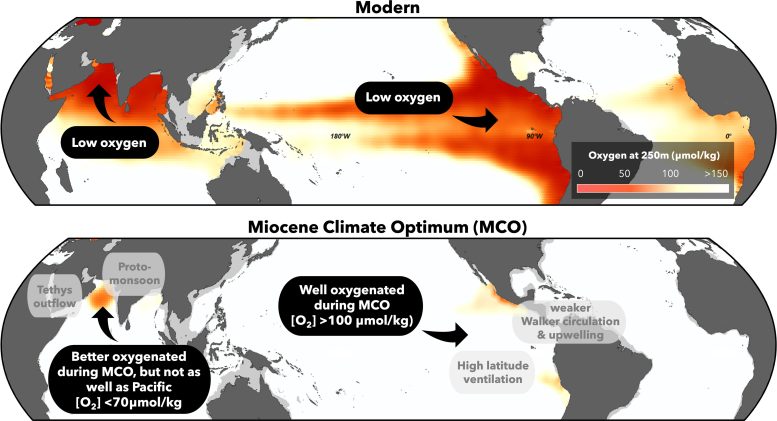
During this warm period, the Arabian Sea did have an oxygen minimum zone. Oxygen levels stayed below about 100 micromol per kilogram of water for roughly 7 million years. But here's the crucial detail: the conditions weren't as extreme as they are today. The region was hypoxic (moderately low oxygen) rather than suboxic (severely depleted). It still supported a wider range of marine life.
Meanwhile, the eastern tropical Pacific Ocean during the same period was actually well-oxygenated—the opposite of what's happening now. This divergence between regions is the key insight.
Why regional forces matter
The most severe oxygen loss in the Arabian Sea didn't happen during the warmest phase. It came later, after 12 million years ago, when the climate had already begun cooling. That timing suggests something other than temperature alone was driving the change. Strong monsoons, shifting ocean currents, and how the Arabian Sea connects to other water bodies all play roles that global climate models often miss.
"Ocean response to climate warming is complex," Auderset says. "Global models that focus solely on climate warming risk not capturing the regional factors that may either amplify or counteract those more general trends."
This doesn't mean we should relax about ocean deoxygenation—the ongoing loss is real and concerning. But it does mean that some regions might respond differently than others, and that local oceanography could potentially work in our favor in some places. The Arabian Sea today is severely depleted in ways it wasn't during a comparably warm period, suggesting human-driven changes have added a new layer of stress beyond what warming alone would cause.
The research points toward a more nuanced future. Rather than assuming all low-oxygen zones will worsen uniformly, scientists and policymakers need to understand what makes each region unique—and where intervention might actually help.