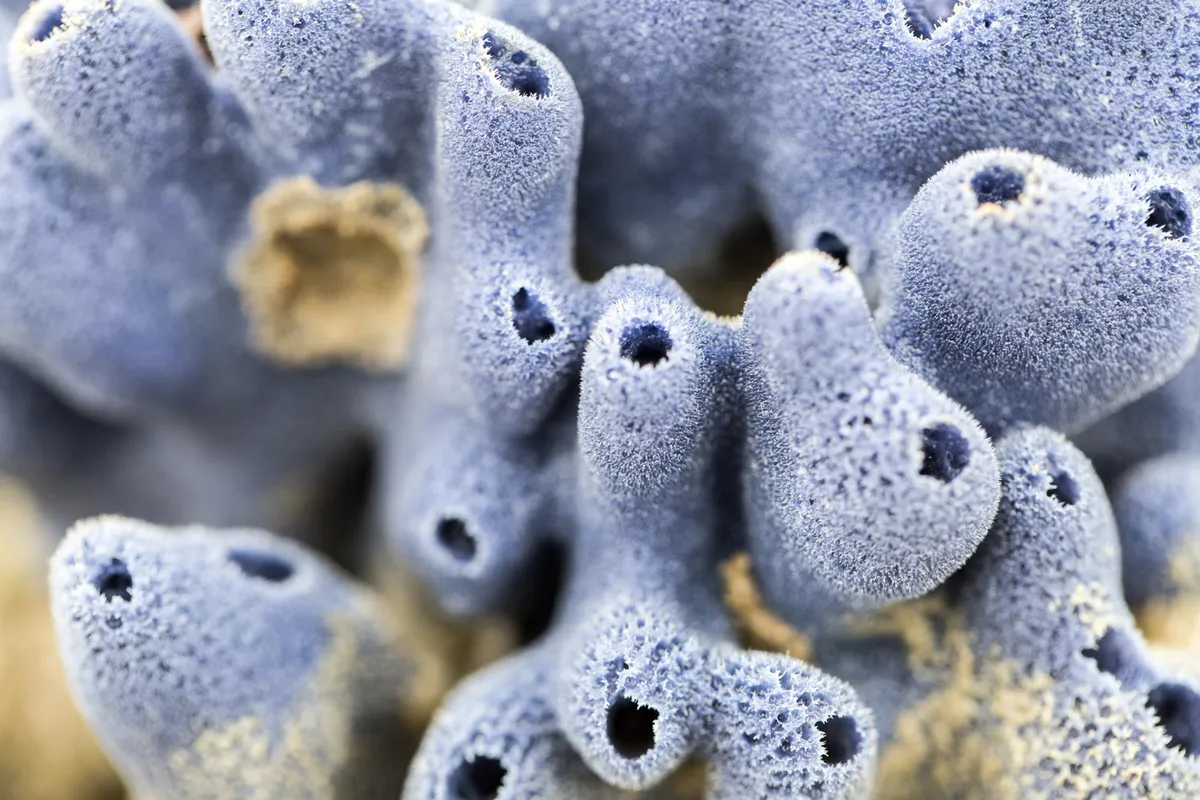
A new group of marine sponges, called Vilesida, has been found. These sponges make special chemicals that could be useful for new medicines.
The discovery also supports the idea that animals, including sponges, might have appeared about 100 million years earlier than scientists thought. Researchers at Uppsala University's Museum of Evolution identified this new order of sponges.
A Rare Discovery
Sponges are hard to classify. Many species don't even have official scientific names. Finding a completely new order of animals is very rare. Only twelve new animal orders have been described globally in the last five years.
We're a new kind of news feed.
Regular news is designed to drain you. We're a non-profit built to restore you. Every story we publish is scored for impact, progress, and hope.
Start Your News DetoxThe discovery of Vilesida was published in the Zoological Journal of the Linnean Society. The research team confirmed that these sponges are a distinct and previously unknown order.
Ancient Origins and Evolution
Julio Díaz, the lead author, said this discovery greatly improves our understanding of sponge classification and marine life. It also sheds light on the early history of life on Earth. Even though Vilesida sponges look similar to related groups, genetic tests show they separated over 150 million years ago.

Vilesida sponges live in many places, including the Caribbean, Pacific, Mediterranean, and Atlantic. They play important roles in their environments, from shallow coral reefs to deep ocean areas. The study also named a new family (Vilesidae), a new genus (Murus), and two new species from the northeast Atlantic.
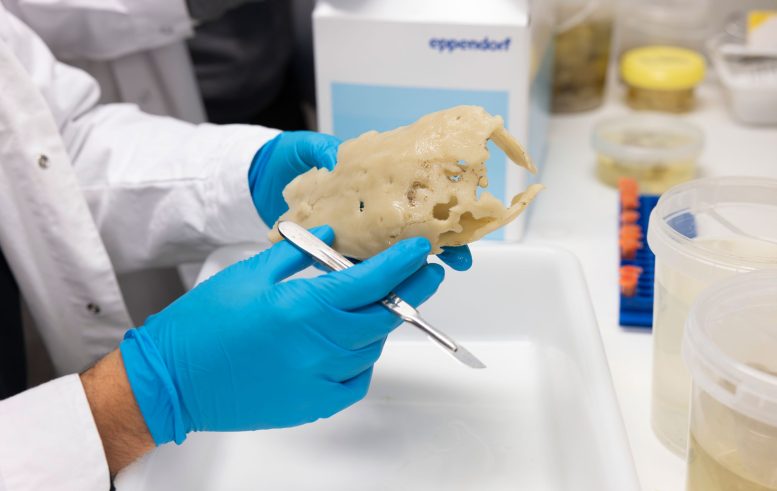
The discovery came from deep-sea sponge samples collected off the coast of Spain. Scientists used genetic and chemical tests to confirm these samples belonged to a new group.
Unique Chemicals and Early Animal Life
The research team found that Vilesida sponges produce unusual sterols, which are key parts of their cells. Sterols help cell membranes stay fluid. Instead of cholesterol, like humans, these sponges mainly produce 24-isopropylcholesterols (24-ipc sterols). Until now, these sterols were not found in such large amounts in any other group.

Paco Cárdenas, who led the study, explained that these unique sterols match the oldest known animal biomarkers. These fossilized steroids were found in Ediacaran rocks over 600 million years old. This finding supports the idea that sponges, and thus animals, appeared about 100 million years earlier than thought.
A recent paper in PNAS also supports this idea. Three authors from the current study suggested that unusual sterols in ancient rocks likely came from early sponges.
Impact on Evolution and Medicine
The discovery of Vilesida is important for two reasons. It suggests animals evolved earlier, and these sponges produce unique sterols.
Cárdenas noted that other studies show sterols are promising for new antimicrobial, anti-cancer, and antiviral drugs. Now that these sponges are named and their locations are known, chemists and pharmacists can find these valuable substances more easily.
Deep Dive & References
Vilesida, a new order of demosponges revealed by molecular phylogeny and abundant 24-isopropylcholesterols (24-ipc sterols) - Zoological Journal of the Linnean Society, 2025