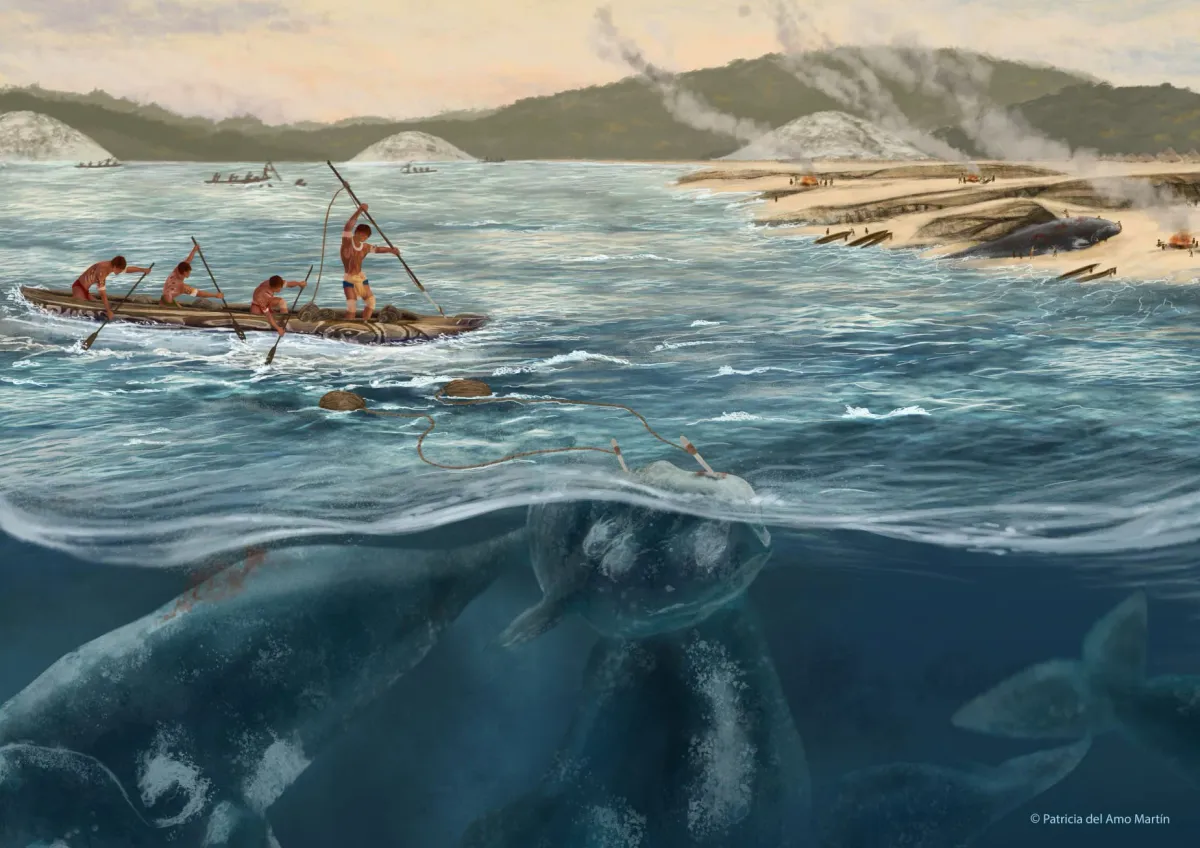
Ancient communities in southern Brazil hunted large whales 5,000 years ago. This is about 1,000 years earlier than similar hunting practices were documented in Arctic and North Pacific cultures.
This discovery changes what scientists thought about early maritime societies. It also offers new insights into ancient ocean environments.
Early Whaling in Brazil
A new study from the Institute of Environmental Science and Technology at the Universitat Autònoma de Barcelona (ICTA-UAB) found that Indigenous groups in Brazil were hunting whales much earlier than previously believed. The research focused on communities around Babitonga Bay, Santa Catarina. These groups built large shell mounds called sambaquis during the Holocene period.
We're a new kind of news feed.
Regular news is designed to drain you. We're a non-profit built to restore you. Every story we publish is scored for impact, progress, and hope.
Start Your News DetoxThese findings challenge the idea that large-scale whaling started in Northern Hemisphere societies between 3,500 and 2,500 years ago.
The study was led by ICTA-UAB researchers Krista McGrath and André Colonese. Their team examined hundreds of whale bones and bone tools from sambaqui sites in Babitonga Bay. These items are now kept at the Museu Arqueológico de Sambaqui de Joinville in Brazil. Many original sites have been lost, so this collection is very important.
Advanced Tools and Whale Species
Researchers used several methods to study the remains. These included zooarcheology, tool analysis, and advanced molecular techniques (ZooMS). They identified species like southern right whales, humpback whales, blue whales, sei whales, sperm whales, and dolphins. Many bones showed cut marks, which means the animals were butchered.
The team also found large whalebone harpoons. These are among the biggest ever found in South America. All this evidence, including whale remains found in burials, suggests active hunting. It shows these communities did not just rely on whales that washed ashore.
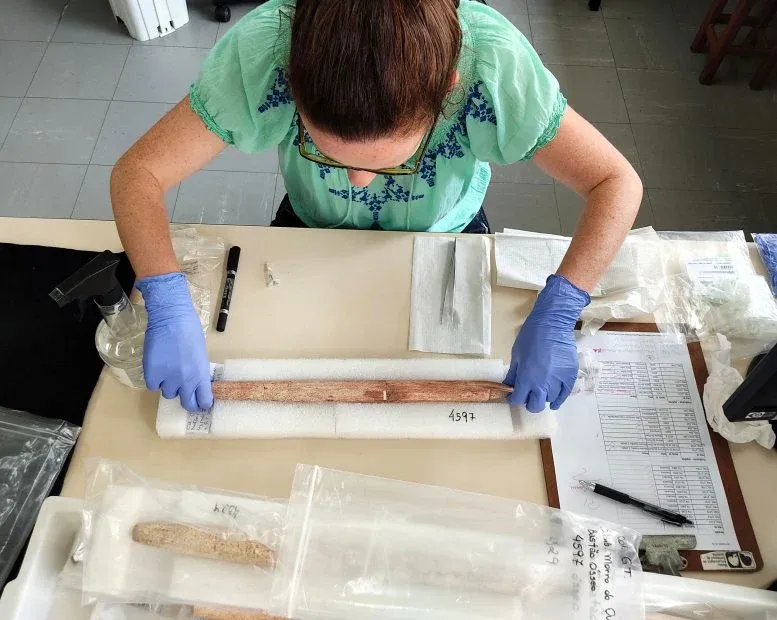
Krista McGrath, the lead author, said, "The data reveals that these communities had the knowledge, tools, and specialized strategies to hunt large whales thousands of years earlier than we had previously assumed."
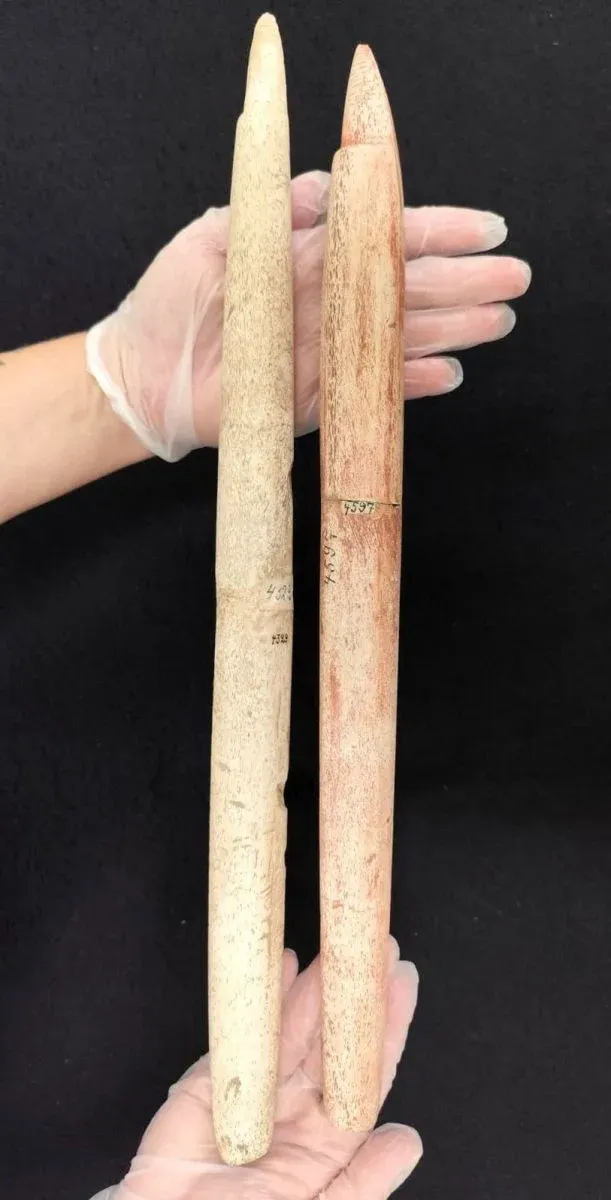
The findings also give clues about past ecosystems. The many humpback whale remains suggest these whales once lived much farther south than their current main breeding areas off Brazil.
Marta Cremer, a co-author, noted that recent increases in humpback whale sightings in Southern Brazil might show a historical recolonization. This has implications for conservation. Understanding whale distributions before industrial whaling is key to their recovery.
New Views on Sambaqui Societies
This study not only redefines the timeline of whale hunting but also offers a deeper look into the lives of postglacial societies on South America’s Atlantic coast. André Colonese, a senior author, said this research changes how we see the social organization of the Sambaqui people. "We can now view these groups not only as shellfish collectors and fishers, but also as whalers," he explained.
Dione Bandeira, a Brazilian archaeologist, added that this practice greatly contributed to these societies living along the Brazilian coast for a long time.
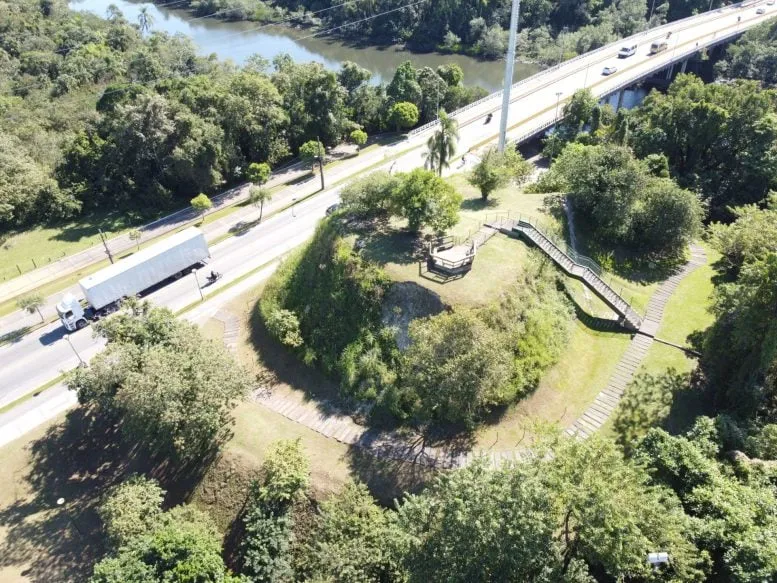
The Sambaqui people built a complex maritime way of life. They used specialized tools, worked together in groups, and had rituals related to hunting large marine animals. This Indigenous history, which was not written down, has been saved through museum collections. Efforts are also being made to protect the remaining sambaqui sites from urban growth in Brazil.
Ana Paula, director of the Museu Arqueológico de Sambaqui de Joinville, highlighted the value of the collections. She said they show the rich potential for learning about ancestral peoples.
Deep Dive & References
Molecular and zooarchaeological identification of 5000 year old whale-bone harpoons in coastal Brazil - Nature Communications, 2026