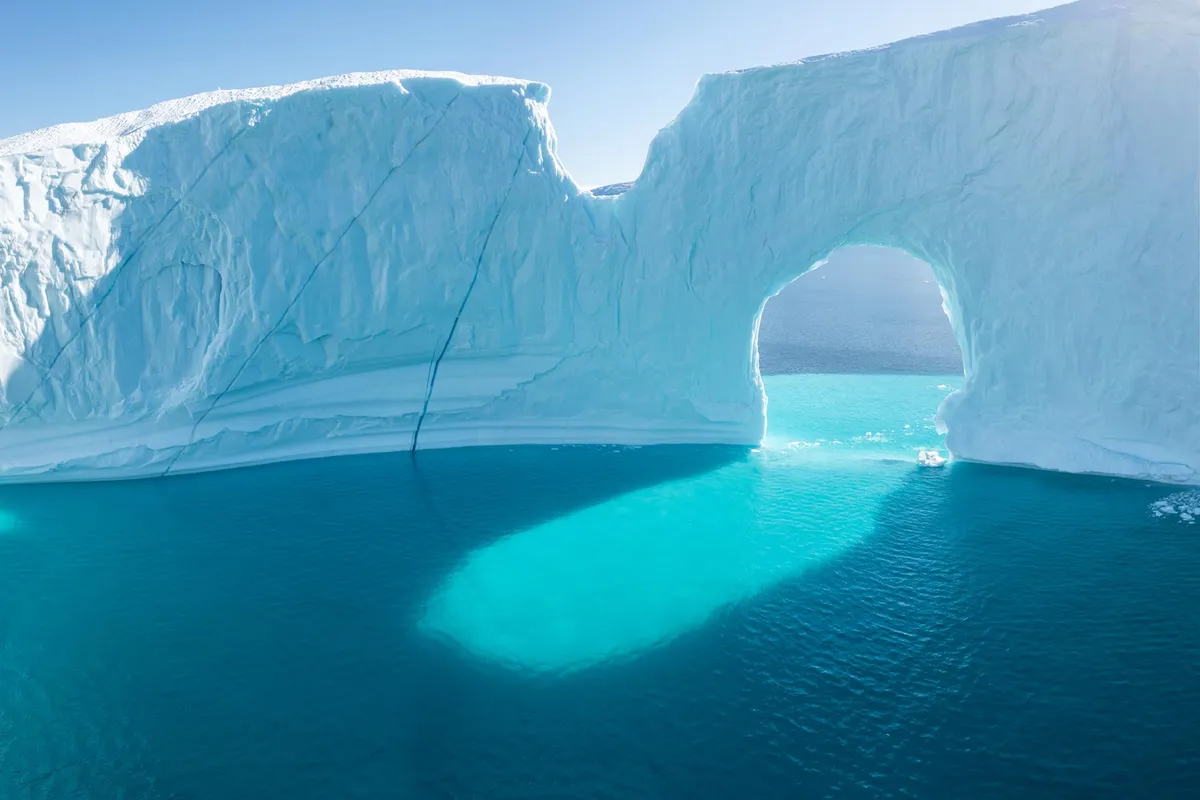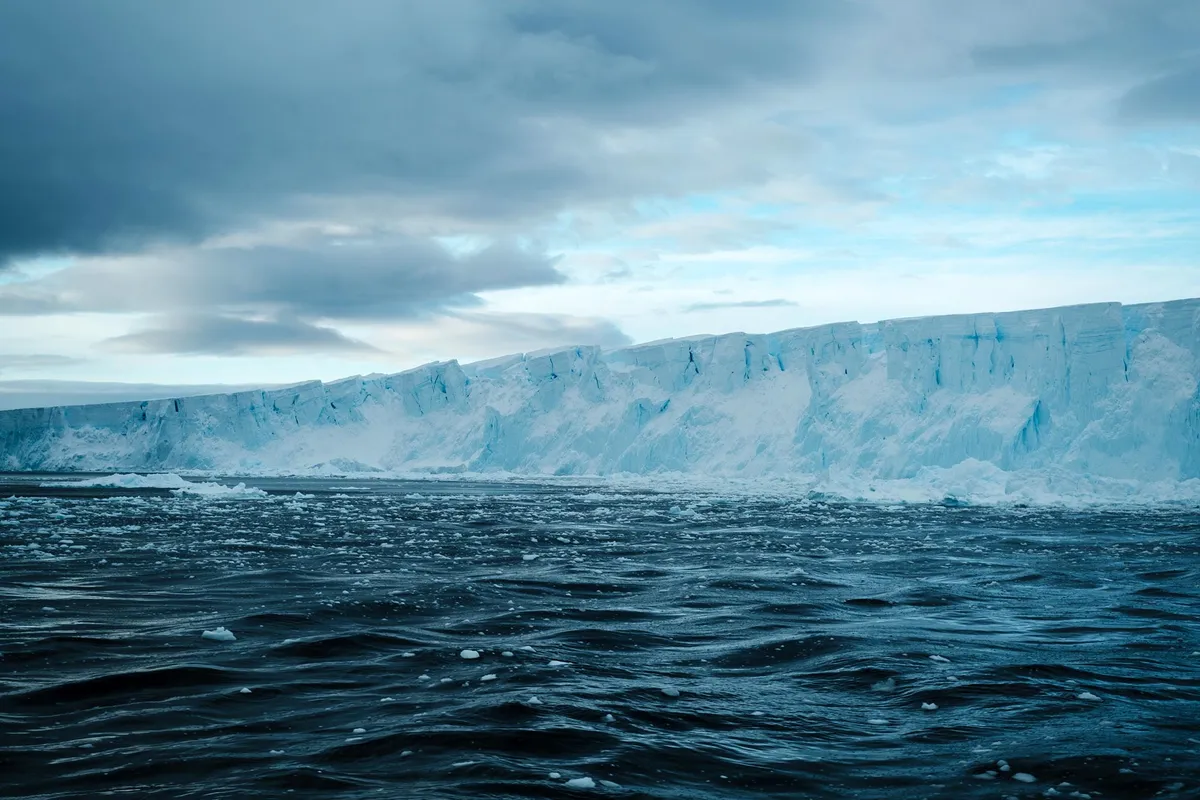
Ancient ice cycles in Antarctica once controlled marine life in distant subtropical oceans. This happened by changing how nutrients moved through the water. A 40,000-year cycle, linked to Earth's tilt, played a surprisingly strong role. This shows how connected global climate systems are.
Scientists from the University of Wisconsin–Madison led new research on this topic. They found that Antarctica's ice sheet changes affected ocean life thousands of miles away.
Antarctica's Ice and Ocean Life
The study, published in the Proceedings of the National Academy of Sciences, focused on the obliquity cycle. This cycle is a 40,000-year pattern caused by shifts in Earth's axial tilt. It influenced ocean productivity in subtropical areas about 34 million years ago. This was when the Antarctic ice sheet first started to grow.
We're a new kind of news feed.
Regular news is designed to drain you. We're a non-profit built to restore you. Every story we publish is scored for impact, progress, and hope.
Start Your News DetoxThis finding was unexpected. The 40,000-year cycle is important at the poles. However, its effect on climate and ocean conditions closer to the equator is usually weaker.
Stephen Meyers, a geoscience professor at UW–Madison and a lead author, noted that other astronomical cycles are usually expected to have a bigger impact. Yet, his team found a clear and strong influence from the 40,000-year cycle. This impact was on subtropical marine productivity for about 1 million years. This period matches the early growth of the Antarctic ice sheets.
Meyers explained that this means biological productivity was affected by a distant process in the high latitudes. This happened through the delivery of nutrients to lower latitudes.

Evidence from Ocean Sediments
Researchers found this information by looking at chemical clues in ocean sediments. These sediments record past biological activity. The samples were gathered during ocean drilling trips between 2020 and 2022. These trips used the research vessel JOIDES Resolution. This ship has collected sediment cores for decades, helping scientists study ocean history.
Alexandra Villa co-led the study with Meyers. She was a PhD student at UW–Madison and joined an expedition. She noted that the vessel provided records for major scientific discoveries about global climate, life's evolution, and plate tectonics. Villa is now a postdoctoral researcher at MARUM in Bremen, Germany.

The sediment cores helped scientists understand how life in subtropical oceans reacted to changes in the Antarctic ice sheet. Villa explained that ocean circulation is linked to biological productivity. Today, about three-quarters of marine biological productivity north of 30 degrees south of the equator relies on nutrients from the Southern Ocean. This is the ocean around Antarctica.
She added that nutrient-rich water from the Southern Ocean sinks. Then, it travels to lower latitudes. There, it mixes upward to the surface, affecting biological productivity.
About 34 million years ago, the Antarctic ice sheet formed. This changed ocean circulation and how nutrients moved. Villa said that when the ice sheet grew large enough to reach the Southern Ocean, the 40,000-year rhythm of the ice sheets affected nutrient delivery to subtropical areas.
Global Climate Connections
This research builds on earlier UW–Madison work. That work showed the strong influence of the 40,000-year obliquity cycle on marine-based ice sheets.
Now, scientists can connect this cycle to wider ocean circulation patterns. These patterns have effects across the globe. This highlights how closely Earth's climate system is linked.
Meyers emphasized that the Earth System is very interconnected. Changes in one part of the planet can have surprising ripple effects. Polar ice sheets and global ocean circulation are key ways this happens. They impact marine food webs far from the ice sheet. This study shows how dynamic and sometimes surprising these "global teleconnections" can be.
Deep Dive & References
High-latitude teleconnections drive subtropical marine bioproductivity at the dawn of the Antarctic ice sheet - Proceedings of the National Academy of Sciences, 2026