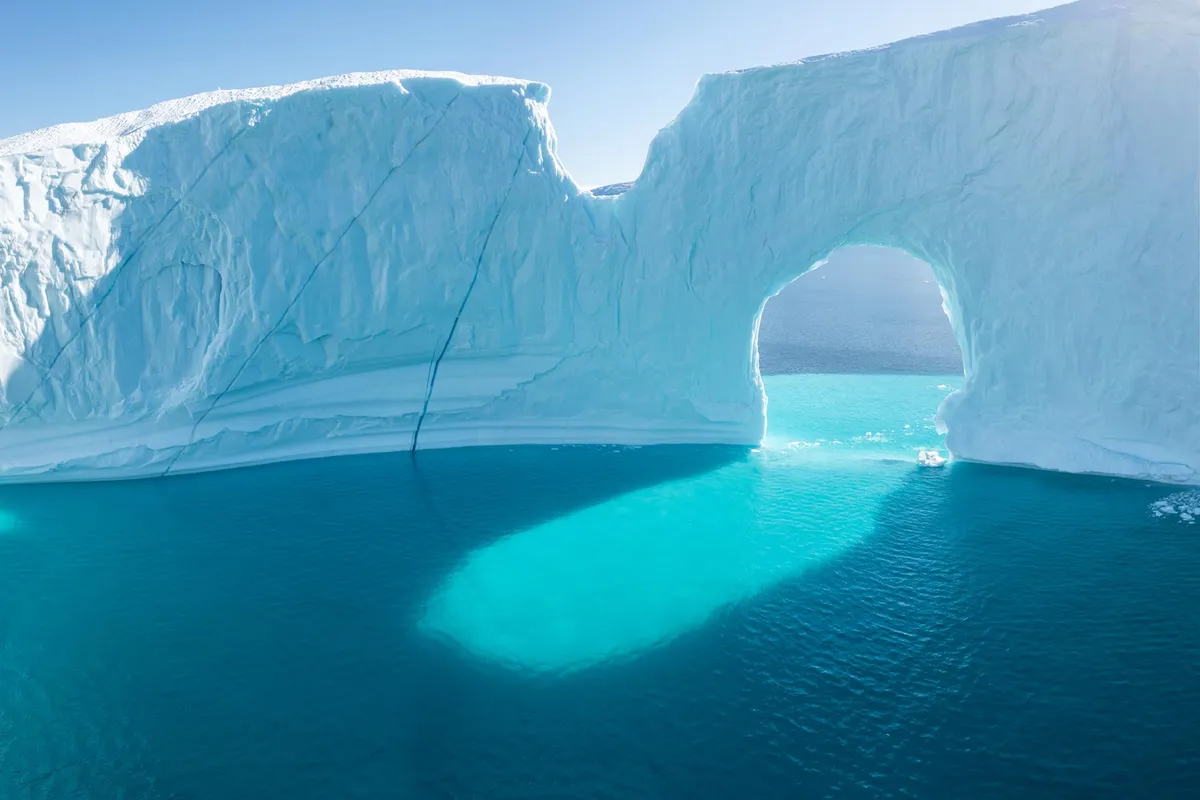
Turns out, the seemingly empty ocean around Antarctica is actually a bustling, microscopic metropolis. And it's doing some heavy lifting for our planet's climate, quietly sucking up massive amounts of heat and carbon dioxide from the atmosphere.
Most of this vital work is thanks to tiny, drifting organisms called plankton. They're the unsung heroes of Earth's carbon balance, and now, scientists have just pulled back the curtain on their incredibly complex genetic lives.
The Ocean's Unseen Workforce
Imagine nearly a decade of dedicated work, led by biogeochemist Nicolas Cassar from Duke University, all to understand how these microscopic residents of the harsh Southern Ocean actually influence global systems. Because, as Cassar puts it, this ocean is massive, and its role in absorbing atmospheric heat and carbon is even bigger.
We're a new kind of news feed.
Regular news is designed to drain you. We're a non-profit built to restore you. Every story we publish is scored for impact, progress, and hope.
Start Your News DetoxAmong these invisible workers are phytoplankton, the minuscule marine plants responsible for roughly half of all photosynthesis on Earth. Yes, half. Which means they're hoovering up an astonishing amount of CO2, keeping our atmosphere in check.
To get a closer look, researchers spent three months in late 2016 and early 2017 collecting water samples across the Southern Ocean. Then came the molecular detective work: sequencing the DNA from these samples, comparing them to existing gene catalogs, and grouping them by shared traits — like their impressive ability to thrive in freezing temperatures.
A Hidden Genetic World, Indeed
What they found was, in scientific terms, a bit mind-blowing. At least one-third of the genes they uncovered are not in any current marine gene catalogs. Let that sink in for a moment. We thought we knew a lot about ocean microbes, and it turns out, we've barely scratched the surface.
Cassar noted that a huge chunk of these genes was simply missing from databases. This means they’re exploring entirely unknown genetic territory, like discovering a new continent, but it's all happening on a microscopic scale.
The study also revealed that these microbial communities aren't just randomly scattered. They form distinct, ocean-current-shaped ecosystems. Some prefer the icy surface waters, while others thrive in the mysterious deep. It's like finding different neighborhoods in that microscopic metropolis.
The next step, according to Cassar, is to dive into this newfound genetic diversity. Understanding how it all works will be crucial to predicting how the Southern Ocean will respond to — and influence — climate change. Because if microbes control much of the ocean's chemistry, then their genes are the ultimate control panel for our planet's future climate.
Which, if you think about it, is both impressive and slightly terrifying. You'll want to tell someone about this.