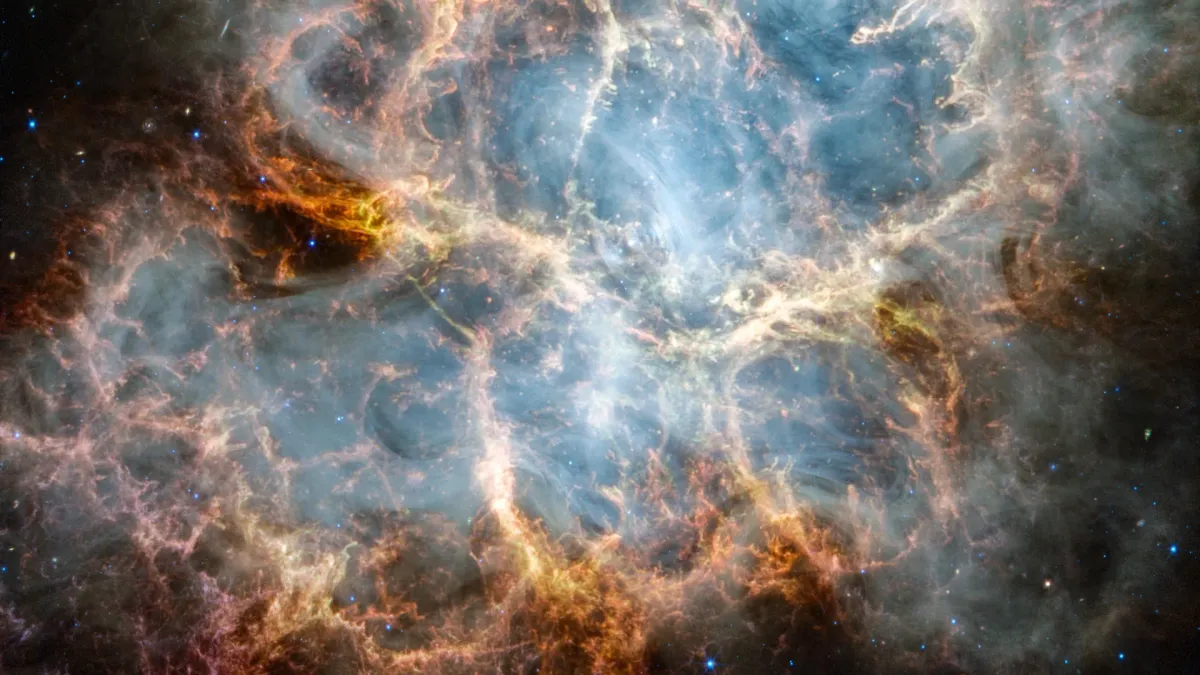
For decades, cosmologists have been trying to figure out what exactly kicked off the universe's rapid expansion, the Big Bang, without breaking Einstein's perfectly good (but apparently not that good) theory of gravity. Turns out, the answer might just be... more gravity.
Scientists at the University of Waterloo have cooked up a new theory that suggests the universe's explosive infancy didn't need any special, extra ingredients. It all just might come down to a deeper understanding of quantum gravity, which is both impressive and slightly terrifying.
Rethinking the Cosmic Dawn
Led by physics professor Niayesh Afshordi, the team dove into a concept called Quadratic Quantum Gravity. See, Einstein's General Relativity, while a century-long champ, gets a bit wobbly when you try to apply it to the universe's absolute infancy – a time of energy so extreme it makes a supernova look like a quiet Tuesday.
We're a new kind of news feed.
Regular news is designed to drain you. We're a non-profit built to restore you. Every story we publish is scored for impact, progress, and hope.
Start Your News DetoxInstead of patching up Einstein's theory with cosmic duct tape, this new approach offers a mathematically sound way to describe gravity even at those mind-bendingly high energies. It's like finding out the original recipe for the universe was just missing one key spice, not a whole new dish.
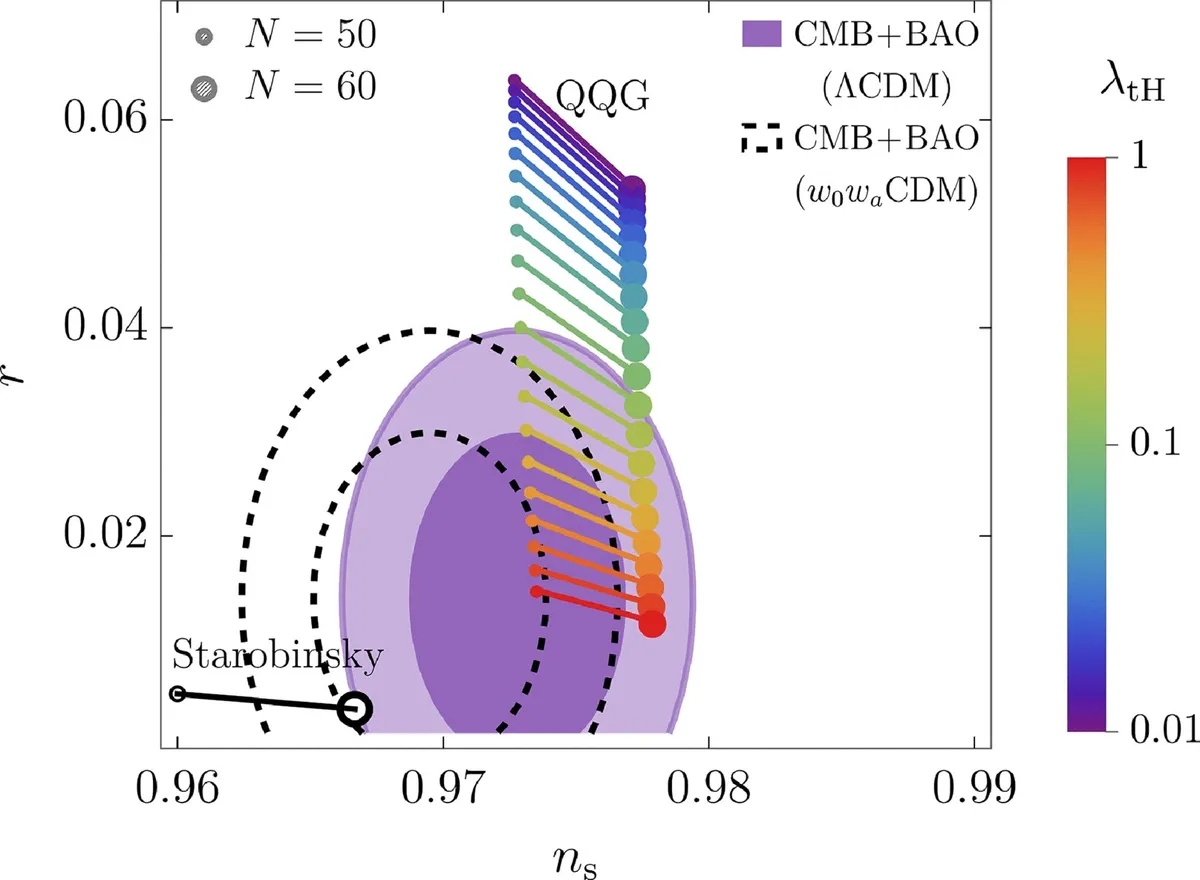
What they found is that the Big Bang's lightning-fast expansion – what scientists call "inflation" – could just naturally pop out of this simpler, more consistent quantum gravity theory. No need for exotic particles or mysterious fields. Just gravity, behaving itself at extreme scales.
Ripples in the Fabric of Spacetime
Even better, this model isn't just a pretty idea. It predicts a minimum amount of primordial gravitational waves. Think of these as tiny ripples in spacetime itself, echoes from the universe's very first moments. And here's the kicker: future experiments might actually be able to detect them.
That's right. A theory dealing with the unseeable, untouchable birth of everything is making predictions we can test with today's tech. Afshordi called this direct link between quantum gravity and real data "rare and exciting," which is scientist-speak for "we're pretty stoked about this."
This all lands at a perfect moment. Cosmology is entering a new era of precision, with galaxy surveys, cosmic microwave background experiments, and gravitational wave detectors getting sensitive enough to peek back in time further than ever before. If these ripples show up, it'll be a cosmic mic drop for Quadratic Quantum Gravity.
So, the next time you look up at the night sky, remember: the universe's dramatic origin story might just be a lot more elegant, and a lot less complicated, than we ever dared to imagine. And that's something worth thinking about.
Original research published in Physical Review Letters.