For over two decades, astronomers have been scratching their heads about strange "zebra stripes" in the radio waves coming from the Crab Pulsar. Imagine a rainbow, but only a few super bright colors show up, separated by total darkness. Now, scientists think they've figured it out, and it's all thanks to a cosmic tug-of-war.
Turns out, it’s a battle between the pulsar's own gas cloud, called plasma, trying to spread light out, and gravity, trying to pull it back in. When these two forces meet, they create these wild, distinct stripes.
A Cosmic Tug-of-War
Mikhail Medvedev, a professor at the University of Kansas, is about to share these findings. He explains that gravity actually bends space itself. So, light doesn't travel in a straight line; it follows the curve of space. Think of gravity as a giant lens.
We're a new kind of news feed.
Regular news is designed to drain you. We're a non-profit built to restore you. Every story we publish is scored for impact, progress, and hope.
Start Your News DetoxWe've seen gravity acting like a lens around black holes before. But here's the cool part: this is the first time we've seen both gravity AND plasma team up to shape a signal from space. Around black holes, gravity does all the work. With the Crab Pulsar, it’s a tag-team effort, and it’s the first real-world proof of this combo move.
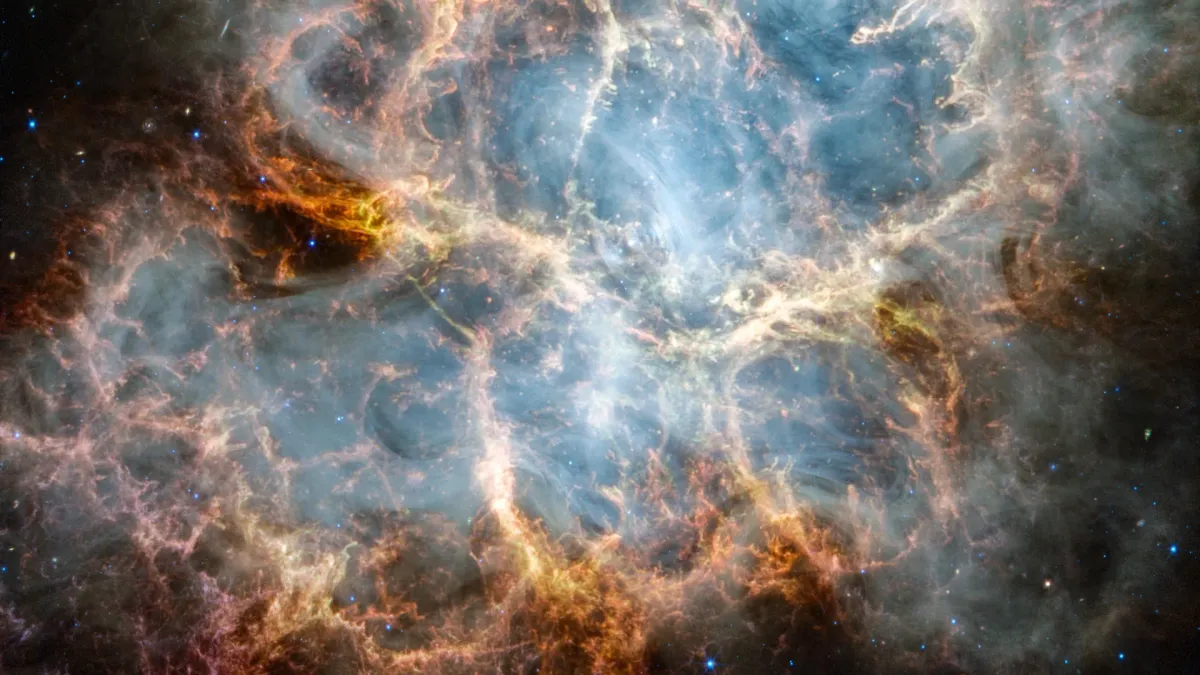
The Crab Pulsar sits right in the middle of the Crab Nebula, about 6,500 light-years away. Its relatively close distance and clear view make it a superstar for studying neutron stars – those super dense leftovers from exploded stars.
The Missing Piece
Medvedev’s earlier models could make the striped pattern appear, but they couldn't explain how sharp the contrast was. The stripes were there, but not as dramatic as what telescopes actually see.
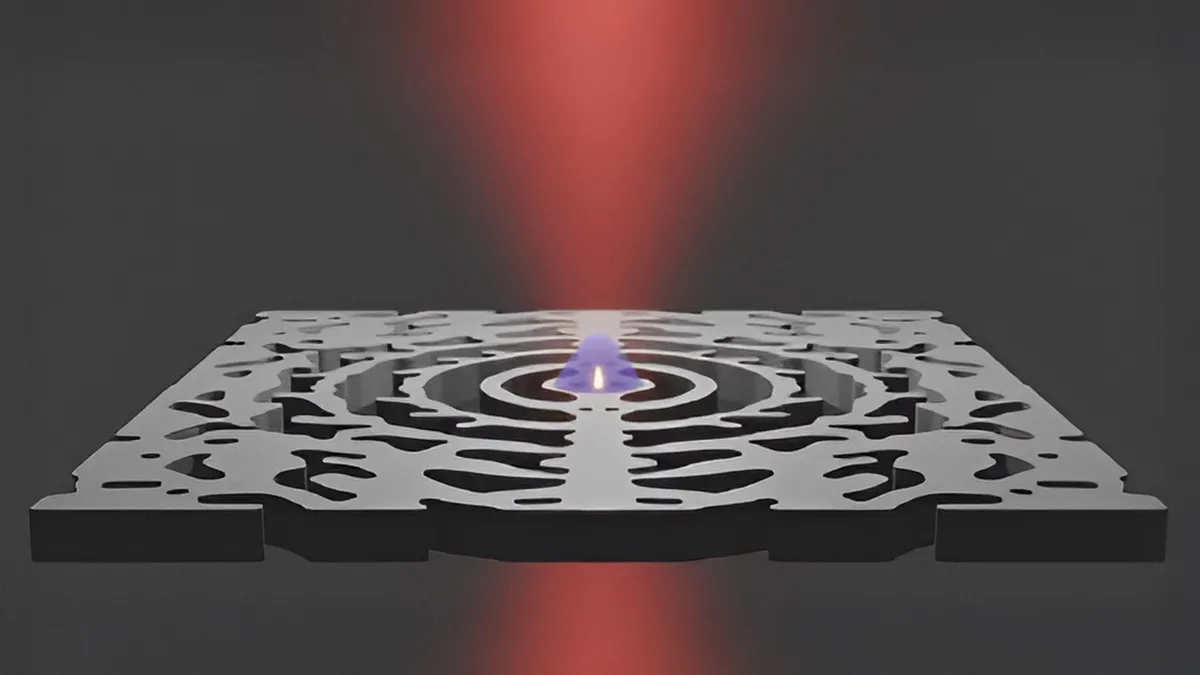
He realized the plasma around the pulsar was spreading the radio waves out. But by adding Einstein's theory of gravity to the mix, he found the missing piece. The plasma acts like a lens that defocuses the light, while gravity acts like a lens that focuses it. When these two opposing forces balance out, they create multiple paths for the radio waves.
These paths either boost each other or cancel each other out, making those bright and dark bands. It's like waves in water: sometimes they combine to make a bigger wave, and sometimes they crash into each other and disappear. This clever dance between plasma and gravity is what gives the Crab Pulsar its signature zebra stripes.
This new understanding isn't just a cool fact. It gives scientists a powerful new tool to study rotating gravitational systems and get a much better look at neutron stars. It could even help us map out how matter is spread around these super-dense objects and peek into their mysterious insides.