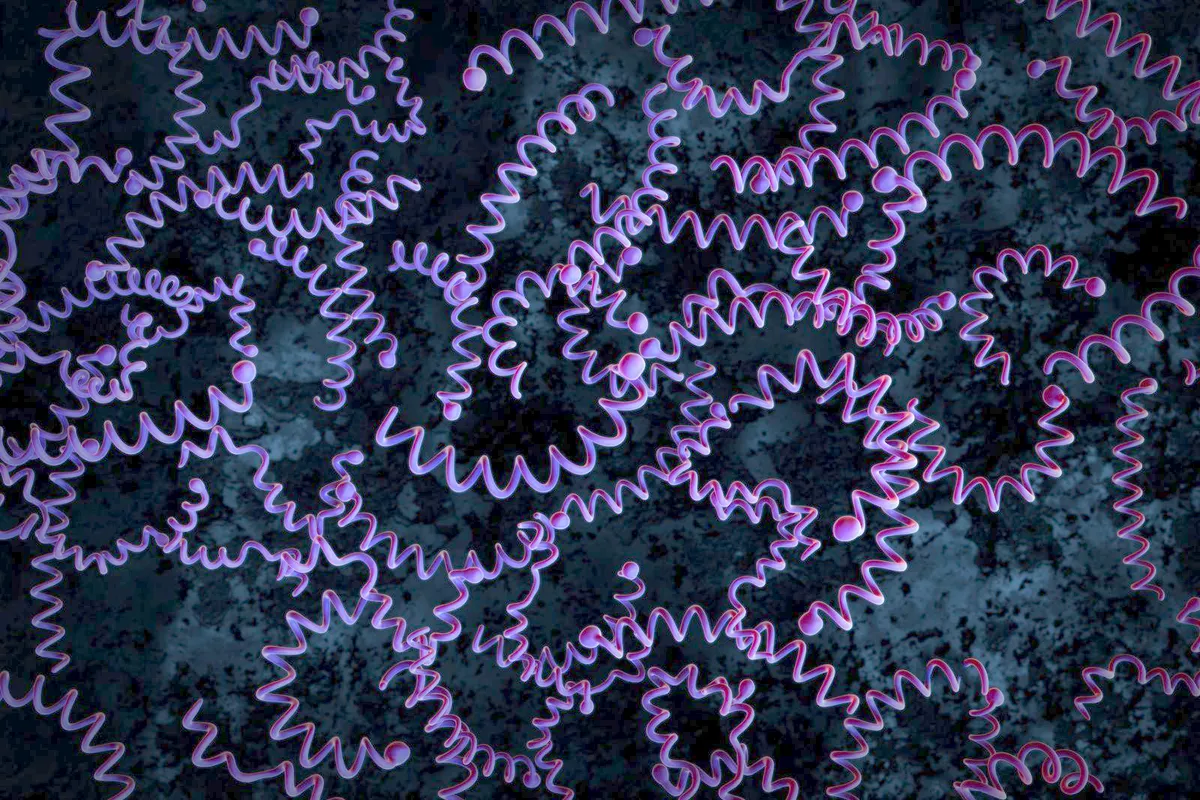
For centuries, syphilis seemed to arrive in Europe with Columbus. The disease swept across the continent in the late 1400s, and historians long debated whether the bacterium Treponema pallidum had been hiding in Europe all along or genuinely jumped ship from the Americas. Now researchers have pushed that question back thousands of years—and found something unexpected.
Scientists analyzing bones from a man who died 5,500 years ago in what's now Colombia discovered he carried a strain of T. pallidum. They sequenced its complete genome, the first time anyone has recovered such ancient DNA from this bacterium so far back in time. The findings, published in Science in January 2026, suggest the bacteria's story is far older and more complicated than anyone realized.
"There's this long evolutionary history of treponemal pathogens that was already diversifying in the Americas thousands of years earlier than previously known," says Elizabeth Nelson, a molecular anthropologist at Southern Methodist University who co-authored the study.
We're a new kind of news feed.
Regular news is designed to drain you. We're a non-profit built to restore you. Every story we publish is scored for impact, progress, and hope.
Start Your News DetoxHow they found it
The discovery was pure accident. Lars Fehren-Schmitz and colleagues at UC Santa Cruz were cataloguing ancient DNA from Colombian remains to trace human migration patterns when they noticed something odd in the tibia of this 5,500-year-old man. The bones came from a rock shelter in the Bogotá savanna and showed no obvious signs of infection—no scarring or deformation that typically marks syphilis, yaws, or bejel in skeletal remains. Yet the DNA was unmistakably there.
When the researchers compared this ancient strain to modern and historical versions of T. pallidum, the genetic distance told a striking story. The 5,500-year-old bacterium didn't match any known subspecies. Instead, it appeared to have diverged from other lineages roughly 13,700 years ago—nearly twice as long ago as the three modern forms of the disease split apart (around 6,000 years ago). This suggests treponemal diseases were far more genetically diverse in the deep past than they are today.
"The Treponema genus co-evolved with humans older than previously suspected," explains Fernando González-Candelas, a geneticist at the University of Valencia. In other words, this wasn't a recent hitchhiker on human civilization. It's been with us through vastly longer stretches of our history.
Why this matters beyond the science
The findings do something less obvious but equally important: they shift how we think about syphilis socially. The disease has long carried moral baggage. People have been stigmatized for carrying it, and historically, blame has been assigned to specific geographic regions or communities—a pattern that persists today.
By revealing that T. pallidum has been evolving alongside humans for over 13,000 years across multiple continents, this research reframes syphilis as what it actually is: a product of deep evolutionary, ecological, and biological conditions that have nothing to do with the character of any group. "Reframing syphilis as a product of localized evolutionary and ecological conditions—rather than a marker of a particular place or people—may represent critical steps toward reducing stigma and improving public health," write anthropologists Molly Zuckerman and Lydia Bailey.
That shift from blame to biology might sound abstract, but it matters practically. Stigma is a real barrier to treatment. The more we understand these diseases as ancient evolutionary phenomena rather than moral failings, the better chance we have at actually helping people.