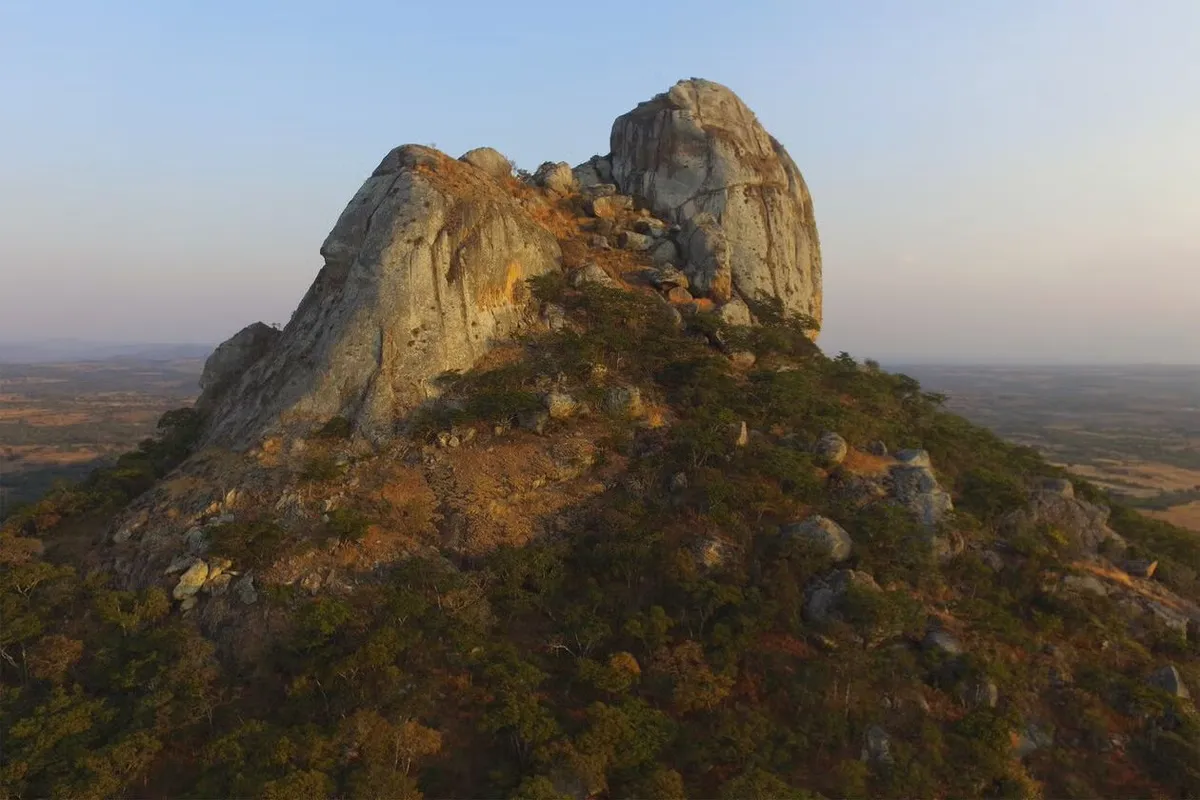
In a rocky shelter at the base of Mount Hora in northern Malawi, archaeologists have uncovered something that rewrites what we know about ritual and belief among Stone Age communities: a queen-size bed of ash containing the cremated remains of a woman who died 9,500 years ago.
This discovery, published in Science Advances, is the oldest known evidence of intentional cremation in Africa — and it suggests something profound about the people who lived there. They didn't just survive. They grieved in elaborate, labor-intensive ways.
What the ash revealed
The site, called Hora 1, was first identified in the 1950s as a hunter-gatherer burial ground. Recent excavations exposed a thick layer of ash containing the fragmented, calcined bones of a single individual. Using radiocarbon dating and forensic analysis, researchers determined she was a middle-aged woman, just under five feet tall, who was physically active before her death. Microscopic cuts on her arms and legs suggest her flesh may have been removed before or during the cremation — possibly as part of a funerary ritual.
We're a new kind of news feed.
Regular news is designed to drain you. We're a non-profit built to restore you. Every story we publish is scored for impact, progress, and hope.
Start Your News DetoxThe researchers excavated the ash remains at the site known as Hora 1. Credit: Grace Veatch
What makes this remarkable is the sheer effort involved. "Cremation is very rare among ancient and modern hunter-gatherers, at least partially because pyres require a huge amount of labor, time and fuel," explains Jessica Cerezo-Román, the study's lead author and an anthropologist at the University of Oklahoma. The researchers estimate that at least 66 pounds of deadwood and grass were burned to reduce this woman's body to ash — a process that would have taken hours or days of sustained fire-tending.
For a transient community, constantly moving to hunt and gather, this was an extraordinary commitment. Yet the evidence suggests people returned to this same spot repeatedly to perform this ritual. That persistence hints at something deeper: a belief system complex enough to justify the sacrifice.
A puzzle with missing pieces
The archaeologists remain puzzled by certain details. The woman's skull is missing, leading them to hypothesize it was removed as part of the funeral rites. Her bones were found in two distinct clusters, suggesting her body was repositioned during the cremation. These gaps in the record are part of what makes the discovery so intriguing — we're seeing fragments of a ritual we can only partially reconstruct.
Before this finding, the earliest known evidence of burned human remains in Africa dated back around 7,500 years. The world's oldest cremation evidence overall comes from Lake Mungo in Australia (roughly 40,000 years old), and the oldest known in situ funeral pyre with adult remains is in Alaska, dating to around 11,500 years ago. This Malawian site fills a significant gap.
As anthropologist Joel Irish notes, the timing and context make this discovery especially striking: "That it is such an early date, and that they would have been transient as hunter-gatherers makes it more amazing. They clearly had advanced belief systems and a high level of social complexity at this early date."
What we're seeing in that ash is not just the remains of one woman, but evidence that human communities were already investing in meaning-making, ritual, and the memorialization of loss — hallmarks of the symbolic thought that defines us as a species. The next phase of research will likely focus on understanding the broader context of Hora 1 and whether similar cremation sites exist nearby.