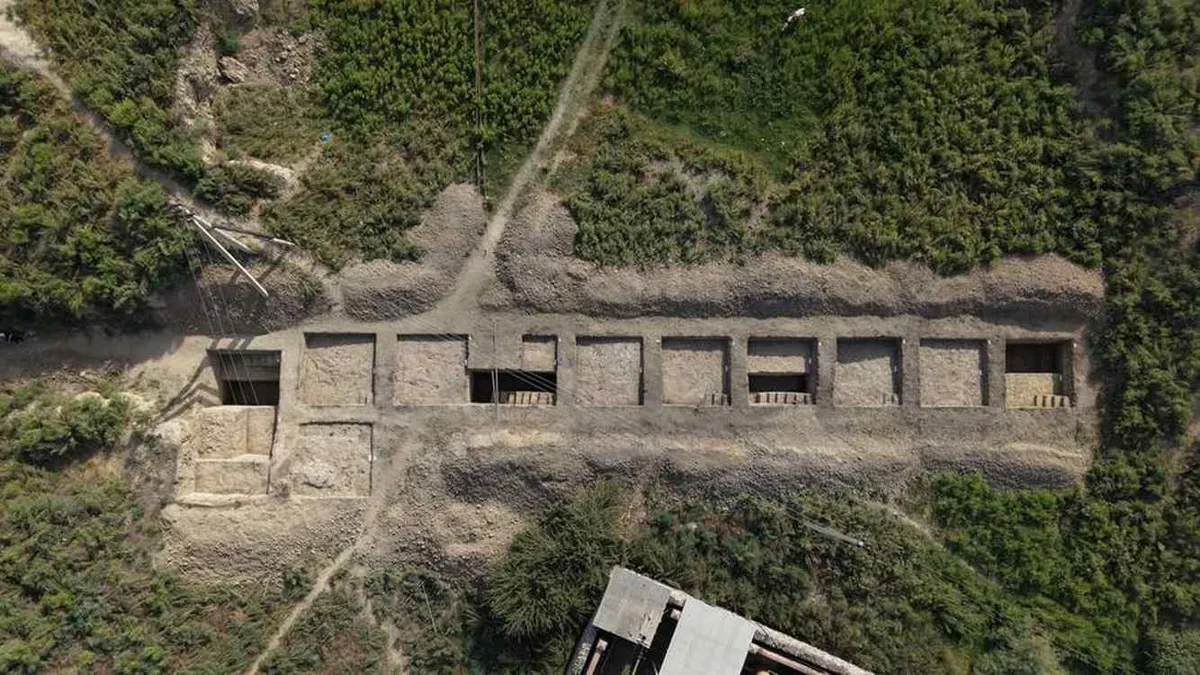
Archaeologists digging in the Fergana Valley have uncovered standing sections of the walls that once enclosed Kuva, a city that spent 1,300 years as one of the Silk Road's most vital crossroads.
The discovery matters because Kuva wasn't just another trading post. Between the 3rd century BCE and the 10th century CE, it sat at the exact point where goods stopped being theoretical and became real — where Chinese emperors' silk and jade met the legendary "Heavenly Horses" from the surrounding valley, animals so prized that dynasties fought to control access to them.
A joint team from China's Luoyang Archaeological Institute and Fergana State University has spent two years excavating the 110,000 square meter site. Beneath the soil, they've found the bones of an entire city: palace foundations, gates, homes, streets arranged in patterns that tell stories about how people organized themselves, and workshops where craftspeople turned raw materials into goods worth trading across continents.
We're a new kind of news feed.
Regular news is designed to drain you. We're a non-profit built to restore you. Every story we publish is scored for impact, progress, and hope.
Start Your News DetoxBut the walls themselves are the real prize. They've been rebuilt multiple times — evidence that Kuva changed hands between Achaemenid Persians, Macedonians, Parthians, Sogdians, and Persian dynasties. Each civilization left its mark in brick and mortar. "The construction details help us establish reliable timelines," explains Liu Bin, who leads the Chinese side of the expedition. "We can see architectural styles shift as different groups took control."
This matters beyond academic curiosity. The Silk Road wasn't a single highway but a patchwork of routes and relationships. Understanding when Kuva was powerful and when it declined tells us when trade flowed freely and when it choked. It shows us which civilizations could keep routes open and which couldn't. It's the difference between a thriving city and an abandoned one.
The team plans to move into the palace areas next year, looking for more details about how the city functioned — who lived there, what they made, how they governed. Each layer of excavation adds another thread to the story of how goods, ideas, and yes, horses, moved across the ancient world.