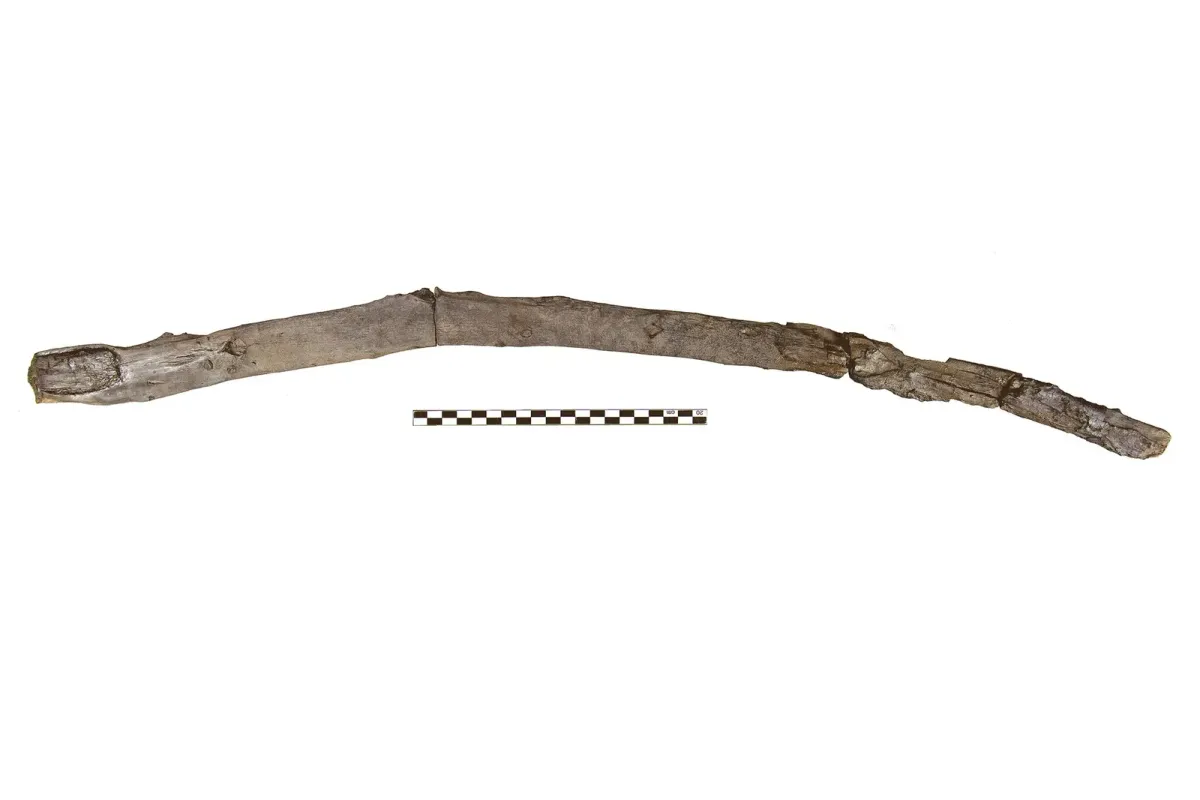
A stick. Two pieces of wood, really — one about 2.7 feet long, the other just a few inches — pulled from the earth in southern Greece after lying buried for 430,000 years. To most people, they'd look like nothing much. But to archaeologists, they represent something rare enough to reshape how we understand our ancient ancestors.
These are likely the oldest handheld wooden tools ever discovered. They were found at Marathousa 1, a mining site in Greece's Megalopolis basin, excavated between 2013 and 2019 alongside 142 other pieces of wood that survived an improbable journey through deep time.
Why These Sticks Matter
Wood doesn't usually last. It rots, it burns, it crumbles into nothing. Finding wooden artifacts older than a few thousand years is genuinely uncommon outside of places like Egypt, where the dry climate acts as a natural preservative. The wet, loose sediments at Marathousa 1 created a different kind of time capsule — one that protected these fragments during a period of extreme weather nearly half a million years ago, when early Neanderthals or a species called Homo heidelbergensis may have sheltered in the area.
We're a new kind of news feed.
Regular news is designed to drain you. We're a non-profit built to restore you. Every story we publish is scored for impact, progress, and hope.
Start Your News DetoxWhen researchers examined the two most promising pieces under a microscope, the evidence of intentional shaping became clear. The longer tool, made from alder wood, shows signs of careful modification. Its wear patterns suggest it was used to dig through mud — possibly to plant or harvest food, though its discovery near elephant bones raises another possibility. Could our ancestors have used it to process a carcass? Katerina Harvati, a paleoanthropologist at the University of Tübingen who co-authored the research, is cautious. "I've never tried to cut up an elephant carcass," she notes, "so I don't know."
The second tool, made from willow or poplar, is even more puzzling. Someone stripped away its bark with clear intention, but for what purpose remains a mystery.
These aren't the oldest wooden artifacts ever found — that distinction belongs to interlocking logs discovered in Zambia in 2019, dating to around 476,000 years ago. But those may have been part of a structure rather than a handheld tool. The Greek pieces are different: they're evidence of deliberate craftsmanship, of someone picking up wood and shaping it for a specific task.
Not everyone is equally convinced of the significance. Some archaeologists note that without knowing exactly what these tools were used for, it's hard to fully grasp their importance. But others, like Maeve McHugh at the University of Birmingham, see the find as a genuine window into how our ancestors lived — a rare glimpse into the everyday ingenuity of people living half a million years ago.
The discovery hints at a deeper story: our ancestors weren't just surviving, they were problem-solving, adapting wood to their needs. What comes next is the harder work of understanding exactly what those needs were.