Four astronauts on NASA's Artemis II mission are now heading home. They just completed a dramatic lunar fly-by. This journey took them further from Earth than any other humans before.
As they traveled behind the Moon, the crew lost contact with Earth for 40 minutes, as expected. Once communications were back, astronaut Christina Koch said, "It's so great to hear the Earth again."
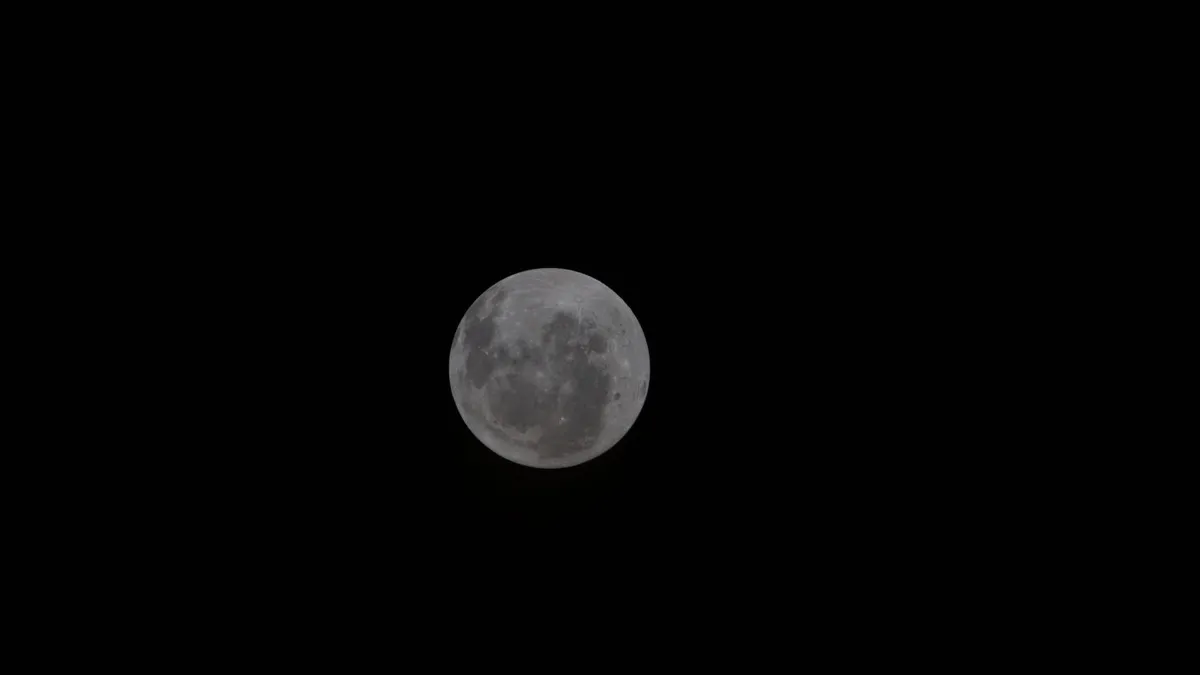
Soon after, the spacecraft got within a few thousand miles of the Moon's surface. The crew then saw a total solar eclipse. The Moon blocked the Sun's light, a sight never before seen from the Moon's perspective.
We're a new kind of news feed.
Regular news is designed to drain you. We're a non-profit built to restore you. Every story we publish is scored for impact, progress, and hope.
Start Your News DetoxBreaking Records and Seeing the Unseen
The Artemis II spacecraft, Orion, broke the record for human travel on Monday at 1:56 PM EDT (6:56 PM BST). It surpassed the 1970 Apollo 13 mission's record of 248,655 miles (400,000 km).
Canadian astronaut Jeremy Hansen humbly acknowledged this achievement. He said they honor past space explorers as they go further than humans ever have.
As the spacecraft neared the Moon, the astronauts began recording its surface. They used digital cameras, made sketches, and recorded audio descriptions.
The mission did not plan to land on the Moon. Instead, it flew around its far side, which is never visible from Earth. Satellites have photographed this side before. However, the astronauts were the first humans to see some of its vast craters and lava plains.
Capturing the Lunar Landscape
The crew's equipment included two professional digital SLR cameras. One had a wide-angle lens for broad scenes, and the other had a powerful zoom for fine details. They also had a mirrorless camera with a standard lens, designed to show views similar to the human eye.
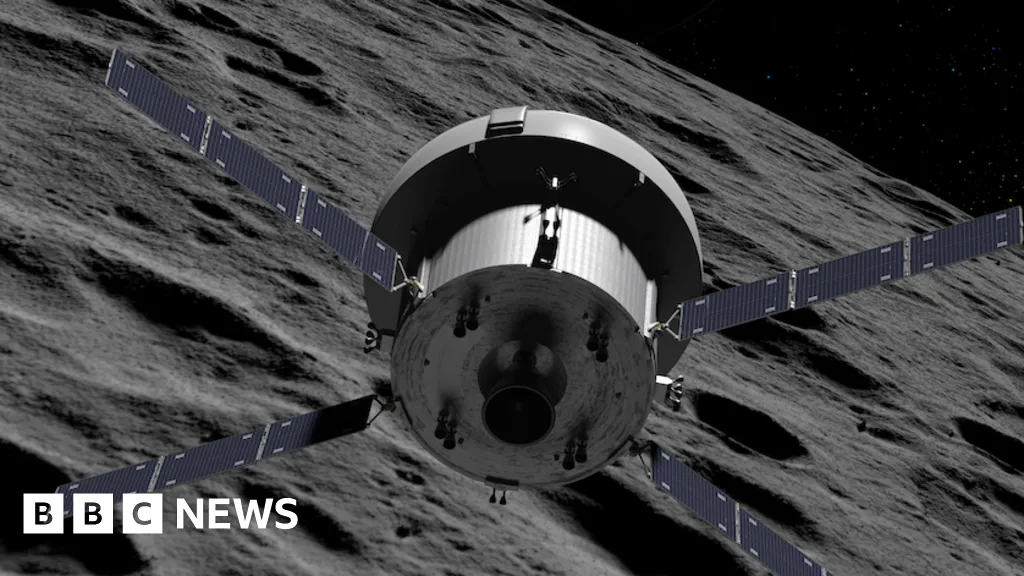
Small video cameras on Orion's four solar array wings recorded continuous views of the Moon's surface. Each astronaut also carried a smartphone to film daily life inside the capsule. NASA plans to share this imagery later in the mission or after the spacecraft returns.
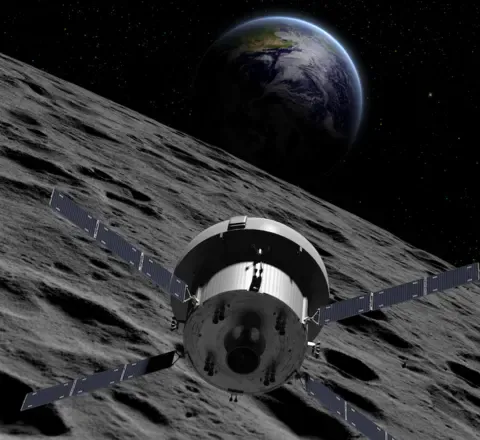
During the six-hour flyby, the crew dimmed Orion's internal lights. This reduced window reflections and improved their view. NASA's science team says the audio recordings are as important as the images. Human eyes can spot subtle colors, contrasts, and textures that spacecraft images might miss.
Dr. Kelsey Young, NASA's lunar science lead, noted that trained observers can detect faint shades and geological features on the far side. These become clearer with prolonged viewing. She explained that human eyes and brains are very sensitive to subtle changes in color, texture, and surface characteristics.
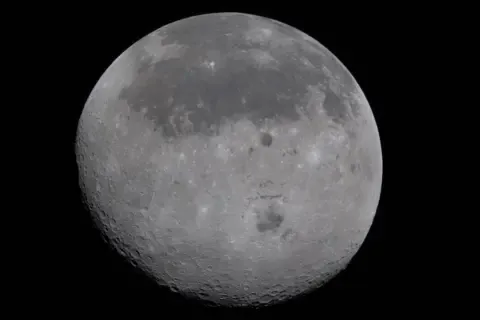
The Moment of Silence
The most anxious part of the night was when Orion slipped behind the Moon. Its radio and laser connections to Earth were cut for about 40 minutes. This left the four astronauts alone on the lunar far side.
Just before this "loss of signal," Pilot Victor Glover sent a message to Earth. He said they would still feel Earth's love and that they loved everyone from the Moon. He promised they would "see you on the other side."
For the next 40 minutes, mission controllers, families, and viewers waited. They watched the mission clock tick down until contact was expected to be restored.
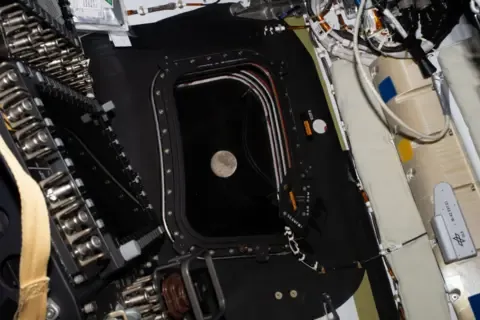
When the signal finally returned, there was a long silence. Then, Christina Koch's voice crackled back to mission control, echoing the Apollo era. She spoke of exploration, building ships, visiting again, and constructing science outposts. She also mentioned driving rovers, doing radio astronomy, founding companies, and bolstering industry. Ultimately, she said, "We will always choose Earth. We will always choose each other."
A Glimpse of the Sun's Corona
Around 8:35 PM (1:35 AM BST Tuesday), the Sun began to change as seen from the capsule. The Moon moved to eclipse it. What remained was a portion of the Sun's shimmering atmosphere, called the corona. This part is usually hidden by glare.
Glover was deeply moved by the sight. He described the amazing brightness where the sunset was still vivid, with a distinct Earth shine.
For NASA, "Moon Day" was more than just a show. It was a crucial test for the Orion spacecraft's systems for future missions. Artemis II is a test flight for bigger goals. These include landing humans on the Moon again, for the first time since 1972, and eventually sending people to Mars.
Sensors on Orion recorded how its power and thermal systems handled nearly an hour without direct sunlight. They also tracked rapid temperature swings during the eclipse.
Orion completed its closest pass by the Moon, endured isolation, witnessed an eclipse, and used lunar gravity to return towards Earth. The crew now has several quieter days of checks and experiments. Then, they face a final challenge: a fiery plunge through the atmosphere at nearly 25,000 mph. This will end with a parachute splashdown in the Pacific, testing the capsule's heat shield and recovery systems.