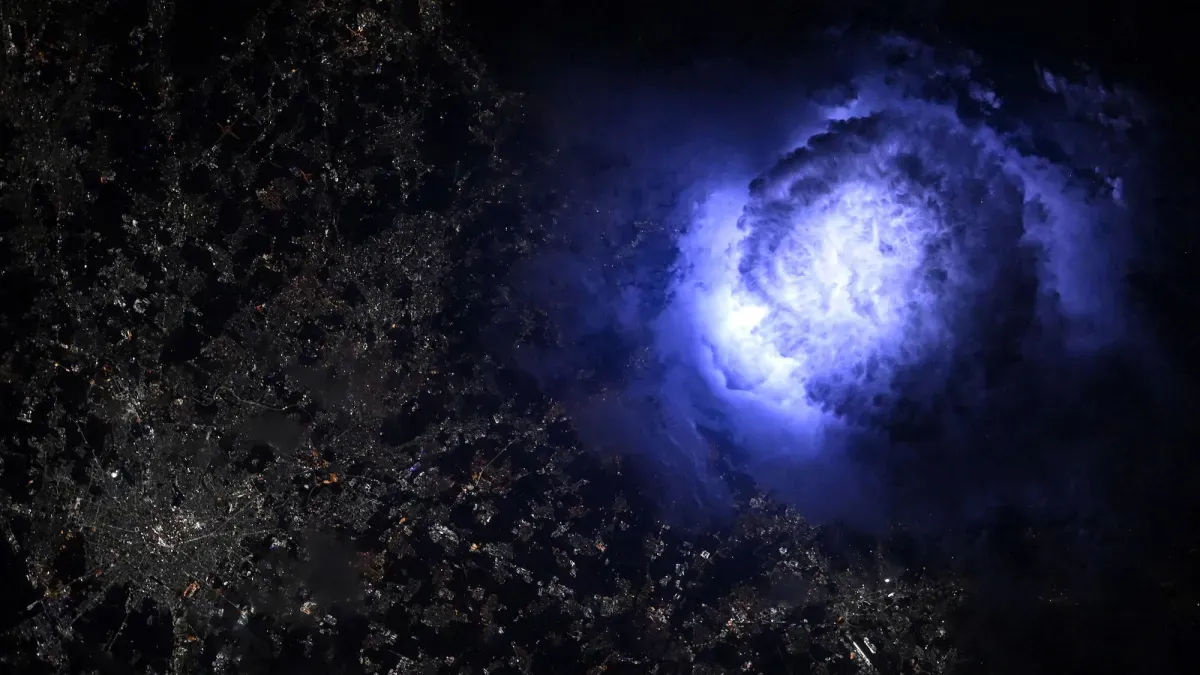
On July 1, 2025, NASA astronaut Nichole Ayers was 250 miles above Milan when she captured something most of us will never see: a lightning bolt from above. The image shows a brilliant blue discharge illuminating the inside of a storm cloud, a perspective that's changing how scientists understand one of Earth's most violent phenomena.
Lightning is familiar enough from the ground — that sudden crack of superheated plasma that tears through air molecules in milliseconds. But from orbit, it tells a different story. What looks like a single bolt from below is actually part of a complex electrical system reaching deep into the upper atmosphere. Those details matter, because they're the ones that improve weather forecasts, protect aircraft from electrical hazards, and help us understand where dangerous storms will develop.
"Storm observations from the space station help scientists study Earth's upper atmosphere, which can improve weather models and protect communication systems and aircraft," NASA noted after Ayers shared the image. The ISS crew photographs Earth constantly — not for the beauty of it (though that's a bonus), but because this vantage point captures patterns invisible from the ground. They track how storms evolve, how human activity reshapes landscapes, and how natural disasters unfold in real time.
We're a new kind of news feed.
Regular news is designed to drain you. We're a non-profit built to restore you. Every story we publish is scored for impact, progress, and hope.
Start Your News DetoxAyers' photo is part of a larger mission to understand lightning's actual impact. Those electrical discharges kill roughly 320 million trees every year — some by direct strike, others by triggering wildfires that spread across continents. Better models of how and where lightning forms mean better predictions of where those fires might ignite, which means faster response and fewer lives lost.
What's striking about this image isn't just its clarity. It's that a single photograph from orbit can reshape how scientists think about storms. The more we observe lightning from above, the more we realize how much we've been missing from ground level. That gap between what we thought we knew and what we're actually learning is where progress happens.