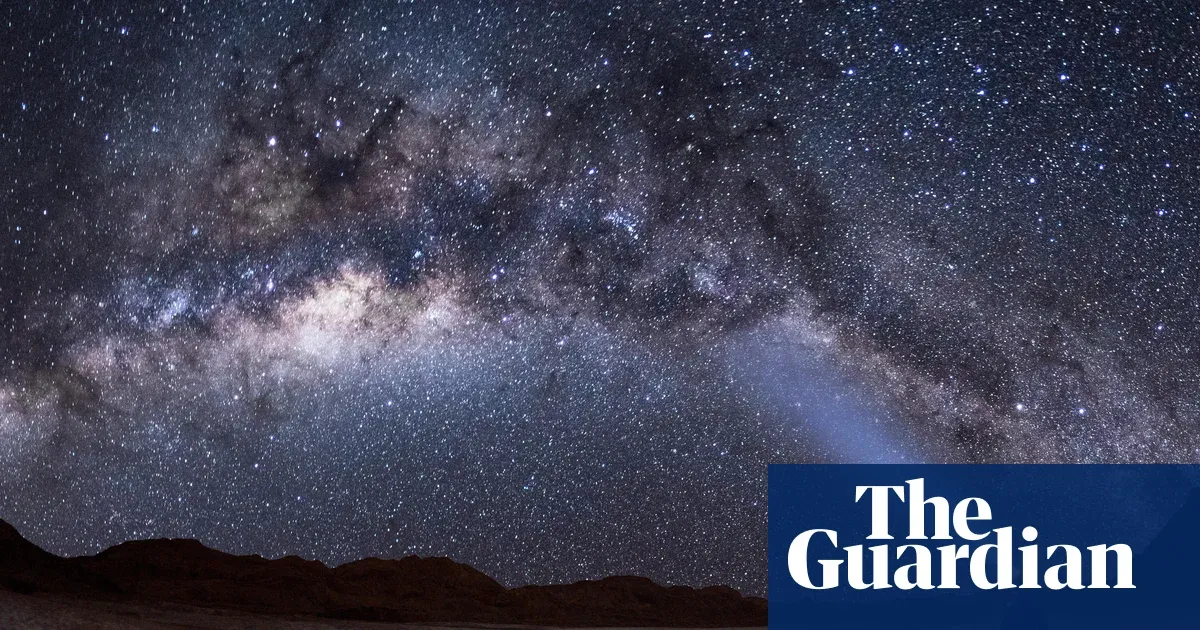
The Atacama Desert holds something rare: skies so clear that astronomers can see deeper into space than almost anywhere else on Earth. This week, those skies got a reprieve.
Chile's environmental authority has formally withdrawn approval for INNA, a $10 billion green hydrogen and ammonia facility that would have sprawled across 3,000 hectares near some of the world's most powerful telescopes. The project included a port, transport links, and three solar plants—infrastructure that would have brought light pollution, vibrations, dust, and atmospheric turbulence to one of humanity's most valuable observation sites.
The facility was planned just 11.6 kilometers from the European Southern Observatory's Paranal Observatory, home to the Very Large Telescope (VLT). That telescope alone has contributed to three Nobel Prize–winning discoveries. Nearby, the Extremely Large Telescope (ELT) is still under construction—when finished, it will be the largest and most powerful telescope ever built, capable of detecting Earth-like exoplanets that might harbor life.
We're a new kind of news feed.
Regular news is designed to drain you. We're a non-profit built to restore you. Every story we publish is scored for impact, progress, and hope.
Start Your News DetoxAstronomers saw the threat clearly. In December, an open letter led by 2020 Nobel laureate Reinhard Genzel urged the Chilean government to reject INNA. The scientific community argued that industrial activity at that scale would degrade the very conditions that make the Atacama irreplaceable for ground-based astronomy. After nearly a year of environmental review, the company behind the proposal, AES Andes, withdrew it.
"This cancellation means that the INNA project will no longer have a negative impact on the Paranal Observatory," said Itziar de Gregorio, the ESO's representative in Chile. But she added a quiet note of realism: the work to protect these skies isn't finished.
This is a win for the astronomical community—a moment when sustained advocacy actually changed the outcome. But it's also a reminder that the world's clearest skies face ongoing pressure from development, energy projects, and light pollution creeping in from expanding settlements. The fight to keep them dark continues.