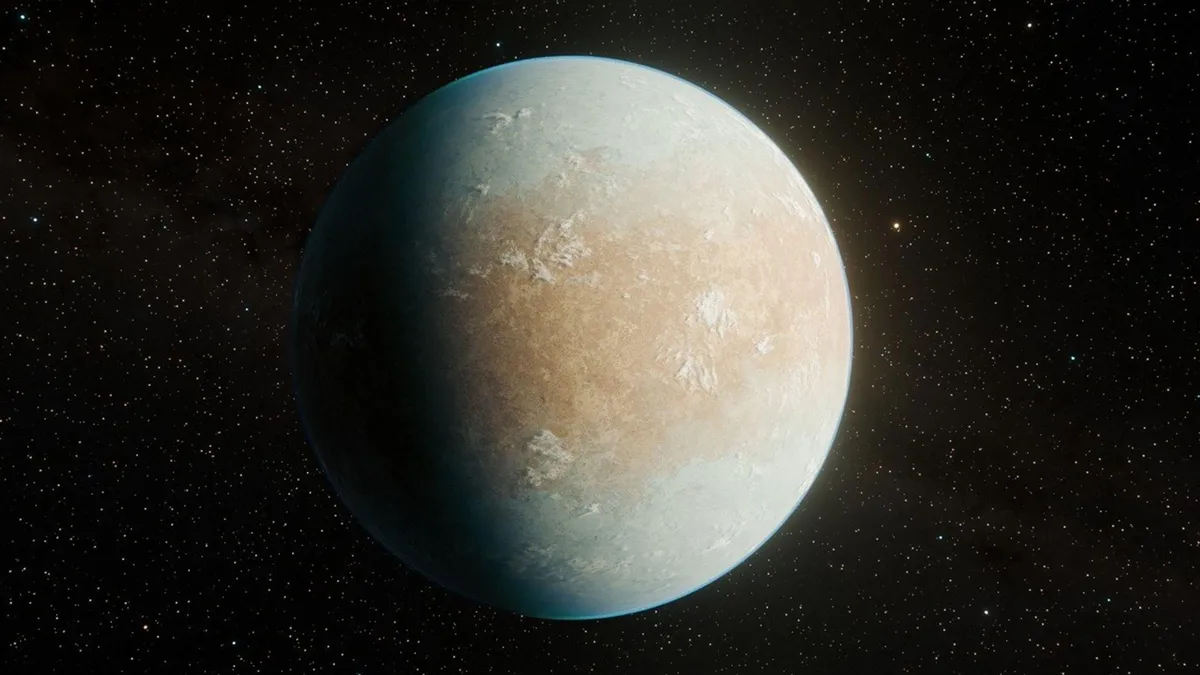
Astronomers have spotted something genuinely uncommon: a rocky planet about Earth's size orbiting a Sun-like star 146 light-years away, completing one lap around its host star roughly every year—just like we do. The catch is brutal. This candidate world, HD 137010 b, sits so far from its dimmer star that surface temperatures could plunge to minus 90 degrees Fahrenheit, colder than Mars.
The discovery emerged from archival data collected by NASA's Kepler Space Telescope before it shut down in 2018. What makes HD 137010 b stand out is its orbital arrangement. Most Earth-sized exoplanets orbit much closer to their stars, completing a year in days or weeks. A planet with an Earth-like orbital period around a nearby, Sun-like star is rare enough to notice. Rarer still: it passes directly in front of its star from our vantage point, creating a miniature eclipse that lets astronomers study it in detail.
But here's the problem. The planet receives less than one-third of the energy Earth gets from the Sun. Its host star, HD 137010, is both cooler and dimmer than our own. That energy shortfall translates into a frozen world—potentially even colder than the Red Planet's average of minus 85 degrees Fahrenheit.
We're a new kind of news feed.
Regular news is designed to drain you. We're a non-profit built to restore you. Every story we publish is scored for impact, progress, and hope.
Start Your News Detox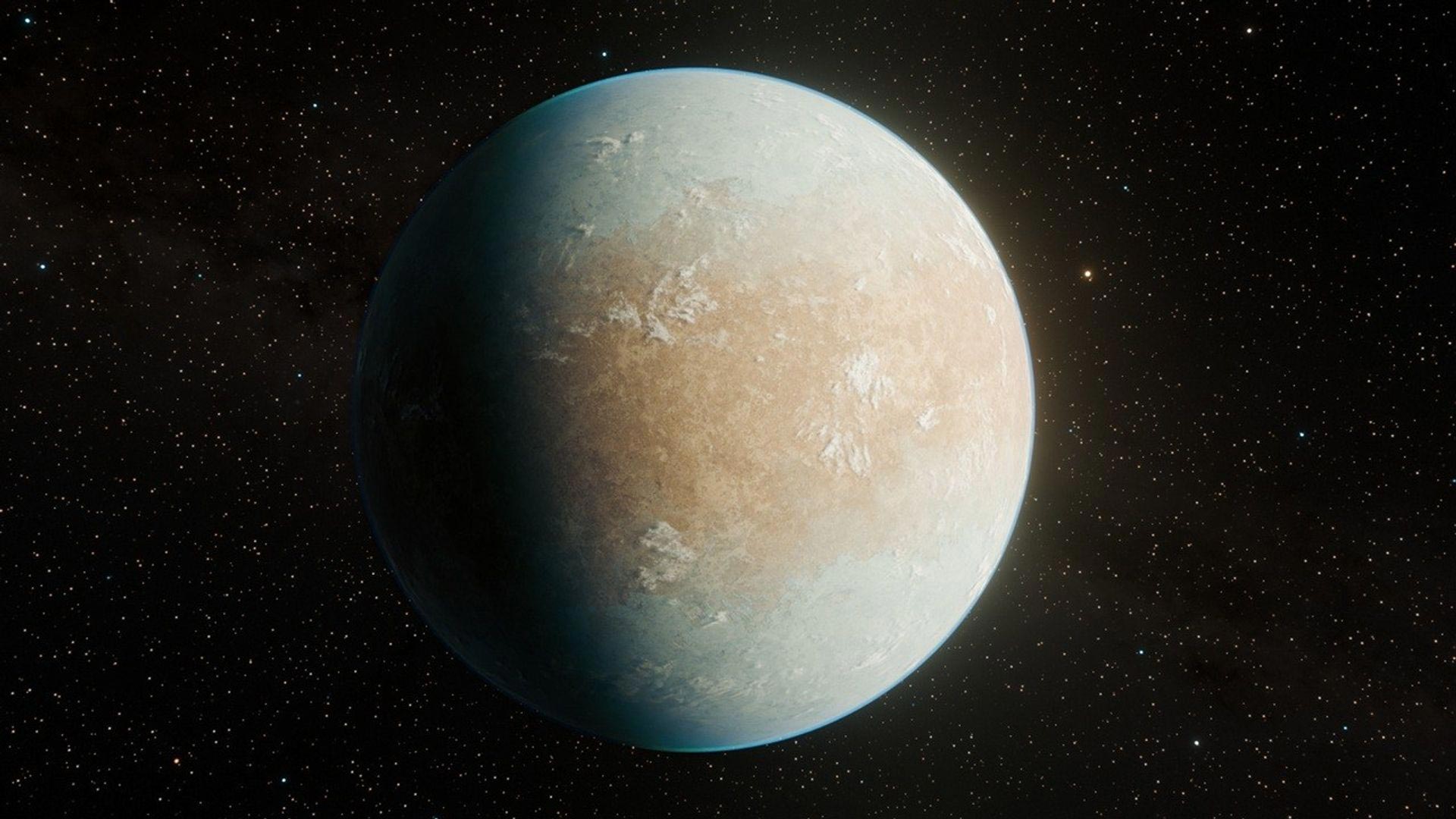
An artist's concept of HD 137010 b, a rocky planet slightly larger than Earth orbiting a Sun-like star about 146 light-years away. Credit: NASA/JPL-Caltech/Keith Miller (Caltech/IPAC)
Still a candidate, not yet confirmed
HD 137010 b remains officially a "candidate." Astronomers spotted just one transit—a single crossing in front of its star—during Kepler's K2 mission. From that single 10-hour transit, researchers calculated the planet's orbital period by comparing it against orbital models. The precision was impressive for a one-off detection, but one sighting isn't enough. Astronomers need to watch the planet cross its star multiple times to rule out false alarms.
The problem: planets in Earth-like orbits transit rarely. A planet hugging its star might cross every few days. HD 137010 b, sitting far out like we do, might not cross again for months or years. Confirmation will likely require data from NASA's TESS satellite or the European Space Agency's CHEOPS, or possibly wait for the next generation of space telescopes.
There's a sliver of hope for habitability, though. The research team estimates a 40% to 51% chance—depending on how generously you define "habitable"—that the planet actually sits within its star's habitable zone. The key would be an atmosphere much thicker in carbon dioxide than Earth's, which could trap enough heat to allow liquid water. On the flip side, there's roughly a 50-50 chance it lies beyond the habitable zone entirely, locked in permanent winter.
For now, HD 137010 b remains a tantalizing maybe: an Earth-sized world in a familiar orbit, orbiting a familiar-looking star, in a place that might—or might not—support life. Confirmation will take patience.