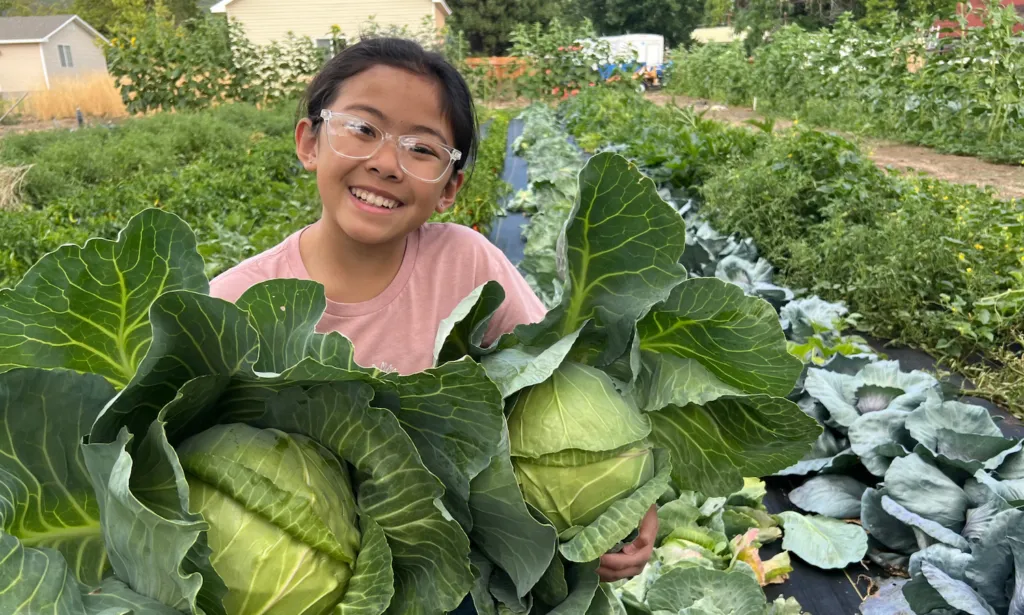
David Chen isn't just growing over 600 types of fruits, vegetables, and herbs at Zoe's Garden in Layton, Utah. He's cultivating something far more ambitious: an entire philosophy on how to, you know, survive.
His journey started, as many do, with necessity. Arriving in the U.S. from China in 1982 with his family, little money, and even less English, the question wasn't philosophical. It was simply: "How can we sustain ourselves?"
Chen didn't go to college. His education came from working restaurant jobs and later taking in his younger brother. It was a masterclass in making ends meet, a degree in pure grit.
We're a new kind of news feed.
Regular news is designed to drain you. We're a non-profit built to restore you. Every story we publish is scored for impact, progress, and hope.
Start Your News DetoxHe eventually landed in landscaping, growing poinsettias. The catch? Pests. The solution? Pesticides. The problem? They made him sick. It took his wife asking if they were going to start a family, and then adding the rather pointed caveat, "Well, only if you stop killing yourself," for him to realize things needed to change. Because apparently that's where we were.
So he ditched the chemicals and started growing vegetables in greenhouses. When his first daughter, Zoe, was born, the farm got its name. A customer later informed him that Zoe means "abundant life" in Greek, which, if you think about it, is both impressive and slightly terrifying in its serendipity.
More Than Just Produce
Zoe's Garden quickly became a cornerstone of Utah's local food movement, a true community-supported agriculture (CSA) hub. Today, it supplies everything from farmers' markets to local restaurants. But the real magic happens at home.
His daughters are involved in every aspect of the farm. And they've learned a thing or two about value. Take the time a customer tried to haggle a $4 cantaloupe down to 50 cents with his then six-year-old. Her response? "If you can’t afford it, I’m more than happy to give it to you." Then she launched into a detailed explanation of all the work that went into growing it. Chen, naturally, was beaming. "I didn’t teach her that," he said, probably still trying to figure out where she picked up that level of sass.
Last fall, the girls even hosted a farm day, inviting customers to harvest their own produce. Chen recalls an older visitor, walker and all, happily picking flowers. "Everyone was really, really happy," he noted.
For Chen, these aren't just feel-good moments. They're proof that farming isn't just about food; it's about forging relationships. It's about connecting people to their sustenance, growers to consumers, and communities to the very systems that keep them going. It's about maximizing our ability to sustain ourselves, and then sharing that idea, one perfectly ripe vegetable at a time.