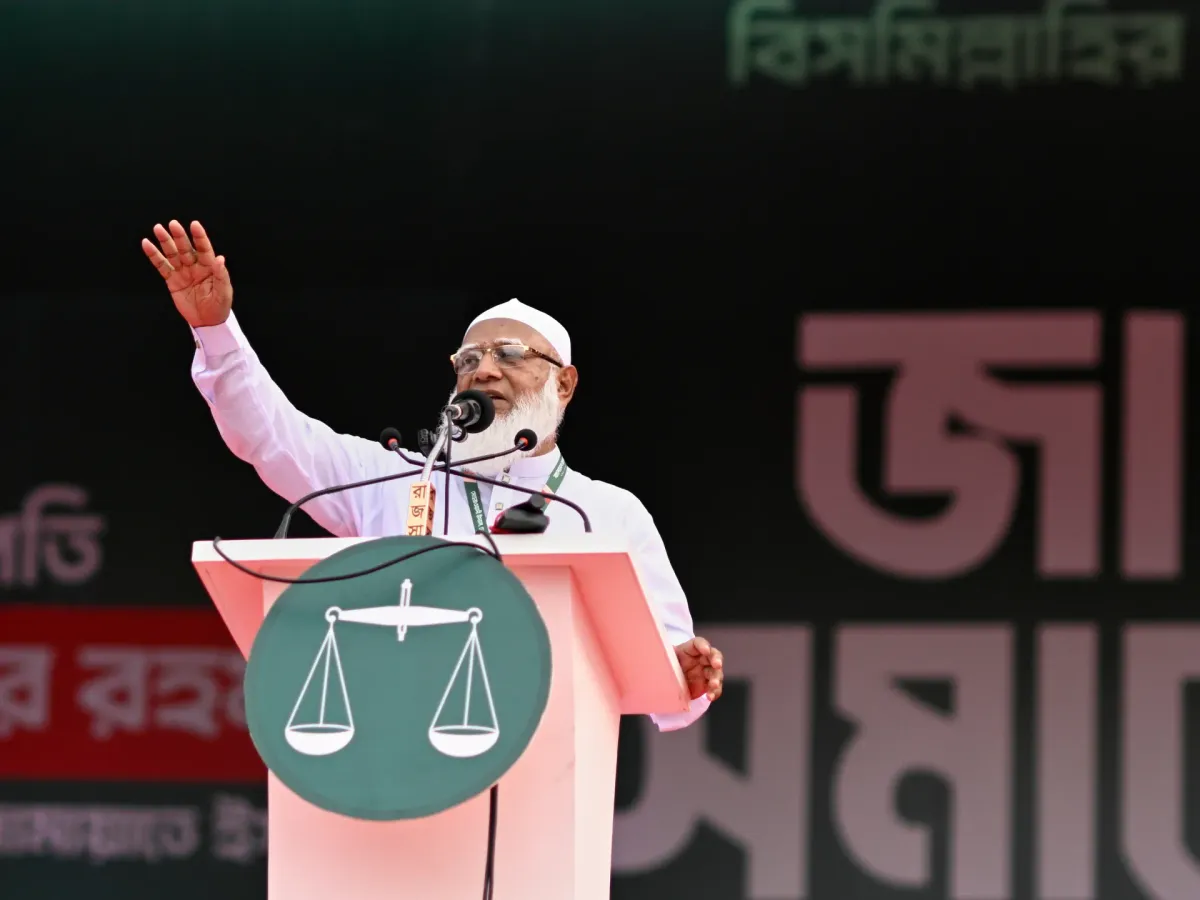
On a Wednesday evening in Dhaka, Shafiqur Rahman, the chief of Bangladesh's Jamaat-e-Islami party, laid out an economic vision that would quadruple the country's GDP to $2 trillion by 2040. The 67-year-old promised investment in technology-driven agriculture, manufacturing, IT, education and healthcare — a deliberate pivot away from how his party has been defined for decades.
For years, Jamaat faced a credibility problem. Critics portrayed it as too doctrinally rigid to govern a young, diverse population seeking modern progress. But something has shifted. European diplomats are now meeting openly with Rahman. Indian officials are seeking engagement. American diplomats have signaled interest in building relationships. A year ago, these meetings would have been unthinkable.

The Opening
The timing matters. Last July's uprising that removed Prime Minister Sheikh Hasina didn't just end one government — it fractured Bangladesh's entire political order. For decades, the country's politics had revolved around a familiar rivalry: Hasina's Awami League versus the Bangladesh Nationalist Party. That duopoly is now broken. With the Awami League sidelined and the BNP standing alone as the frontrunner, a political vacuum opened. Jamaat, long pushed to the margins, moved in.
We're a new kind of news feed.
Regular news is designed to drain you. We're a non-profit built to restore you. Every story we publish is scored for impact, progress, and hope.
Start Your News DetoxRahman's appeal extends beyond traditional party faithful, particularly among younger supporters who call him "dadu" — grandfather. One voter in his Dhaka constituency described him simply: "He is a patriot. Whether as prime minister or opposition leader, he will lead us well." It's a striking statement about a man whose party was once considered politically untouchable.
Economists in Dhaka remain skeptical about the manifesto's fiscal details. The promises are sweeping; the mechanics are vague. But analysts suggest this isn't really about the numbers. For Jamaat's leadership, the manifesto signals something else: that a party rooted in Islamic doctrine sees no contradiction between those foundations and the modern future Bangladeshis want to build.
Whether that reinvention is genuine or carefully packaged will shape both Rahman's leadership and Jamaat's future. The February 12 election will test whether voters believe the transformation is real.