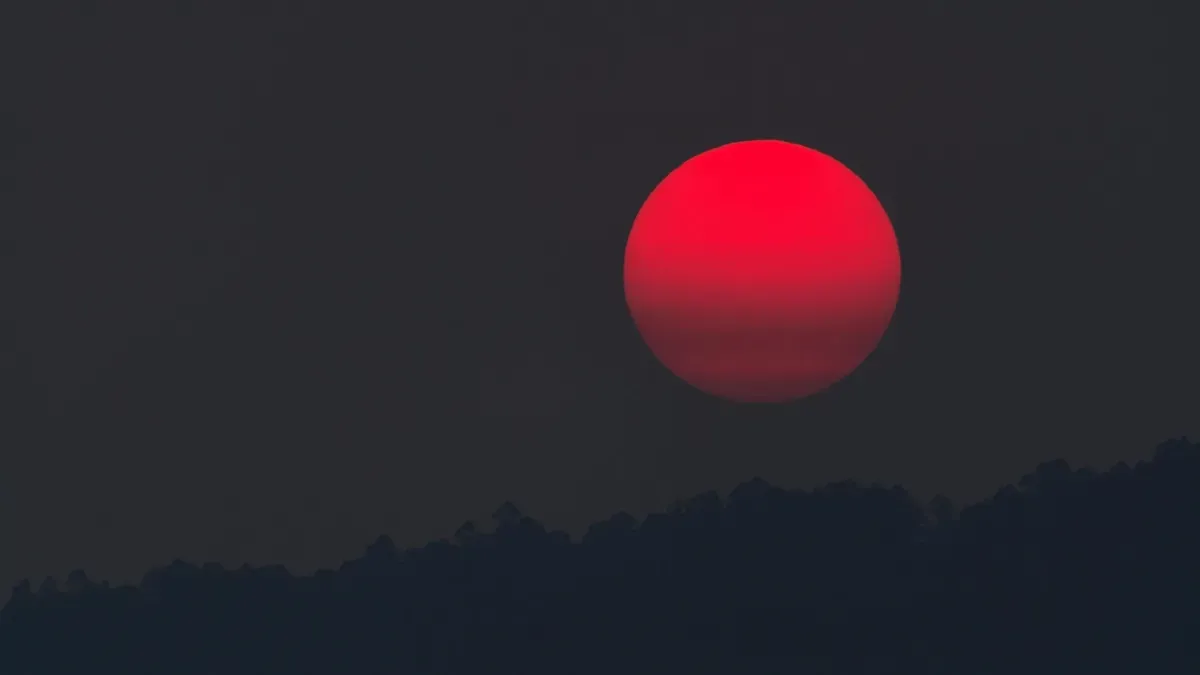
On March 3, 2026, the moon will slip into Earth's shadow and turn deep crimson for about an hour and a half. It's a lunar eclipse—what some call a blood moon—and roughly 6 billion people will have a clear view from where they stand. No special glasses needed. No equipment. Just you, the sky, and a moment that won't happen again until 2028.
Here's what's actually happening: Earth will position itself directly between the sun and the full moon, blocking direct sunlight. But the moon won't go dark. Instead, Earth's atmosphere bends sunlight like a lens, filtering out the blue wavelengths and letting mostly red light bend around our planet onto the lunar surface. That's what gives it the deep crimson glow.
A rare window of time
The total eclipse will last roughly 82 minutes—long enough to step outside, watch it unfold, maybe grab someone to experience it with you. Lunar eclipses happen every one to three years somewhere on Earth, but this particular one is visible from a massive swath of the planet. The last time most of us saw one clearly was recent enough to remember. The next one after March 2026 won't arrive until 2028.
We're a new kind of news feed.
Regular news is designed to drain you. We're a non-profit built to restore you. Every story we publish is scored for impact, progress, and hope.
Start Your News DetoxThere's something grounding about a lunar eclipse. Unlike a solar eclipse, which requires specific geography and protective gear, this one is democratic. You just need clear skies and a moment to look up. The comment sections filling with people marking their calendars—some joking about staying indoors (Twilight references, naturally), others hoping it falls on a birthday and brings new powers—show what this event really is: a shared experience in an increasingly fragmented world.
March 3, 2026 is marked. The moon will do what it's done for billions of years. And for 82 minutes, billions of people will pause and watch the same thing together.