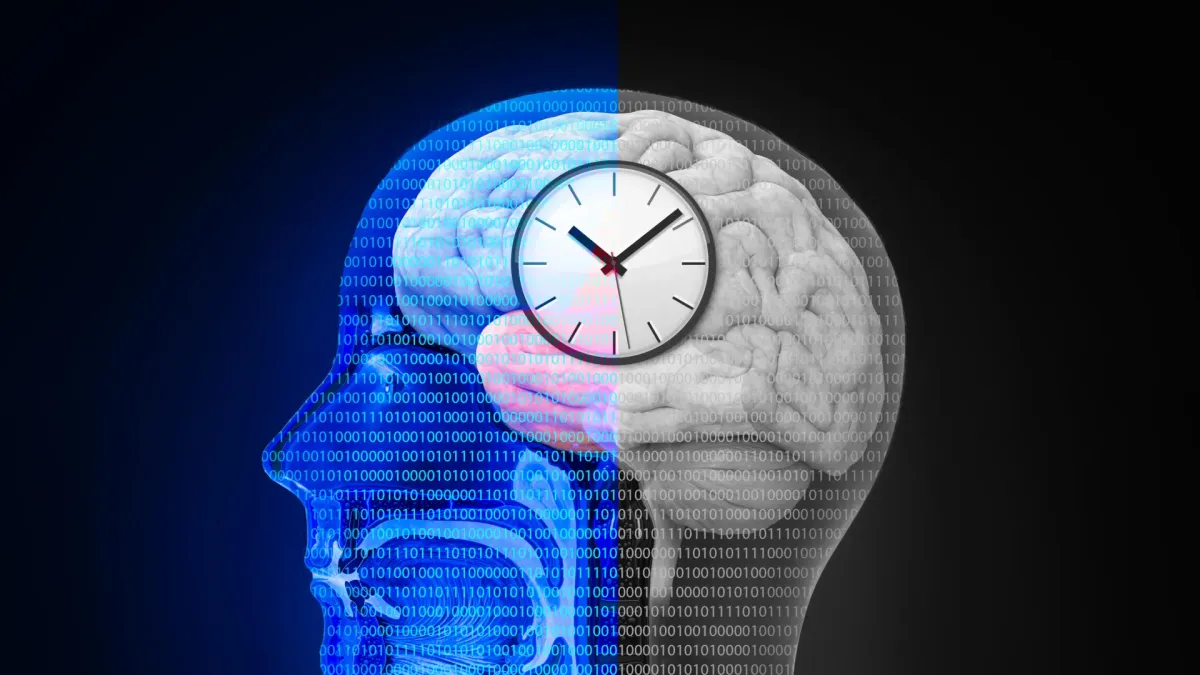
Your brain doesn't process everything at the same speed. Some regions hold onto information for a fraction of a second; others work across longer stretches of time. This isn't a flaw — it's how your brain actually works. And researchers have just figured out that the way these different regions sync up might explain why cognitive abilities vary so much from person to person.
Linden Parkes, a psychiatrist at Rutgers, led a study that mapped the brains of 960 people, tracing how information moves through neural networks. What they found was elegant: the brain's white matter — the wiring that connects regions — essentially choreographs these timing differences. Some regions operate on what neuroscientists call "intrinsic neural timescales," which is just a fancy way of saying how long a region holds onto information before moving to the next signal.
"To affect our environment through action, our brains must combine information processed over different timescales," Parkes explained. It's like conducting an orchestra where some sections play in quick bursts while others sustain longer notes. The conductor — your brain's connectivity — has to keep them aligned.
We're a new kind of news feed.
Regular news is designed to drain you. We're a non-profit built to restore you. Every story we publish is scored for impact, progress, and hope.
Start Your News DetoxThe team used mathematical models to track how this actually happens in real brains. They discovered something significant: people whose brain wiring better matches the way different regions handle fast and slow information tend to show higher cognitive capacity. It's not that one person's brain is simply "faster" than another's. It's that the synchronization between regions matters. A brain that's optimized for its own timing patterns works more efficiently.
What makes this even more interesting is that these patterns aren't random. The researchers found links between the timing organization and genetic, molecular, and cellular features of brain tissue. The same mechanisms showed up in mouse brains, suggesting this is a fundamental principle of how nervous systems work across species.
The implications extend beyond understanding normal variation. Parkes' team is now applying this framework to neuropsychiatric conditions like schizophrenia, bipolar disorder, and depression. If these conditions involve disruptions to how the brain's timing system works — how information flows across regions at different speeds — that opens a new way to think about what goes wrong and potentially how to help.
This isn't a breakthrough that will change your life next week. But it's the kind of foundational insight that reshapes how researchers approach brain health, moving from treating the brain as a single entity to understanding it as an intricate system of differently-paced processes that need to work in concert.