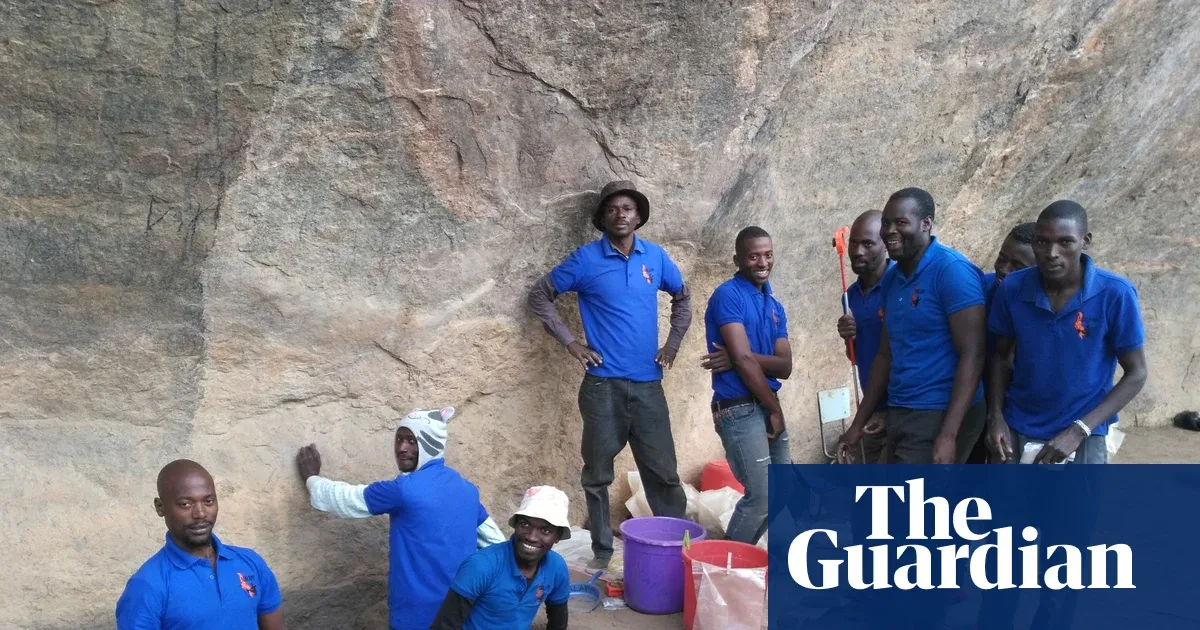
A rock shelter in northern Malawi has yielded something rare: evidence that challenges how we think about ancient African societies. Researchers discovered a cremation pyre built roughly 9,500 years ago, containing the remains of an adult woman, making it the oldest intentional cremation in Africa and the first pyre definitively linked to African hunter-gatherers.
The pyre sat at the foot of Mount Hora, tucked into a natural rock shelter that appears to have served as a burial ground for thousands of years. Among the 170 bone fragments recovered, archaeologists found something striking: the woman's skull was missing, and cut marks on other bones suggested they had been separated at the joints and stripped of flesh before the fire was lit. This wasn't violence or desecration. Dr. Jessica Cerezo-Román from the University of Oklahoma, who led the study, suggests the bones were likely removed as part of a deliberate funerary practice—perhaps to be carried away as tokens, kept as objects of remembrance or spiritual significance.
What the Pyre Reveals
The rock shelter itself tells a story of sustained ritual practice. Burials accumulated there over roughly 8,000 years, from about 16,000 to 8,000 years ago. Alongside complete skeletons, researchers found scattered bone collections from different individuals—fragments that suggest some people's remains were deliberately divided and distributed. Within the cremation pyre itself, they discovered flakes and points of worked stone, possibly placed intentionally as grave goods or offerings.
We're a new kind of news feed.
Regular news is designed to drain you. We're a non-profit built to restore you. Every story we publish is scored for impact, progress, and hope.
Start Your News DetoxThese details point to something the original research framed carefully but profoundly: the people who used this shelter had social structures far more intricate than stereotypes about "tropical hunter-gatherers" typically allow. Different individuals received different treatment in death. Some were buried whole. Some were cremated. Some had bones removed and carried elsewhere. In a community where people are honored or remembered differently in death, they almost certainly held different roles, status, or significance in life.
Dr. Ebeth Sawchuk from the Cleveland Museum of Natural History, a co-author on the study, notes that the missing bones from the cremated woman likely weren't lost to time—they were taken deliberately, perhaps for curation or reburial in another location entirely. The pyre itself becomes one part of a larger, distributed ritual.
Before this discovery, the oldest confirmed intentional cremations in Africa dated to around 3,500 years ago, found among pastoral Neolithic communities. Globally, the only older pyre containing human remains was found in Alaska and dated to roughly 11,500 years ago—but it held a young child, not an adult. The Malawi pyre stands alone in its combination of age, adult remains, and association with a hunter-gatherer community.
Professor Joel Irish of Liverpool John Moores University, who wasn't involved in the research, called the finding significant precisely because it reveals something we've been missing: "They clearly had advanced belief systems and a high level of social complexity at this early date." Not emerging. Already there, 9,500 years ago, embedded in how they honored their dead.