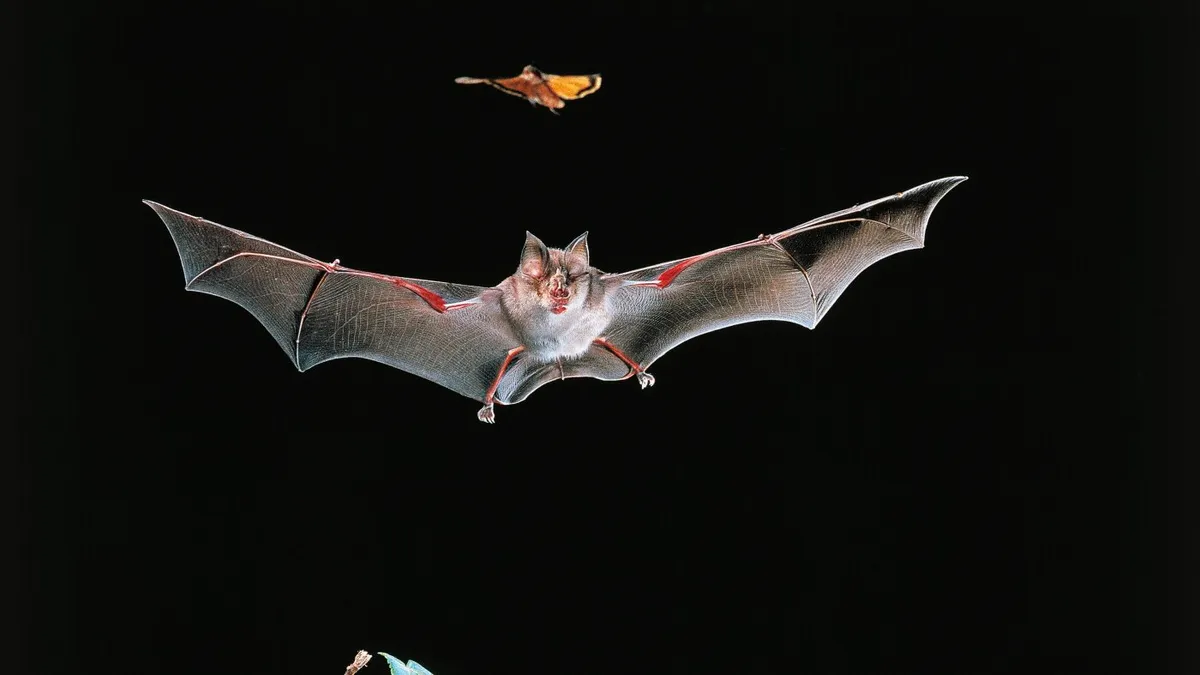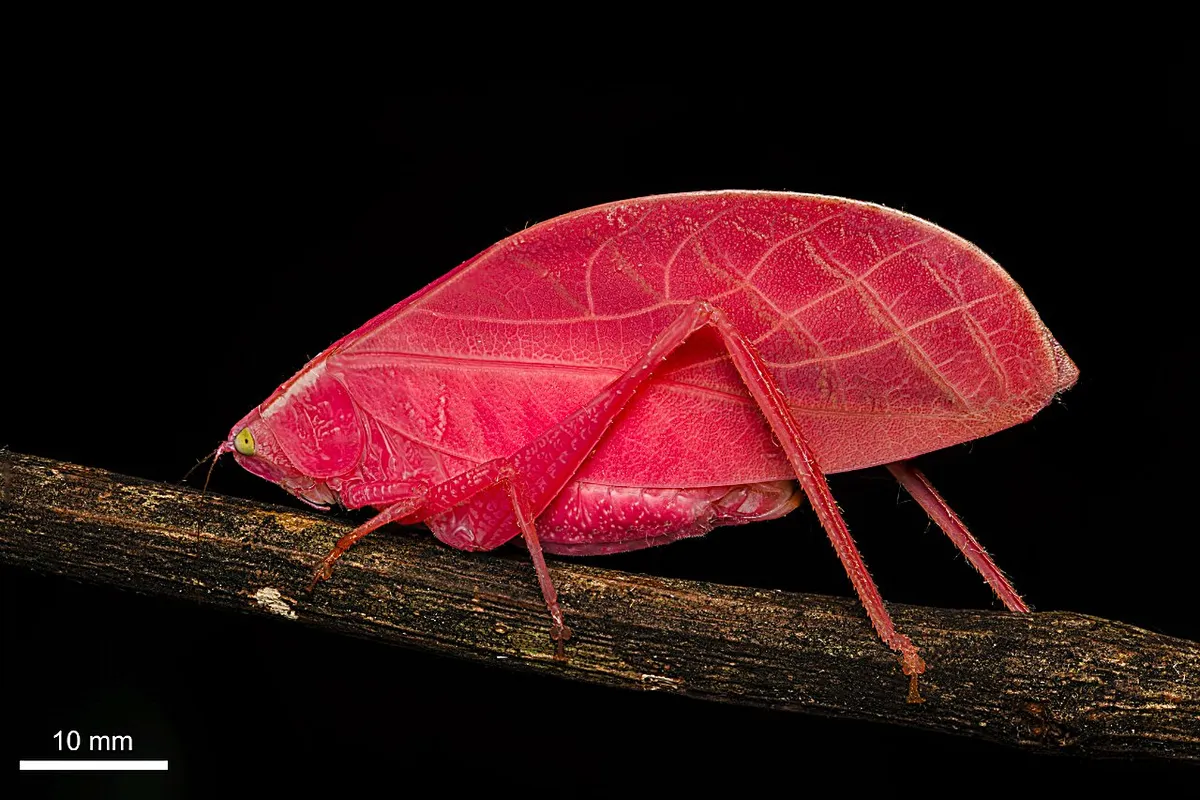
A tropical katydid has pulled off a color transformation that rewrites what scientists thought they knew about camouflage. Researchers spotted an adult female Arota festae—a leaf-mimicking bush cricket native to Panama, Colombia, and Suriname—glowing hot pink beneath a light at the Smithsonian Tropical Research Institute's field station on Barro Colorado Island. Eleven days later, she was completely green.
This wasn't a one-off glitch. The team kept her in natural conditions and documented the shift daily over 30 days. The hot pink faded to pastel within four days, and by day eleven, she was indistinguishable from the common green form. She survived to mate before dying naturally the following month.
Why a Pink Insect Disappears
Here's where it gets clever: the researchers believe this color-shifting isn't random at all. It's tracking something specific happening in the rainforest around her. Many tropical plants—about one-third of species on Barro Colorado Island—display "delayed greening," where newly emerged leaves flush vivid pink or red before maturing to green. The katydid appears to be mimicking this exact life cycle, staying pink when surrounded by pink leaves and turning green as the forest does.
We're a new kind of news feed.
Regular news is designed to drain you. We're a non-profit built to restore you. Every story we publish is scored for impact, progress, and hope.
Start Your News Detox"Rather than a bizarre genetic quirk, this may actually be a finely tuned survival strategy," said Dr. Benito Wainwright of the University of St Andrews, the lead author. The finding is wild because pink katydids have been documented since 1878, but they were always written off as rare, disadvantageous mutations. This appears to be the first recorded case of a katydid completing a full color shift within a single life stage.
Dr. Matt Greenwell of the University of Reading emphasized what this reveals about how tropical forests actually work. "You would think a bright pink insect in a mostly green forest would stand out to predators like a worker in a high-vis jacket," he said. "The idea that an insect might gradually shift color to keep pace with the leaves it mimics shows how dynamic the rainforest can be." It's a reminder that evolution in complex ecosystems isn't just about being invisible—it's about moving in sync with the environment itself.
The research was published in Ecology in 2026.