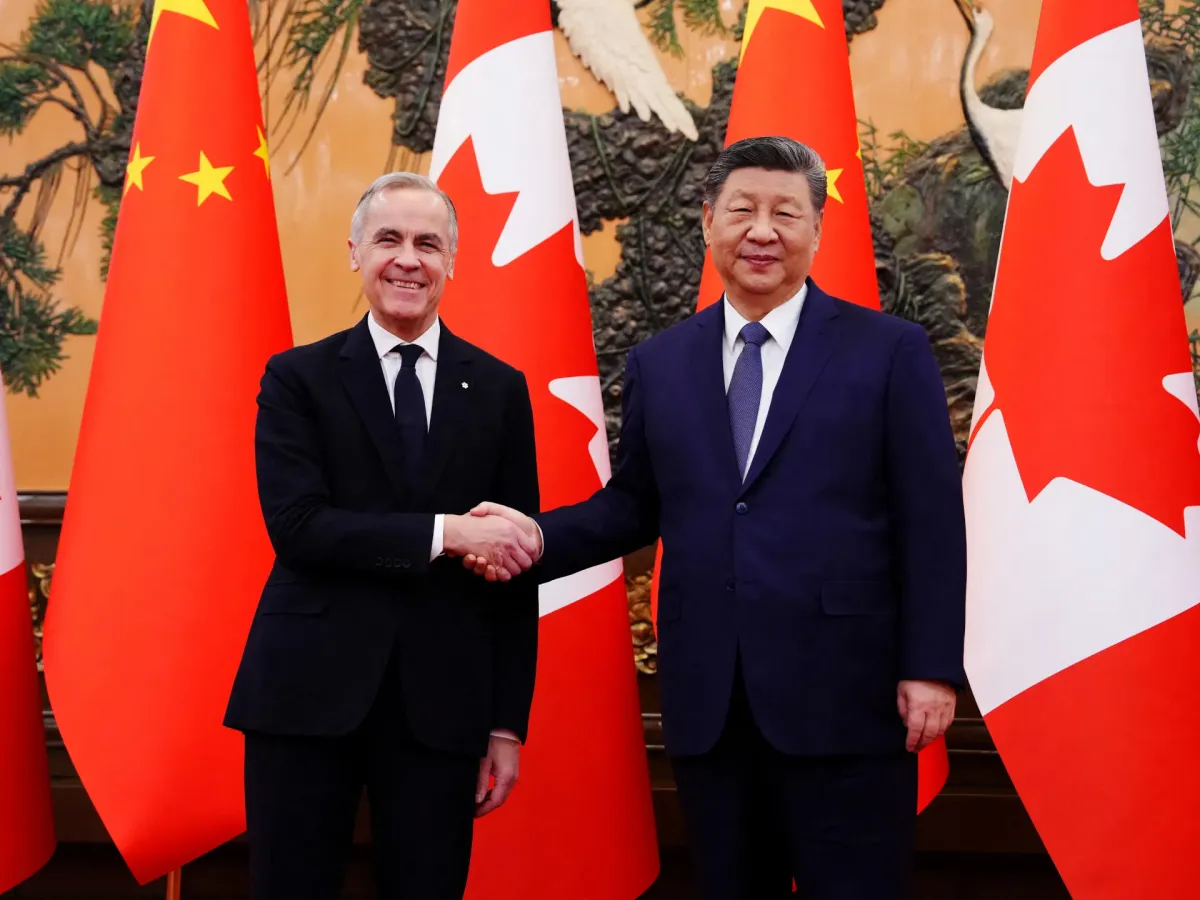
Prime Minister Mark Carney arrived in Beijing this week with a clear message: Canada is looking to reset its relationship with China, and both countries seem ready to listen.
It's the first visit by a Canadian leader to China in eight years, and it comes at a moment when the global trade landscape is shifting. US tariffs under President Trump have squeezed both economies, and Carney is signaling that Canada needs to diversify its economic partnerships rather than rely so heavily on its southern neighbor.
In meetings with Xi Jinping at the Great Hall of the People, both leaders acknowledged the ground they've lost. "It can be said that our meeting last year opened a new chapter in turning China–Canada relations towards improvement," Xi said, referencing talks that began in October at a regional economic conference in South Korea.
We're a new kind of news feed.
Regular news is designed to drain you. We're a non-profit built to restore you. Every story we publish is scored for impact, progress, and hope.
Start Your News DetoxCarney framed the reset in practical terms. "Together we can build on the best of what this relationship has been in the past to create a new one adapted to new global realities," he told Xi. He specifically flagged agriculture, energy, and finance as areas where the two countries could make "immediate progress"—concrete sectors where business actually happens, not just diplomatic pleasantries.
The Trade Complication
There's a real tension underneath the warm words. Canada currently has 100% tariffs on Chinese electric vehicles and 25% tariffs on steel and aluminum—policies inherited from the previous government that China has answered with its own retaliatory measures. Neither side announced movement on these tariffs during the visit, which suggests the economic reset will take time to translate into actual policy shifts.
What's driving the urgency is Trump's "America First" approach. His tariffs have hit both Canadian and Chinese economies, and Carney has been explicit about the goal: building an economy less dependent on the US during what he calls "a time of global trade disruption." While Carney met with several leading Chinese companies in Beijing, the real test will come when tariff negotiations resume.
The broader context matters too. China has been watching Trump suggest that Canada could become the 51st US state—a pressure tactic aimed at pulling allies closer. By pursuing its own engagement with Beijing, Canada is signaling it intends to chart a more independent course.
Neither country expects overnight transformation. But the fact that they're talking seriously, after years of acrimony, suggests both see something worth building. For Canada, that means options. For China, it means a potential wedge between the US and its closest ally. What actually emerges from these talks—whether it's real economic partnership or just better rhetoric—will become clear over the next few months as negotiations move from the diplomatic stage to the trade floor.