Imagine a material so good at its job, scientists say its protective abilities cannot be explained by current science. That's the claim from a team at the University of Hong Kong (HKU), who've cooked up a new "super steel" designed to revolutionize green hydrogen production.
This isn't just any steel. This stuff can shrug off the brutal, corrosive conditions of seawater while making hydrogen, something typically reserved for far more expensive materials like titanium. And by "far more expensive," we mean about 40 times pricier.
The Green Hydrogen Problem (and Solution)
Green hydrogen is the clean energy darling, made by zapping water with electricity to split it into hydrogen and oxygen. Seawater is an obvious, abundant source. The catch? Saltwater is basically a death sentence for most metals, corroding equipment faster than you can say "renewable energy future."
We're a new kind of news feed.
Regular news is designed to drain you. We're a non-profit built to restore you. Every story we publish is scored for impact, progress, and hope.
Start Your News DetoxEnter the HKU team, led by Professor Mingxin Huang. They developed a special stainless steel (dubbed SS-H2) that performs just as well as the titanium-based components currently in use. But here's the kicker: it doesn't need those pricey precious metal coatings (think gold and platinum) that titanium often requires. Suddenly, the economics of green hydrogen get a whole lot more appealing.
The Double-Layered Mystery
Stainless steel usually relies on a thin chromium oxide film for protection. It's good, but not good enough for the high electrical potentials (around 1600 mV) needed for water oxidation. That's where SS-H2 pulls off its magic trick.
It uses a "sequential dual-passivation" strategy. First, the usual chromium oxide forms. Then, inexplicably, a second manganese-based layer forms on top of it. This manganese shield protects the steel in salty environments up to an ultra-high potential of 1700 mV. This is where it gets weird: manganese is typically thought to weaken stainless steel's corrosion resistance. So, its role here is, well, a head-scratcher.
Dr. Kaiping Yu, the study's first author, put it bluntly: this manganese-based protection was unexpected and "cannot be explained by current corrosion science." Let that satisfyingly mysterious number sink in.
From Lab to (Future) Industrial Scale
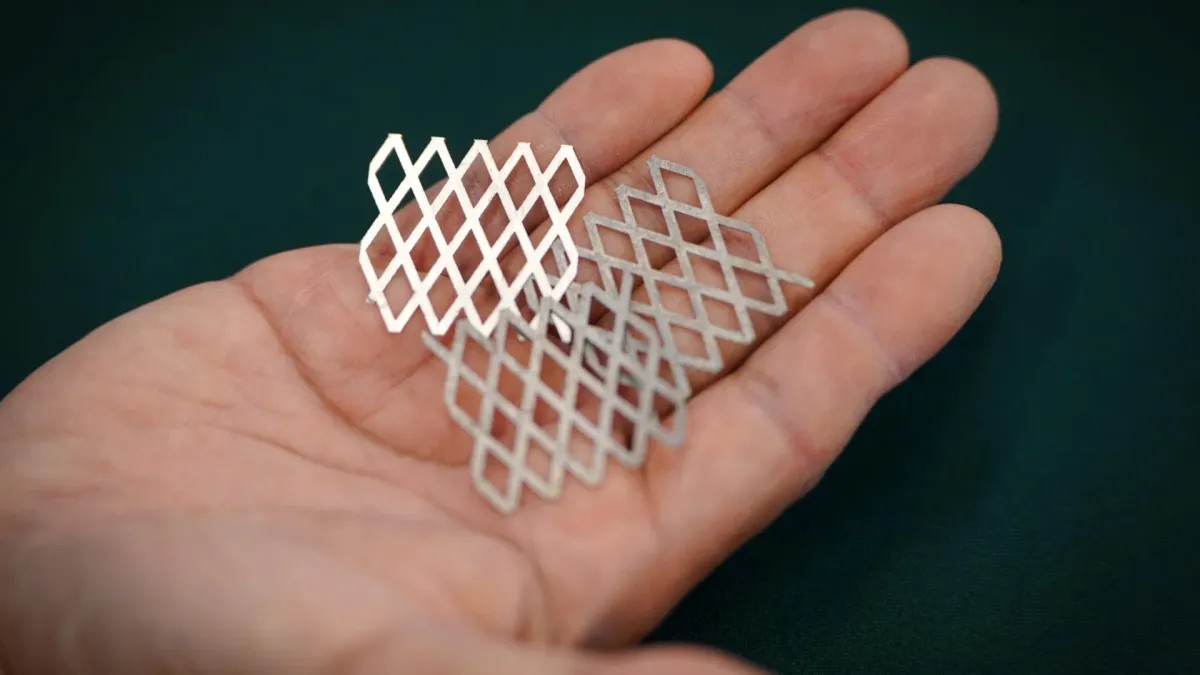
The team spent six years on this, moving from a perplexing discovery to understanding some of the science behind it. They've already snagged patents and even produced tons of SS-H2 wire with a factory in mainland China. While turning this experimental material into actual electrolyzer components (like meshes and foams) is still a challenge, the groundwork is laid.
This isn't just about a new material; it's about a new way to design alloys for high-potential environments. It tackles fundamental limitations, which, if you think about it, is both impressive and slightly terrifying for anyone who thought they knew how corrosion worked.
For an industry where cost and durability are the ultimate gatekeepers, a super steel that can handle high-voltage seawater and replace expensive titanium parts isn't just a step forward. It's a leap toward making clean hydrogen production cheaper, more scalable, and a whole lot more possible.