A UC Berkeley researcher spent 11 days in the Ugandan rainforest collecting chimpanzee urine — and what he found suggests our taste for alcohol runs deeper than culture or choice. It might be written into our biology.
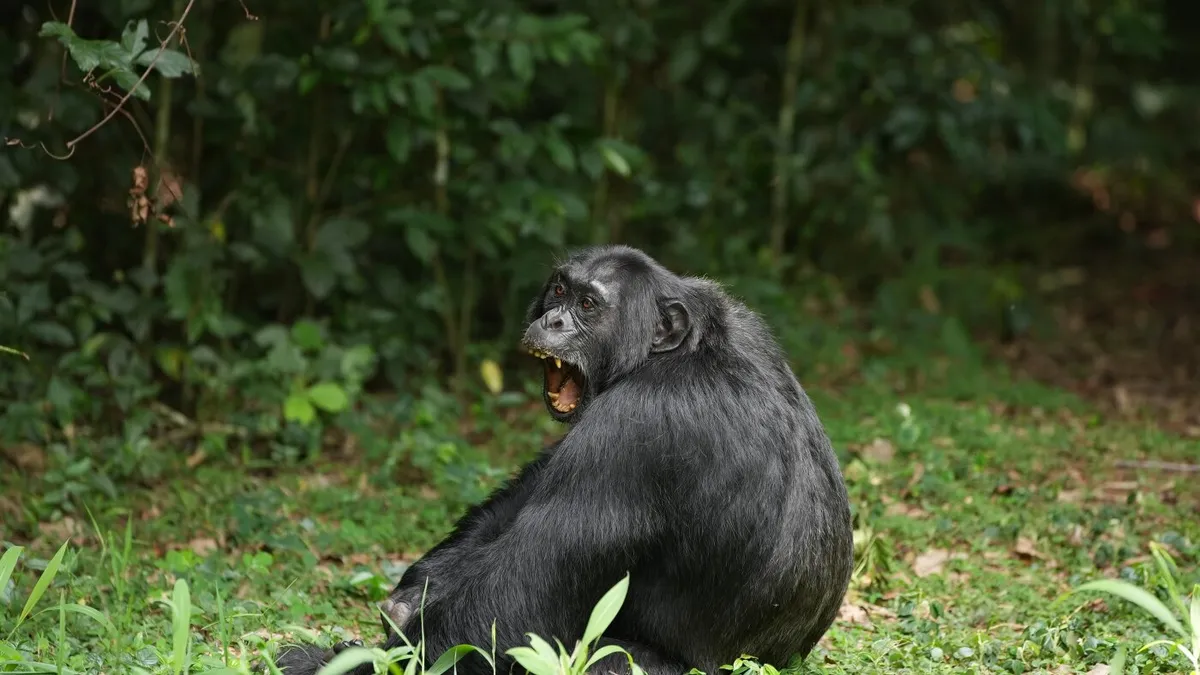
Aleksey Maro and his team tested urine samples from 19 chimps and found that 17 of them had metabolized ethanol from ripe, fermenting fruit. At least 10 had alcohol concentrations equivalent to one or two drinks in a human. The chimps weren't getting drunk. But they were, consistently, consuming alcohol as part of their normal diet.
Why this matters for understanding ourselves
The study, published in Biology Letters, points to what evolutionary biologists call the "drunken monkey hypothesis" — the idea that humans' attraction to alcohol isn't a modern invention but an ancient inheritance. When our primate ancestors encountered fermenting fruit, they may have learned that the smell of fermentation meant calories were nearby. The scent became a signal: sugars and energy. Over millions of years, that association stuck around. Today, we're drawn to alcohol not because we rationally chose to be, but because our ancestors' brains learned to link it with survival.
We're a new kind of news feed.
Regular news is designed to drain you. We're a non-profit built to restore you. Every story we publish is scored for impact, progress, and hope.
Start Your News Detox"It could be that when you smell alcohol, that means that's where the sugars are," Maro explains. In other words, fermentation was nature's way of pointing to the richest food source.
The fieldwork itself was unglamorous. Maro's team collected samples by pipetting off leaves, but the most reliable method was watching for behavioral cues that a chimp was about to urinate, then catching the stream in a plastic bag stretched over a forked branch. "You need to make sure that you are not going to be splashed," says Sharifah Namaganda, a collaborator from the University of Michigan. "But plastic-bag pee is the best you can get."
The chimps were consuming about 10 pounds of African star apple fruit per day — a sweet fruit that, when ripe, ferments naturally. Maro had already shown that these fruits contain significant ethanol. The urine analysis confirmed the chimps were actually absorbing it.
What makes this finding particularly striking is the evolutionary timeline it suggests. This affinity for fermented fruit doesn't stop with primates. Fruit flies, for instance, have evolved to lay their larvae in fermenting fruit pulp — the more fermented, the better. The attraction to alcohol may stretch back hundreds of millions of years, embedded in the reward systems of countless species. We inherited it. We just inherited it alongside a modern ability to concentrate and consume alcohol at levels our ancestors never encountered.
"Chimpanzees are consuming alcohol," Maro says. "It's plausible that our ancestral diet may have had similar alcohol just baked into our everyday existence." That everyday exposure may explain why, today, humans gravitate toward alcohol in ways other animals don't — not because we're uniquely flawed, but because we're uniquely capable of accessing something our brains learned to seek millions of years ago.
The next question is whether chimps actively seek out fermenting fruit or consume the alcohol incidentally. If they're choosing it deliberately, that would suggest a genuine preference for the boozy aroma and flavor — a hint that our own attraction to alcohol runs even deeper than we thought.
Matthew Carrigan, an evolutionary biologist at the College of Central Florida, praised the work despite its small sample size. "It nicely supports what earlier studies have alluded to. This takes it one step further and is measuring the output." Primatologist Cat Hobaiter from the University of St. Andrews suggested the findings could reshape how we understand not just chimp behavior, but the evolutionary origins of human rituals and social practices around drinking itself.