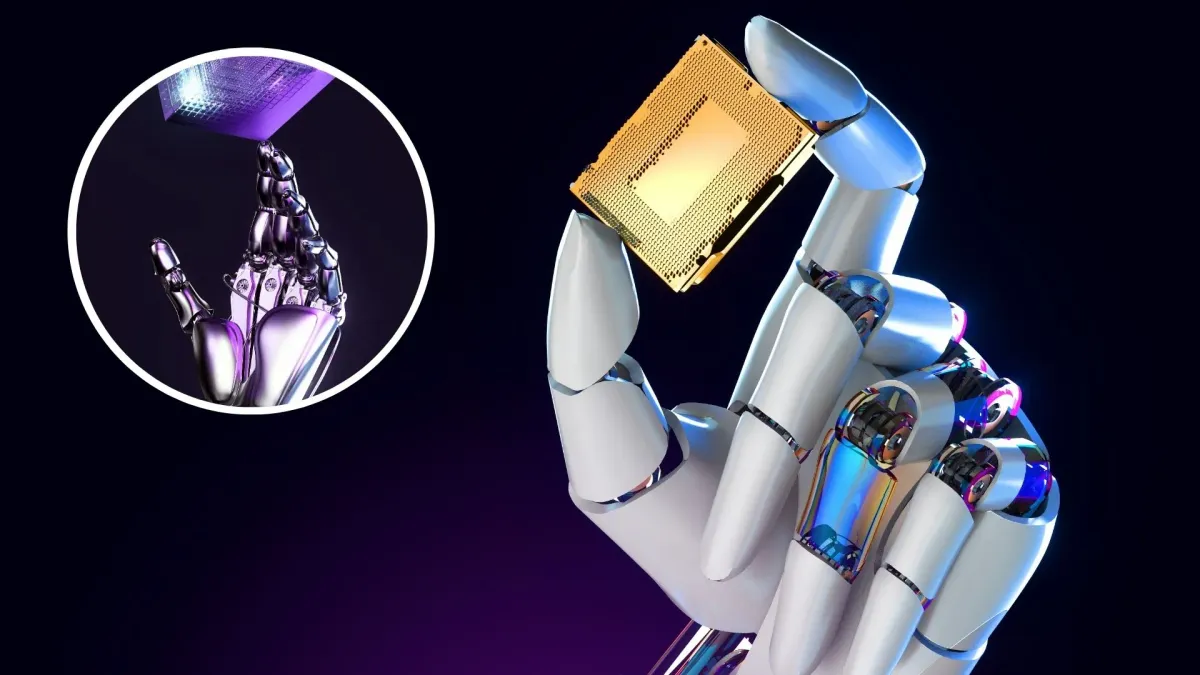
Researchers in China have created a new humanoid robot hand. This hand can sense its own finger movements very precisely. It uses a special soft bending sensor embedded in each finger.
This new sensor helps the robot hand understand both how much its fingers are bending and how they are moving side-to-side. This is important for delicate tasks.

How the Soft Sensor Works
The robot hand was developed by teams from Zhejiang University, Hangzhou Dianzi University, and Lishui University. It has 18 ways to move and five fingers that combine rigid and flexible parts.
We're a new kind of news feed.
Regular news is designed to drain you. We're a non-profit built to restore you. Every story we publish is scored for impact, progress, and hope.
Start Your News DetoxEach finger has a soft optical sensor. This sensor is made from segmented PMMA fibers, a special LED light, and a color detector. It works by tracking how red, green, and blue light changes as the sensor bends.
The way the fibers are arranged helps the system tell the difference between bending forward and bending sideways. This means it doesn't mix up the two types of motion. The sensor showed strong consistency over 100 tests.

Stability and Future Uses
The researchers found that the sensor performed very well in difficult tasks. These included using scissors, operating a computer mouse, and playing the piano. This technology helps solve problems with complex movements and sensing posture in robot hands.
This soft sensor's main benefit is its ability to give detailed, real-time feedback. It can detect pressure, strain, and bending. This gives robots a more refined sense of touch than older systems, which is key for precise tasks.
This technology has many potential uses. Robots could perform complex tasks with more care and accuracy. In prosthetics, these sensors could create artificial limbs that feel more natural to users, improving control and comfort.

The technology could also be used in healthcare devices to monitor movement or help with rehabilitation. While still being improved for durability and data processing, this system is a big step toward better touch sensing in smart machines.