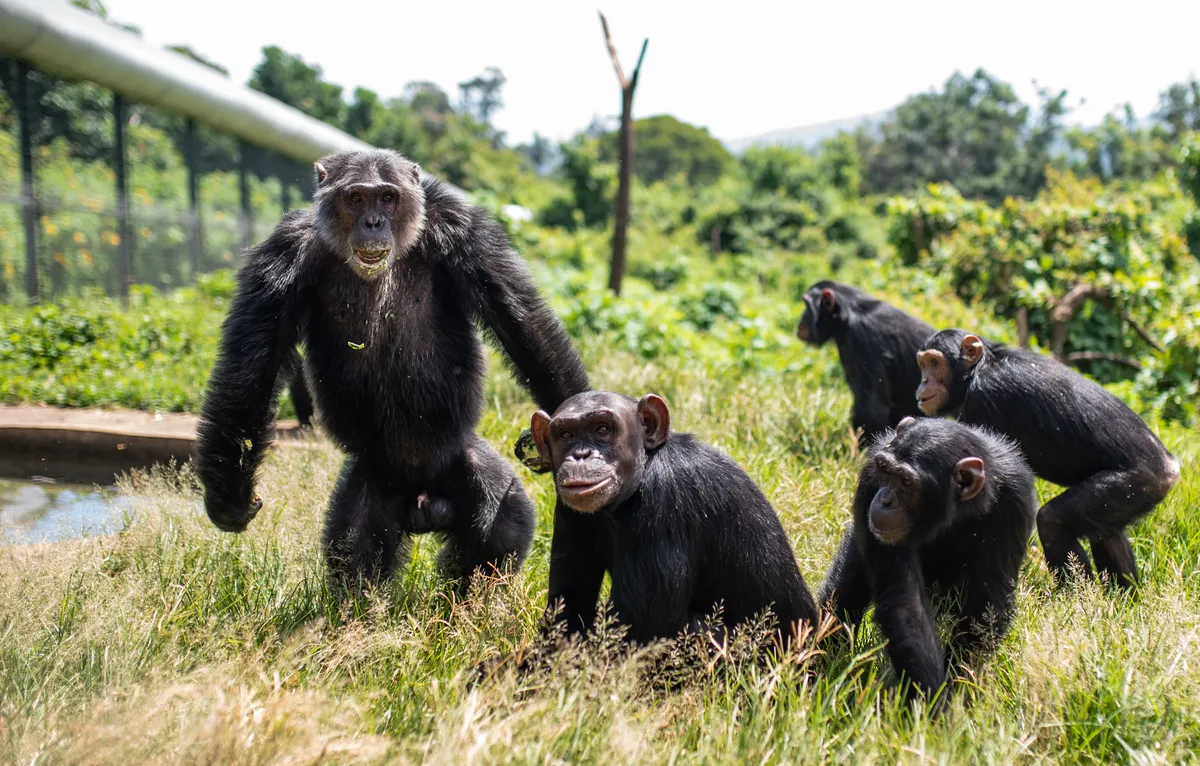
When a highly infectious disease crops up nearby, you lock things down. For the Lwiro Primates Rehabilitation Center (LPRC) in the Democratic Republic of Congo, that meant putting more than 200 rescued chimpanzees and monkeys into confinement. Because, apparently, even primate sanctuaries aren't safe from the world's most terrifying viruses.
The drastic measure came after a man living near the center died from Ebola on May 21st. His recent travel to Ituri province, the epicenter of the current outbreak, was the unfortunate link. Suddenly, the LPRC, a haven for 129 chimps and 108 monkeys — including species like the olive baboon and L'Hoest's monkey, all saved from poaching and illegal trade — found itself on high alert.

Now, before you picture a chimp in a hazmat suit, it's worth noting that no Ebola cases have ever been reported in great apes from humans. The usual transmission goes the other way: humans getting it from infected animals. But primatologist Liz Williamson points out that the virus can absolutely jump species through contact with bodily fluids.
We're a new kind of news feed.
Regular news is designed to drain you. We're a non-profit built to restore you. Every story we publish is scored for impact, progress, and hope.
Start Your News DetoxSo, while the primates aren't exactly social distancing from each other, they are being protected from any potential human-borne vectors. It's a stark reminder that in the interconnected web of life, a virus doesn't care if you've been rescued. It just cares if you're a host.