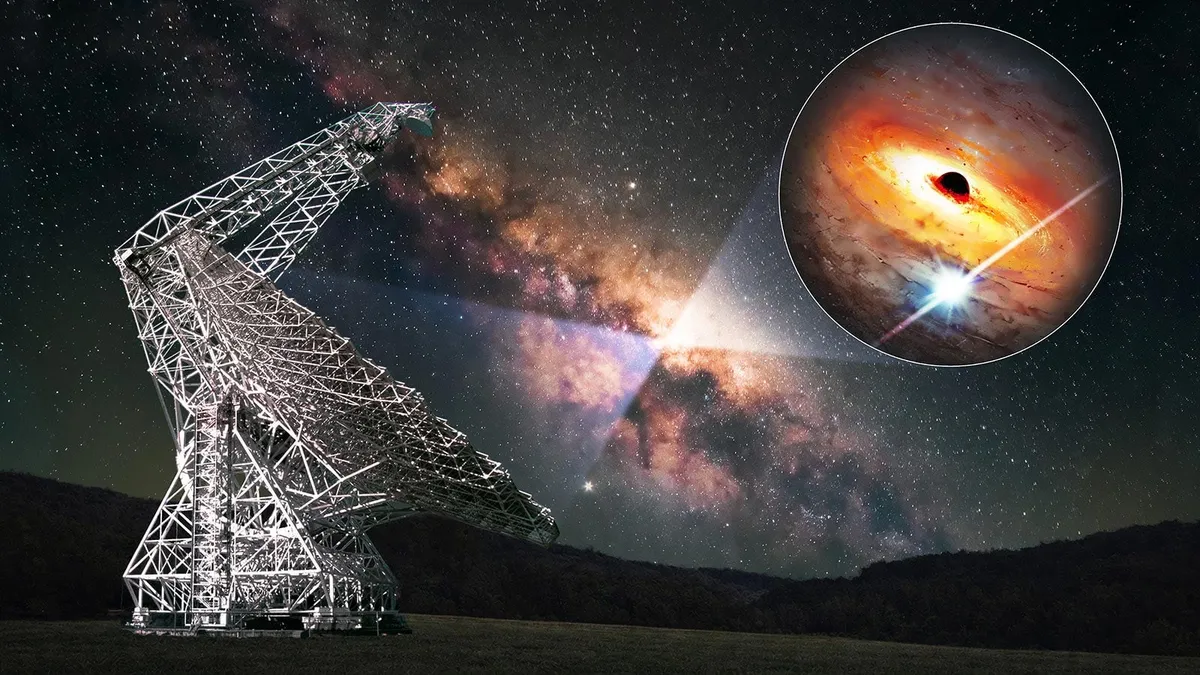
Astronomers thought they had planetary systems figured out. Small rocky worlds orbit close to their stars, large gas giants circle far away. It's a pattern that holds across hundreds of systems—including our own solar system.
Then they found LHS 1903 e, and the whole model started to crack.
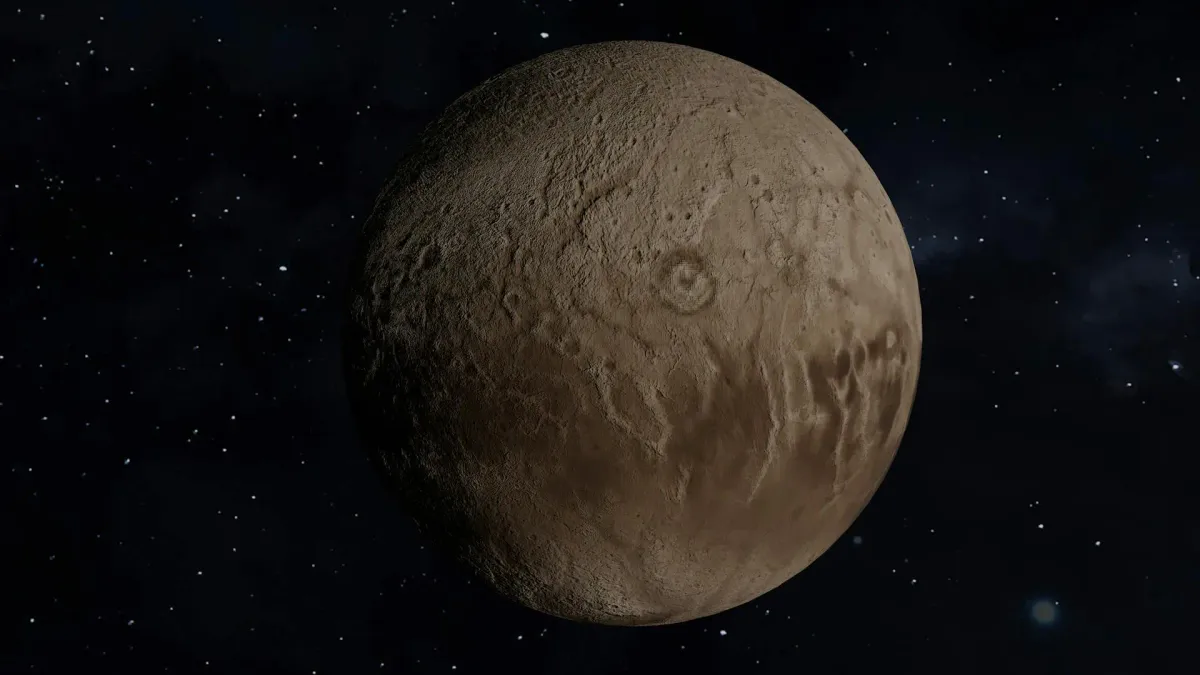
This rocky planet orbits in the outer reaches of a system around the red dwarf star LHS 1903, exactly where a gas-rich world should live according to every textbook. The discovery, published in Science, is forcing researchers to confront a fundamental gap in how we understand planets form.
"We've seen this pattern: rocky inside, gaseous outside, across hundreds of planetary systems," says Ryan Cloutier, a physicist at McMaster University who led the research. "But now, the discovery of a rocky planet in the outer part of a system forces us to rethink the timing and conditions under which rocky planets can form."
We're a new kind of news feed.
Regular news is designed to drain you. We're a non-profit built to restore you. Every story we publish is scored for impact, progress, and hope.
Start Your News DetoxThe System That Broke the Pattern
LHS 1903 is a small, cool red dwarf—the kind of star where planets are easier to spot because they create bigger wobbles in their star's light. When researchers first mapped this system using ground-based telescopes and space observatories, it looked reassuringly normal: one rocky planet hugging the star, two gas-rich mini-Neptunes farther out. The pattern everyone expected.
The theory behind that expectation is elegant. Planets form in a spinning disk of gas and dust around a young star. Close to the star, intense heat strips away light gases like hydrogen and helium. Planets forming there lose their thick atmospheres and become dense, rocky bodies. Farther out, where it's cooler, planets can hold onto gas and grow into puffy giants.
Then the European Space Agency's CHEOPS satellite sent back new observations, precise measurements of how the planets blocked starlight as they orbited. Hidden in that data was a fourth planet, LHS 1903 e, orbiting farthest from the star.
When the team calculated its size and mass, the numbers didn't fit the script. The outermost planet was rocky. Not gaseous. Not puffy. Rocky—in a place where rocky planets shouldn't exist.
"It's remarkable to see a rocky world forming in an environment that shouldn't favor that outcome," Cloutier said. "It challenges the assumptions built into our current models."
A New Timeline for Planet Birth
The researchers tested obvious explanations. A giant collision that blasted away the atmosphere? Computer simulations said no. Planets trading places through gravitational interactions? Detailed orbital analysis ruled that out too.
The evidence pointed instead toward something called inside-out planet formation. Rather than all planets forming at roughly the same time, this model suggests they form one after another. Each new planet reshapes the disk around it. Over time, the disk loses its gas—either consumed by growing planets or blown away by stellar winds.
If LHS 1903 e formed late, after most of the gas had already disappeared, it would have had mainly solid material to work with. Rocky material. The timing, not the location, determined what kind of planet it became.
This single discovery opens a larger question: How many other systems break the familiar pattern? If one red dwarf system can do this, how many others might? The finding also exposes the limits of current models. They explain many systems well, but they may be missing something fundamental about how disks evolve and how timing shapes planetary destinies.
Cloutier and his team plan to study LHS 1903 in greater detail and search for comparable systems that test the inside-out formation idea. The pattern we thought was universal turns out to be just one story among many.