Baker's yeast has just shown us something unexpected: life might be tougher than we thought.
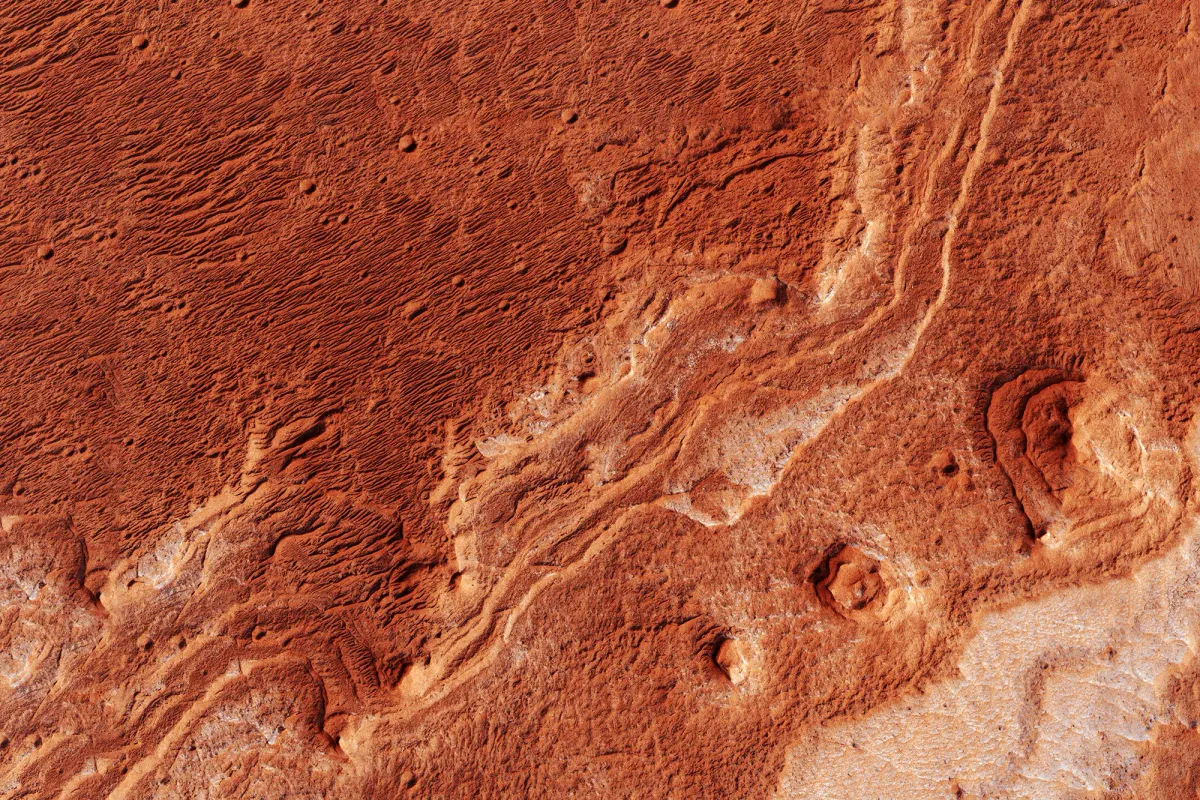
Researchers at UC San Diego subjected humble Saccharomyces cerevisiae — the same yeast that ferments beer and leavens bread — to conditions that mimic some of Mars's harshest environments. The cells were blasted with shock waves traveling at 5.6 Mach (over five times the speed of sound) and exposed to perchlorates, the highly corrosive salts that saturate Martian soil. The yeast didn't just survive. It adapted.
How Life Responds to Martian Stress
The team used a specialized shock tube to recreate what happens when meteorites slam into the Martian surface. Growth slowed under these conditions, but the cells lived. When exposed separately to sodium perchlorate concentrations matching those found in Martian regolith, yeast again persisted. Most intriguingly, when hit with both stresses simultaneously — the one-two punch of shock and chemical toxicity — the yeast still made it through.
We're a new kind of news feed.
Regular news is designed to drain you. We're a non-profit built to restore you. Every story we publish is scored for impact, progress, and hope.
Start Your News DetoxThe mechanism behind this resilience turned out to be elegant. Under stress, yeast cells assembled what scientists call RNP condensates: temporary structures made of RNA and proteins that function like molecular first-aid kits. These condensates corralled vulnerable RNA molecules, protecting them from damage and allowing cells to recalibrate which genes they expressed. Think of it as cellular triage — the cell bundles its most critical instructions into protected bundles while it weathers the storm.
Different stresses triggered different protective responses. Shock waves prompted yeast to form stress granules and P-bodies (two types of RNA condensates), while perchlorates activated P-bodies alone. When researchers created mutant yeast strains unable to assemble these structures, those cells fared much worse under Martian conditions. The condensates weren't just present — they were essential.
This matters because yeast and humans share fundamental cellular machinery. The same stress-response systems that kept these microbes alive operate in our own cells. If life ever existed on Mars, or ever could, it would likely rely on similar molecular strategies to survive.
The research doesn't prove that life could actually thrive on Mars — the planet remains a hostile place. But it suggests that the cellular toolkit for surviving extreme conditions is more versatile than we assumed. Life on Earth has spent billions of years learning to endure. The question of whether it could adapt to another world just became slightly less theoretical.