When resources run scarce and predators circle, primate societies do something remarkable: they lean on each other in ways that strengthen the group's survival odds.
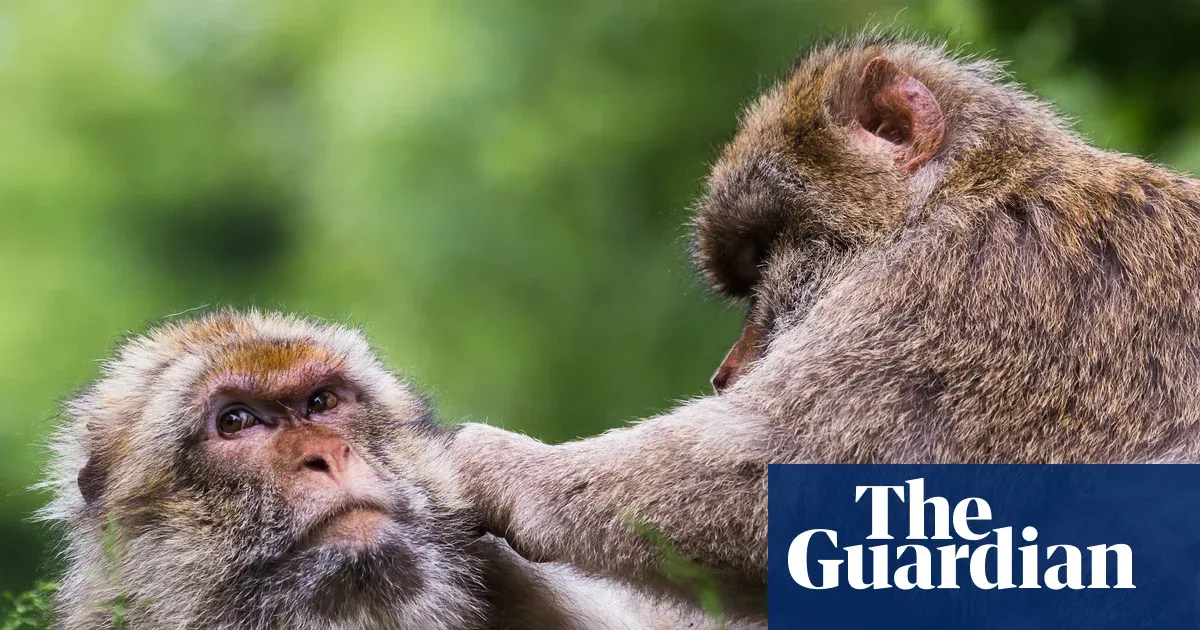
Researchers analyzing same-sex sexual behavior across 59 primate species—from chimpanzees to mountain gorillas to Barbary macaques—have found a pattern that rewrites how we think about social glue. The behavior isn't rare or incidental. It's widespread, deeply rooted in primate evolution, and appears most often in species facing the toughest environmental pressures.
"Same-sex behavior seems to be an affiliative behavior that increases bonding, decreases tension and aggression, and allows whatever species to navigate the challenges they face," explains Prof. Vincent Savolainen from Imperial College London, who led the study published in Nature Ecology & Evolution.
We're a new kind of news feed.
Regular news is designed to drain you. We're a non-profit built to restore you. Every story we publish is scored for impact, progress, and hope.
Start Your News DetoxThe data is striking. Same-sex sexual behavior shows up more frequently in species living in drier environments with scarce resources and high predation risk. It's also more common in species with longer lifespans, larger size differences between males and females (which correlate with bigger social groups and fiercer competition), and more complex hierarchies. The behavior appears to function as a pressure valve—a way to defuse tension and cement bonds that help the group hold together when survival is on the line.
Why this matters beyond the lab
The research hints at something deeper about how social systems evolve under stress. Savolainen notes that early human species likely faced similar environmental challenges and may have exhibited similar behaviors. "There were many different species that unfortunately are all gone, that must have done this same thing as we see in apes," he says.
Prof. Zanna Clay from Durham University, reviewing the work, called it "a common and important part of primate sociality, of which humans are of course part." The study offers what she describes as "a nice novel angle" to long-running debates about the origins of same-sex behavior in nature.
But researchers are careful not to overreach. Human sexuality is shaped by countless cultural, psychological, and social factors that don't apply to other species. Josh Davis, author of A Little Gay Natural History, warns against drawing direct lines between primate behavior and human identity: "People are complex and a result of a whole range of different factors separate from other animals."
Still, the findings arrive at a moment when younger generations report greater sexual fluidity—even as many face mounting mental health pressures. The research suggests that behaviors strengthening social cohesion and reducing stress may have deep evolutionary roots, and that our capacity for diverse forms of bonding might be a feature, not a bug, of how human societies survive difficult times.
The next step is expanding the analysis beyond primates to understand how widely this pattern holds across the animal kingdom.