NASA's Curiosity rover is doing what it does best: moving slowly across Mars, looking at rocks, and sending back data that quietly rewrites our understanding of the red planet.
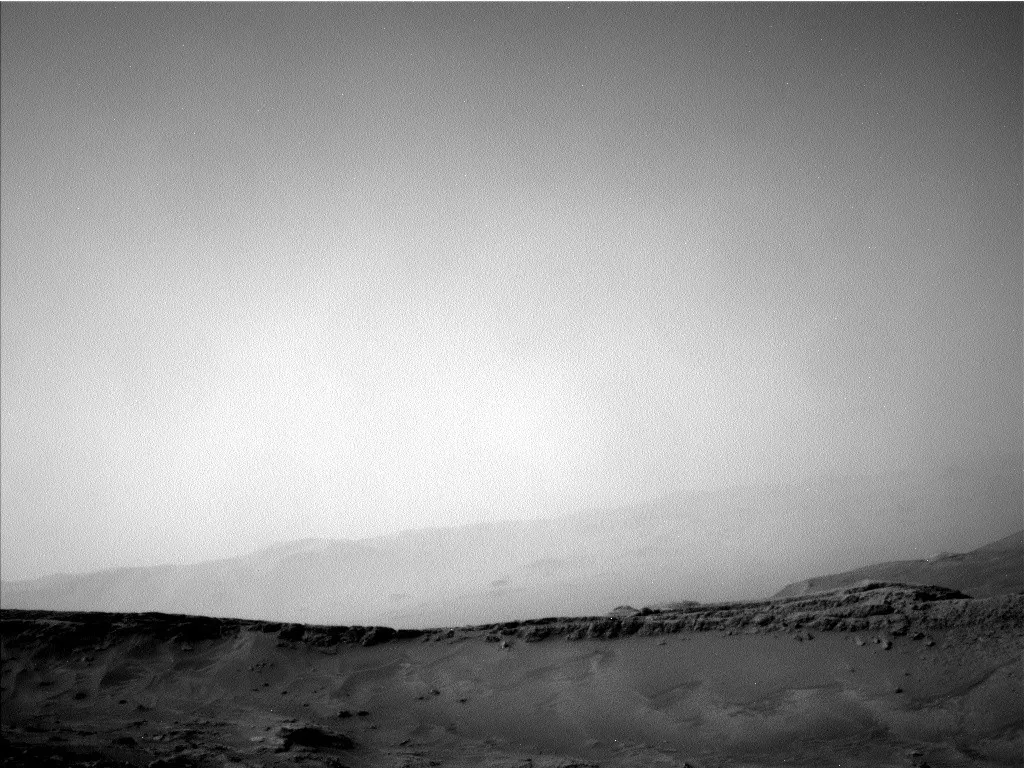
On Sol 4813 (that's Martian day 4,813, measured since the rover landed in 2012), Curiosity pointed its navigation camera north toward the rim of Gale Crater. The view was hazier than it would have been months earlier — Mars is heading into its dusty season, when fine particles thicken the atmosphere and turn the horizon into a pale smudge. For a rover that relies on solar panels and clear skies, this is the annual squeeze.
Mapping the boxwork
Right now, Curiosity is in the final stretch of exploring a geological formation called the boxwork — a region of intersecting ridges that look a bit like a honeycomb when viewed from above. The rover's team is methodically working their way toward the eastern edge of this formation, mapping as they go. Once they've traced that boundary, they'll swing south to check the southern contact before moving on. This is likely the last focused look at the boxwork before the rover turns its attention upslope, toward the higher reaches of Mount Sharp (Aeolis Mons), the three-mile-high peak at the center of Gale Crater.
We're a new kind of news feed.
Regular news is designed to drain you. We're a non-profit built to restore you. Every story we publish is scored for impact, progress, and hope.
Start Your News DetoxThe work itself is unglamorous but precise. At each parking spot, the rover's instruments get to work: close-range contact science on bedrock, the ChemCam laser firing at distant targets to analyze their composition, and detailed mosaic images of features like the "Tapiche" hollow where the rover is currently positioned and the "Los Flamencos" ridge nearby. These aren't random snapshots — they're pieces of a methodical geological survey that's been unfolding for nearly eight years.
Watching for storms
Meanwhile, the environmental science team is keeping watch on Mars's atmosphere. Dust devils and atmospheric opacity are being tracked closely this week, along with cloud movies captured by the navigation cameras. It's routine monitoring with a serious undertone: Mars hasn't experienced a global dust storm since 2018 — four Martian years ago — and the team is aware that another one could happen any time. So far this season, conditions look typical. No imminent storms on the horizon. But on Mars, the team stays vigilant.
For Curiosity, there's no drama in this week's work, just steady progress. The rover is eight years into a mission that was originally planned for two. It's still climbing, still looking, still sending back the kind of detailed geological record that only a human-scale explorer on the ground can provide.