A Diagonal Magnetic Flip Hidden in the Milky Way
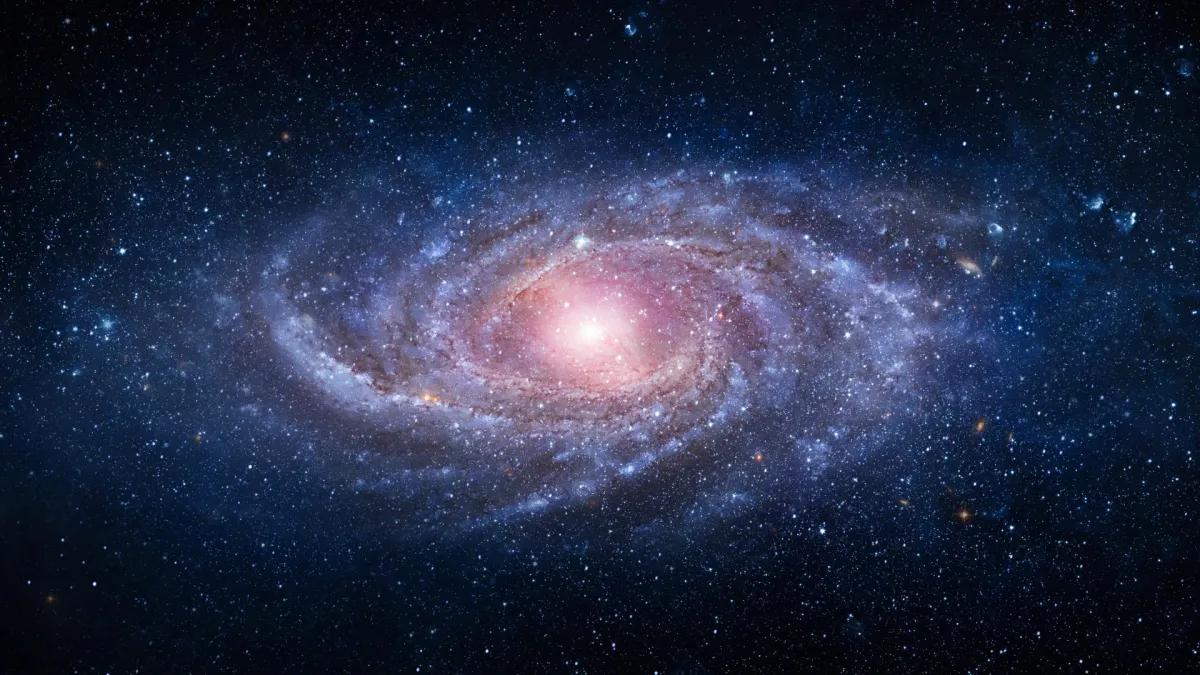
Deep inside the Milky Way, an invisible force quietly holds everything together — its magnetic field. Now, researchers have created one of the most detailed maps ever of this hidden structure, revealing surprising twists in how it flows through our galaxy.
For generations, scientists have studied the stars and planets to better understand how our galaxy works. Dr. Jo-Anne Brown, a professor in the Department of Physics and Astronomy at the University of Calgary, is now focused on charting something we cannot see at all: the Milky Way's magnetic field.
"Without a magnetic field, the galaxy would collapse in on itself due to gravity," Brown said. "We need to know what the magnetic field of the galaxy looks like now, so we can create accurate models that predict how it will evolve."
We're a new kind of news feed.
Regular news is designed to drain you. We're a non-profit built to restore you. Every story we publish is scored for impact, progress, and hope.
Start Your News DetoxMapping the Galaxy's Invisible Architecture
This month, Brown and her colleagues published two new studies in The Astrophysical Journal and The Astrophysical Journal Supplement Series. Together, the papers introduce a complete dataset that astronomers around the world can use, along with a new model designed to improve understanding of how the Milky Way's magnetic field developed over time.
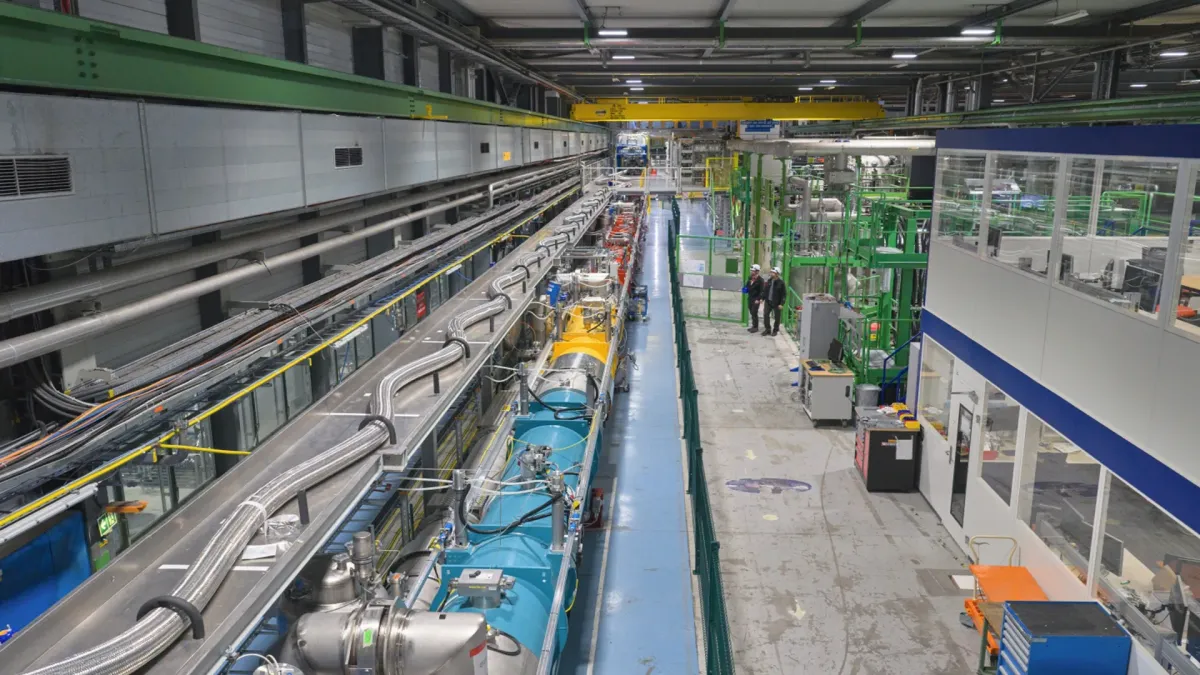
To gather the data, the team relied on a new radio telescope at the Dominion Radio Astrophysical Observatory in British Columbia, a National Research Council Canada facility. The instrument allowed them to scan the northern sky at multiple radio frequencies, offering a detailed look at the structure of the galaxy's magnetic field.
"The broad coverage really lets you get at the details about the magnetic field structure," said Dr. Anna Ordog, lead author of the first study. The result is a high-quality, wide-ranging dataset collected as part of the Global Magneto-Ionic Medium Survey (GMIMS), an international effort to chart the Milky Way's magnetic field.
The researchers measured a phenomenon known as Faraday rotation to trace the magnetic field. This effect occurs when radio waves pass through regions filled with electrons and magnetic fields, causing the waves to shift. Rebecca Booth, a PhD candidate working with Brown and lead author of the second study, explained the concept: "You can think of it like refraction. A straw in a glass of water looks bent because of how light interacts with matter. Faraday rotation is a similar concept, but it's electrons and magnetic fields in space interacting with radio waves."
By analyzing these subtle changes in radio signals, the team was able to map how the magnetic field is arranged across vast stretches of the galaxy.
The Unexpected Diagonal Reversal
In the second study, Booth focused on a striking feature within the Milky Way known as the Sagittarius Arm, where the magnetic field runs in the opposite direction compared to the rest of the galaxy. "If you could look at the galaxy from above, the overall magnetic field is going clockwise," Brown explained. "But in the Sagittarius Arm, it's going counterclockwise. We didn't understand how the transition occurred. Then one day, Anna brought in some data, and I went, 'O.M.G., the reversal's diagonal!'"
Building on Ordog's findings, Booth used the newly assembled dataset to construct a three-dimensional model explaining this reversal. "My work presents a new three-dimensional model for the magnetic field reversal," Booth explained. "From Earth, this would appear as the diagonal that we observe in the data."
This discovery transforms our understanding of how magnetic fields behave across galactic scales, offering astronomers a clearer picture of the invisible forces that shape our cosmic neighborhood.
Deep Dive & References
A Three-dimensional Model for the Reversal in the Local Large-scale Interstellar Magnetic Field - The Astrophysical Journal, 2026
GMIMS-DRAGONS: A Faraday Depth Survey of the Northern Sky Covering 350–1030 MHz - The Astrophysical Journal Supplement Series, 2026