The James Webb Space Telescope has caught the early universe doing things it shouldn't be able to do. Galaxies that look far too bright and compact for their age. Black holes that grew impossibly fast. Mysterious compact objects that barely glow in X-rays. Each discovery alone would be surprising. Together, they're forcing astronomers to admit that something fundamental is missing from our models of how the universe began.
For decades, physicists have had a pretty good story about cosmic history. Stars and galaxies formed gradually, building up from smaller pieces. Black holes grew slowly, starting from stellar-mass seeds and accreting material over billions of years. But JWST, launched in 2021, has been revealing a universe that doesn't follow this script.
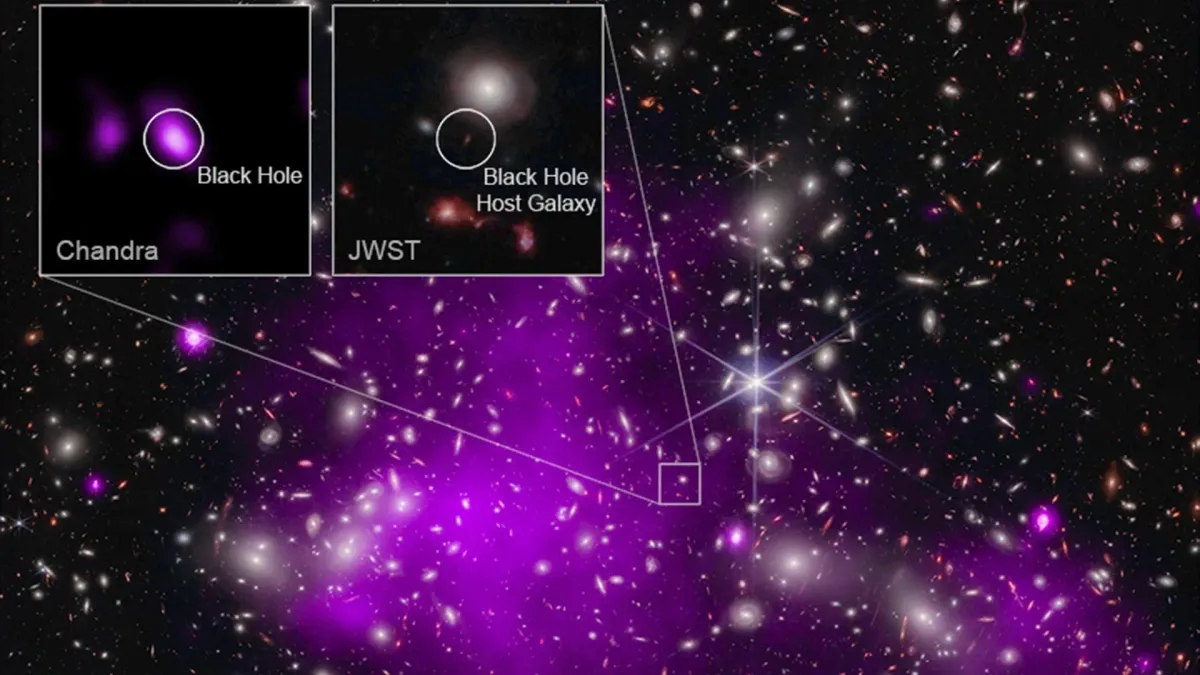
The telescope has spotted what astronomers call "blue monster" galaxies—extremely bright, compact, and nearly dust-free—appearing when the universe was less than a billion years old. No simulation predicted these should exist so early. JWST has also found "little red dots," compact objects from cosmic dawn that emit almost no X-ray radiation, defying expectations. And perhaps most puzzling: some of the earliest galaxies host supermassive black holes far larger than they should be able to grow in such a short time.
We're a new kind of news feed.
Regular news is designed to drain you. We're a non-profit built to restore you. Every story we publish is scored for impact, progress, and hope.
Start Your News DetoxA New Candidate Explanation
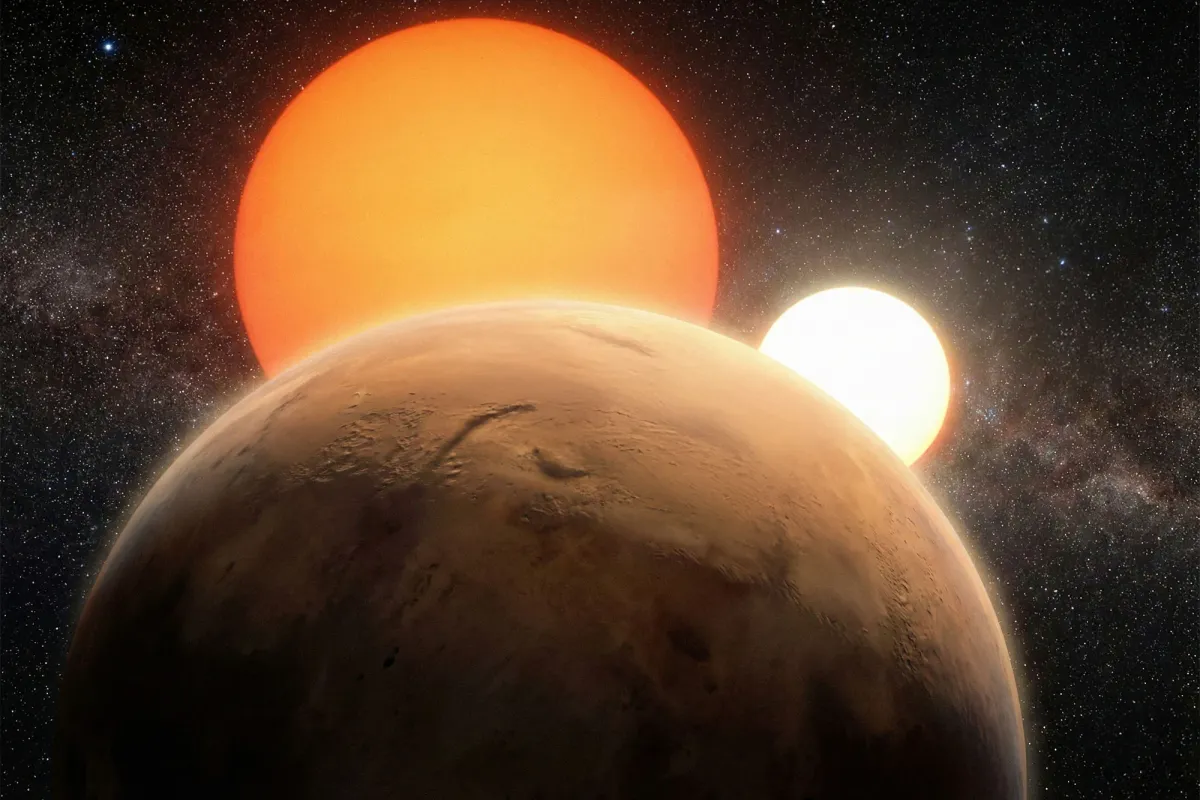
A new study, building on research from 2023 and 2025, proposes that dark stars might solve all three mysteries at once. Dark stars are a theoretical object—never directly observed—that would form in the early universe when dark matter particles accumulate at the cores of the first stars. Unlike ordinary stars powered by nuclear fusion, dark stars would be powered by dark matter annihilation, making them far more massive and luminous than conventional stellar physics would allow.
If dark stars existed, they could naturally explain why JWST is seeing galaxies that are too bright, too massive, and too structured for such an early epoch. They could account for the rapid growth of supermassive black holes—dark stars might collapse into black hole seeds far more efficiently than normal stars. And the little red dots, with their unusual lack of X-ray emission, fit the profile of what dark stars would look like through JWST's instruments.
The new analysis includes spectroscopic evidence from two candidate dark star objects, JADES-GS-13-0 and JADES-GS-14-0, showing distinctive helium absorption features that match dark star predictions. This isn't confirmation—dark stars remain theoretical—but it's the kind of specific, testable signature that moves the hypothesis from "interesting idea" to "worth taking seriously."
What makes this compelling is the scope. These aren't three separate mysteries requiring three separate solutions. One object type, if it exists, could explain all of them. That kind of explanatory power is what physicists look for when they're onto something real.
If dark stars are confirmed, the implications reach beyond cosmology. They would offer a direct way to study dark matter particles—the invisible stuff that makes up most of the universe's mass—by observing how they behave in extreme stellar environments. That would connect observations from the edge of the visible universe with fundamental physics experiments happening in laboratories on Earth. The next few years of JWST observations should tell us whether we're looking at a genuine cosmic fossil or a beautiful theory waiting to be disproven.