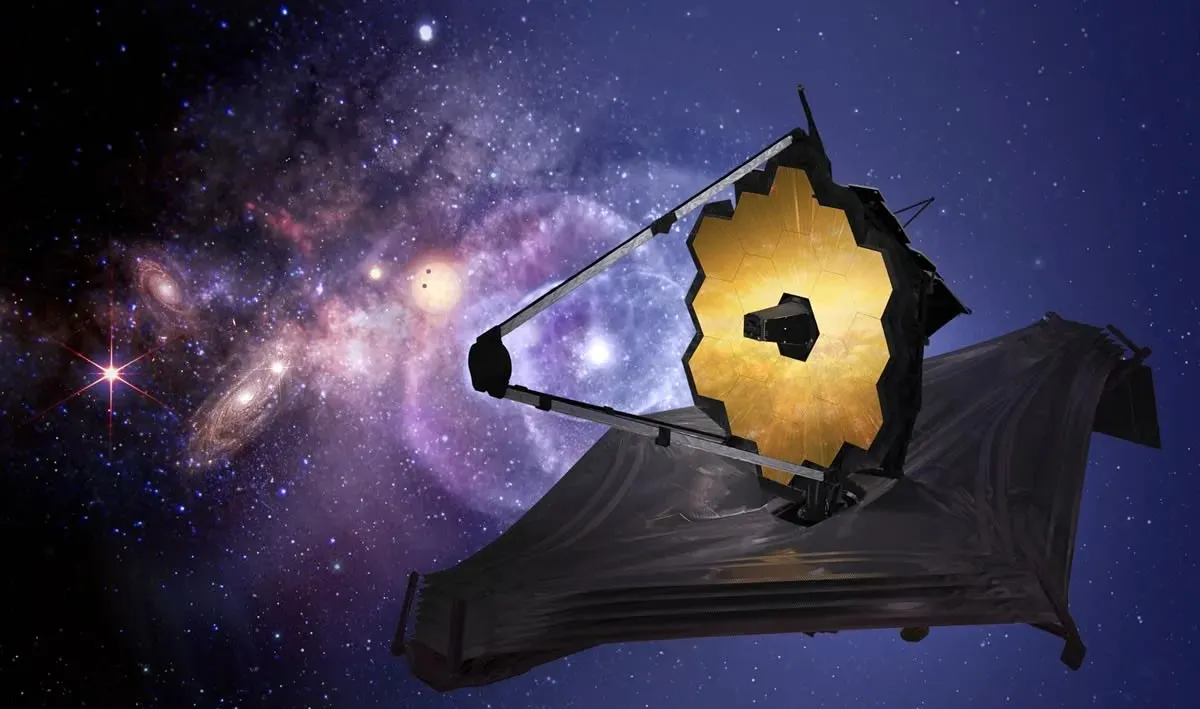
The James Webb Space Telescope has been finding things that shouldn't exist. Galaxies that are far too bright and compact for their age. Black holes that grew impossibly fast. Mysterious red objects that barely emit any light. These discoveries have forced astronomers to rethink how the early universe actually worked.
Now a team led by Cosmin Ilie at Colgate University thinks they've found a single explanation that could account for all three mysteries: dark stars.
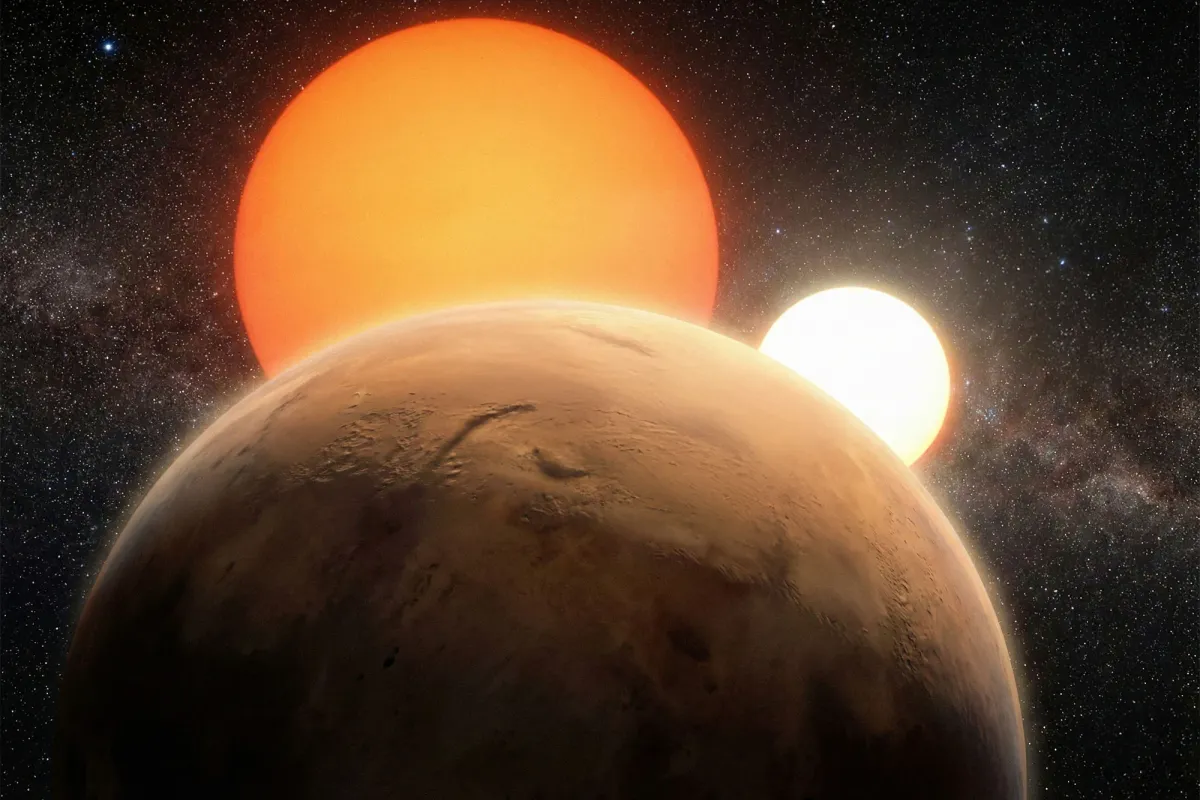
Dark stars aren't made of ordinary matter the way our sun is. Instead, they'd be powered by the annihilation of dark matter particles — the invisible stuff that makes up most of the universe's mass. According to the theory, these objects could have formed in the densest pockets of dark matter within the first few hundred million years after the Big Bang, when the universe's first stars were just beginning to light up.
We're a new kind of news feed.
Regular news is designed to drain you. We're a non-profit built to restore you. Every story we publish is scored for impact, progress, and hope.
Start Your News DetoxWhy JWST Changed Everything
Before the James Webb Space Telescope launched, astronomers had a fairly tidy picture of cosmic history. The first stars formed from hydrogen and helium. Some of those stars became black holes. Those black holes grew into the supermassive monsters we see at the centers of galaxies today.
But JWST's observations of the cosmic dawn — the universe's first few hundred million years — have shattered that neat timeline. The telescope has spotted galaxies that are far too bright and compact to fit the old models. It's found evidence of supermassive black holes that would have needed billions of years to grow, yet they appear only a few hundred million years after the Big Bang. And it's detected a whole new class of objects called "little red dots" — compact sources that emit almost no X-rays, which shouldn't happen if they're what we think they are.
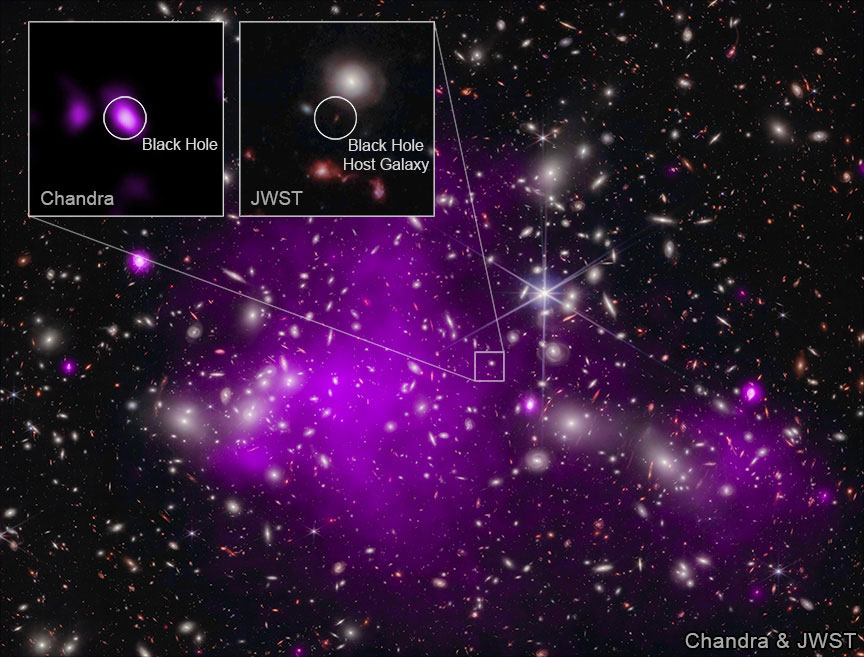
These aren't small discrepancies. They suggest that something fundamental about our understanding of the early universe is incomplete.
A Unifying Theory
Dark stars offer a potential solution to all three problems at once. If these hypothetical objects existed in the early universe, they could explain the unusually bright galaxies. They could also grow into the seeds of supermassive black holes much faster than conventional stars could. And their unique properties — particularly the way they'd absorb certain wavelengths of light — match what JWST is actually seeing in those mysterious red dots.
Ilie's team found spectroscopic evidence in two specific objects observed by JWST (catalogued as JADES-GS-13-0 and JADES-GS-14-0) that matches predictions for dark star absorption features. These aren't definitive detections — dark stars remain theoretical — but they're the kind of specific, measurable clues that move a hypothesis from speculation toward testable science.
What makes this work particularly significant is that it connects cosmology to particle physics. If dark stars are real, studying them would tell us something concrete about dark matter itself — the nature of particles that make up 85 percent of the universe's matter, yet remain fundamentally mysterious. That knowledge could complement decades of experiments on Earth trying to detect dark matter directly.
The next few years of JWST observations will either strengthen the dark star hypothesis or push astronomers back to the drawing board. Either way, the early universe is proving far more complex and surprising than the models we built before we could actually see it.