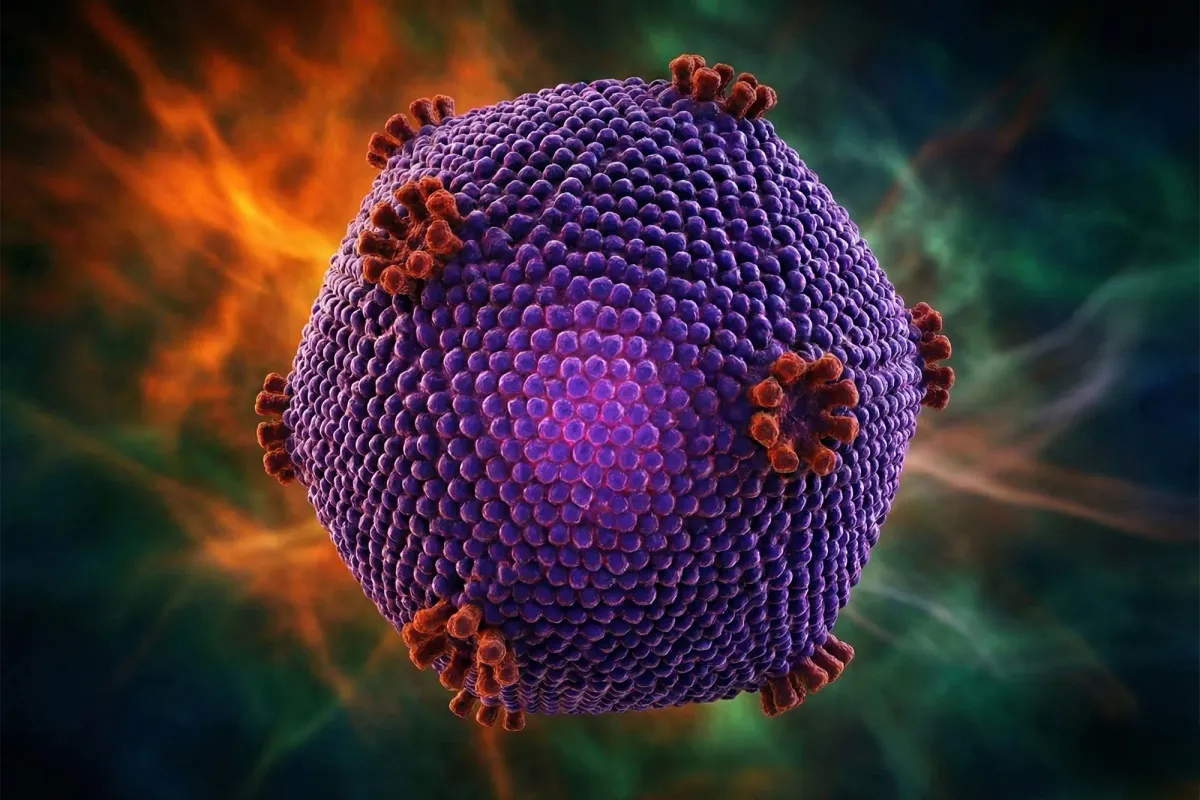
Scientists have identified a new giant virus that infects amoebas, and it's forcing researchers to reconsider one of biology's biggest questions: where did complex life come from.
The virus, named ushikuvirus after the Japanese lake where it was found, is part of a growing group of oversized viruses that may have played a crucial role in the emergence of the first complex cells. For decades, viruses have been the awkward cousins in the story of life's origins—present from the beginning, yet fundamentally different from everything else. They can't make proteins on their own. They can't survive without hijacking a host cell. By traditional definitions, they're not even alive. Yet here they are, woven into the deepest branches of life's family tree.
How Giant Viruses Changed the Picture
The turning point came in 2003, when scientists first discovered giant DNA viruses. What made them remarkable wasn't just their size—it was what they did inside cells. When these viruses infected a host, they created dedicated compartments called "virus factories," sometimes wrapped in membranes, where they replicated their genetic material. The setup looked eerily similar to a cell nucleus. That resemblance sparked a radical idea: what if viruses didn't just emerge after complex life evolved, but actually helped create it.
We're a new kind of news feed.
Regular news is designed to drain you. We're a non-profit built to restore you. Every story we publish is scored for impact, progress, and hope.
Start Your News Detox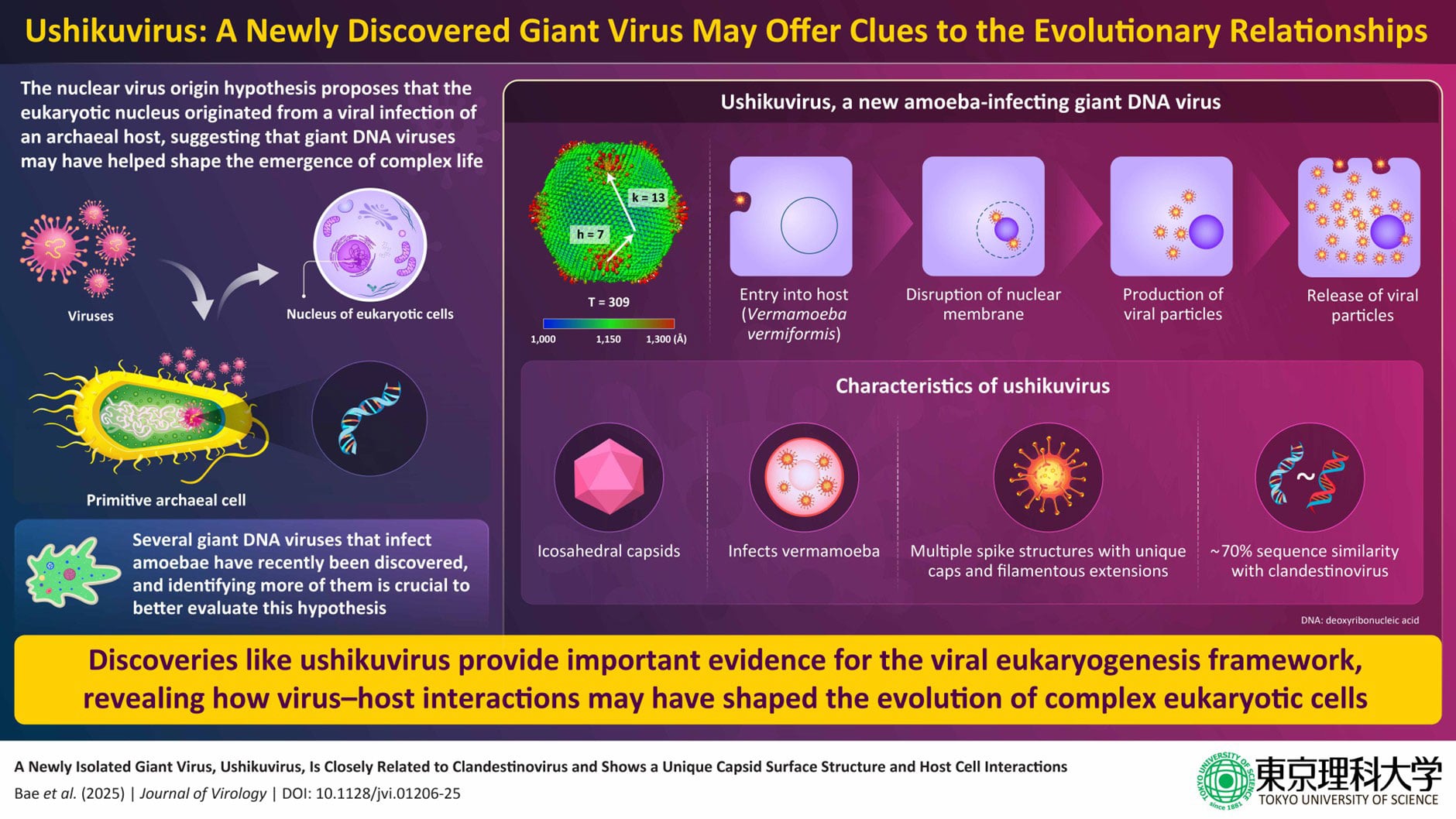
Over the past two decades, researchers have found more members of this viral family. There's Mamonoviridae, which infects certain amoebas. There's clandestinovirus, which infects a different type of amoeba. Each discovery adds another piece to the puzzle. Now, in a study published in the Journal of Virology, Japanese researchers led by Professor Masaharu Takemura have identified ushikuvirus—a new giant virus that, like clandestinovirus, infects vermamoeba amoebas.
What makes ushikuvirus distinct is how it behaves inside its host. Unlike some of its relatives, ushikuvirus actually breaks down the nuclear membrane to replicate itself. It also causes infected cells to grow to unusual sizes, and its outer shell has a unique architecture—spiky protrusions with filamentous extensions that don't appear on related viruses. These differences suggest that giant viruses have diversified over time, each adapting to its particular host in specific ways.
"Giant viruses can be said to be a treasure trove whose world has yet to be fully understood," Takemura says. "One of the future possibilities of this research is to provide humanity with a new view that connects the world of living organisms with the world of viruses."
Finding these viruses is genuinely difficult—they're everywhere in the environment, but isolating them in the lab remains a challenge. Each new discovery is valuable precisely because the diversity is so vast and so poorly understood. By comparing how different giant viruses replicate and interact with their hosts, researchers are starting to map the evolutionary paths these viruses have taken and how they may have influenced the evolution of eukaryotic life—the complex cells that eventually became plants, animals, and humans.
There's a practical angle too. Some amoebas carry diseases like amoebic encephalitis. Understanding how giant viruses infect and kill amoebas could one day lead to new treatments for these infections.
The mystery isn't solved yet. But with each giant virus discovered, the story of life's origins gets stranger, deeper, and more fascinating.