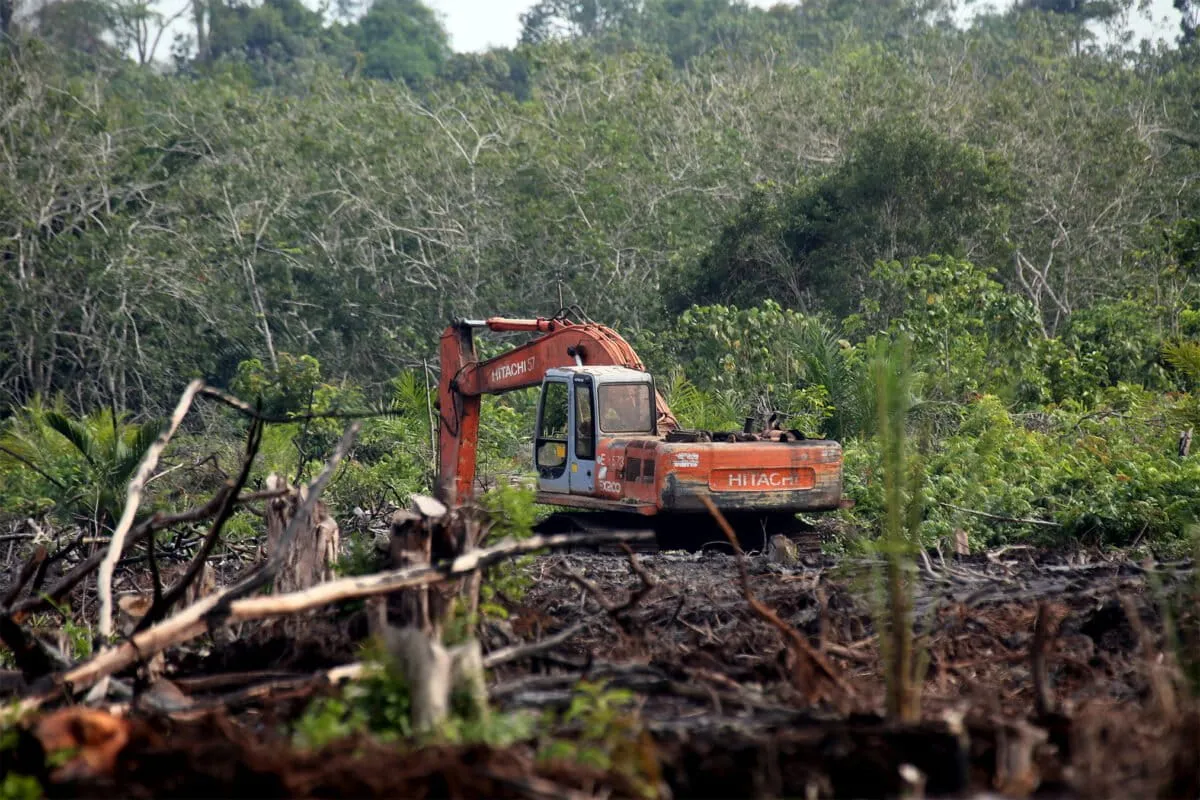
When Kuno Kasak visited an oil palm plantation in Sarawak, Malaysia in 2022, he noticed something that most people walk past without thinking: the water-filled ditches carved through the peatland. These canals serve a practical purpose—they drain the naturally soggy ground to make it suitable for farming. But Kasak, an environmental technology professor at Estonia's University of Tartu, knew they were also leaking methane into the atmosphere. The question was how much.
It turned out to be a lot more than anyone had properly accounted for.
In a new study, Kasak and his team measured methane emissions from these drainage canals across multiple hectares of oil palm plantations. What they found was striking: the ditches were responsible for roughly 10% of all greenhouse gas emissions from each hectare they studied—despite covering just 4% of the plantation's total area. That's a concentration of emissions that had been largely invisible in global climate accounting.
Why does this matter? Methane is a climate wildcard. While it breaks down faster than CO2, it traps heat more than 20 times more effectively over a 100-year period. It's responsible for nearly a third of the global temperature rise since industrialization began. Getting the accounting right—knowing where methane actually comes from and how much is being released—is essential for understanding what we're up against and where to focus climate solutions.
We're a new kind of news feed.
Regular news is designed to drain you. We're a non-profit built to restore you. Every story we publish is scored for impact, progress, and hope.
Start Your News Detox"This is significant because it means that previous estimates of emissions from drained peatlands likely underestimate the contribution from ditches, which are often ignored in global carbon accounting," Kasak told Mongabay.
The ditches weren't just methane sources either. They were also releasing CO2, adding another layer to the emissions picture from these landscapes.
The finding highlights a broader pattern in climate science: the most important sources of emissions aren't always the most obvious ones. Peatlands themselves are already known to be significant carbon stores—when you drain them for agriculture, you're essentially opening a carbon bank account and letting it bleed out. But the specific mechanics of how that happens, the precise channels through which carbon escapes, often get oversimplified in models and policy. A small feature of the landscape—a ditch—can turn out to be disproportionately important.
As palm oil production continues to expand across Southeast Asia, particularly in Indonesia and Malaysia where peatlands are abundant, getting these measurements right becomes increasingly urgent. The more accurate the accounting, the better the case for protecting these ecosystems in the first place.