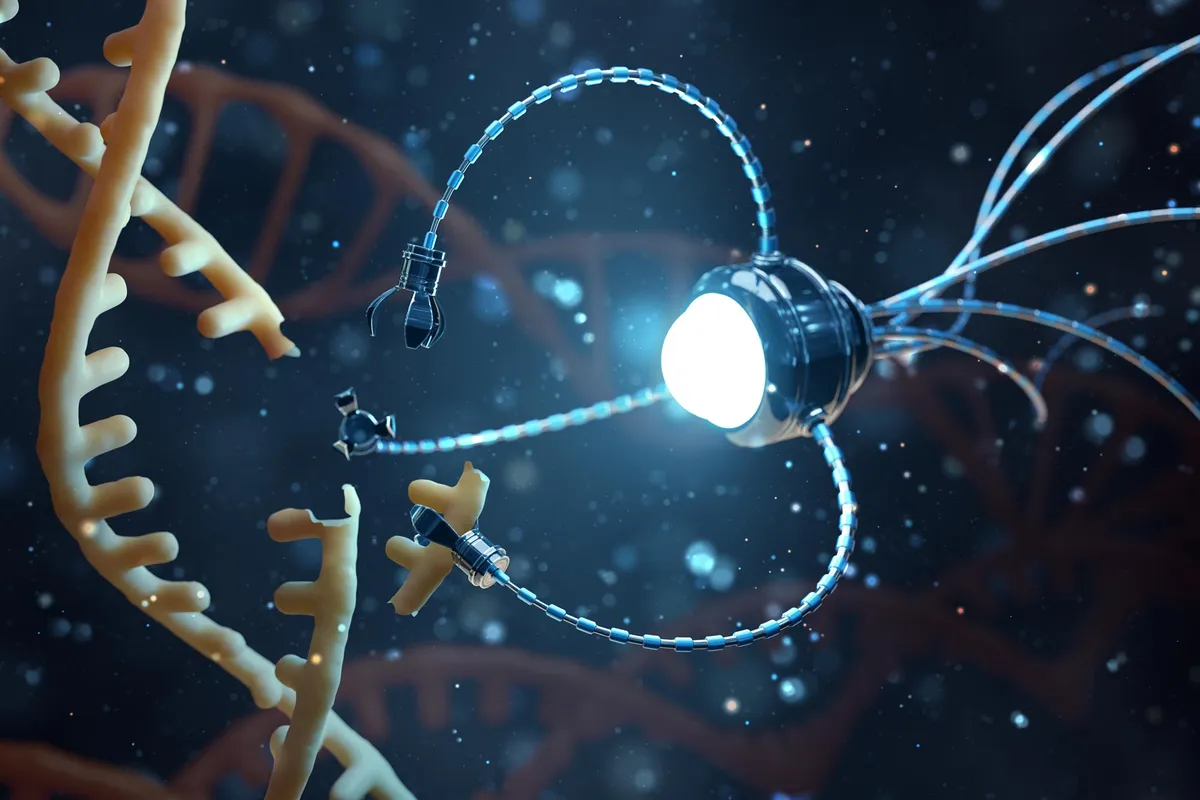
Imagine tiny robots, smaller than a cell, zipping through your body. Their mission? To find specific cancer cells and zap them with medicine, or even build microscopic computers. This isn't sci-fi anymore. Scientists are actually building these machines out of DNA.
We usually think of DNA as the blueprint for life. But now, it's becoming a building material for robots. The goal is to create "DNA robots" that can target diseases with incredible precision. Think of it: drugs delivered only to the bad guys, leaving healthy cells alone. Pretty clever, right?
This tech is still in its early stages. Most DNA robots are just ideas being tested in labs. But the field is exploding as researchers learn to make DNA structures that can bend, fold, and move exactly how they want.
We're a new kind of news feed.
Regular news is designed to drain you. We're a non-profit built to restore you. Every story we publish is scored for impact, progress, and hope.
Start Your News DetoxHow These Micro-Bots Work
Scientists are getting really creative with the designs. Some robots have stiff, stable joints. Others use flexible parts, almost like microscopic origami. They're taking ideas from big robots and shrinking them down, making tiny devices that can do specific jobs reliably.
But building them is only half the battle. These little guys need to move and react in a world where molecules are constantly bumping around. So, researchers are programming their actions directly into the DNA using special chemical tricks. They design "fuel" strands that make the robots move or change shape. It’s like giving the robot molecular instructions to follow.
Beyond the Lab: What They Could Do
The biggest buzz is for medicine. These DNA robots could act like "nano-surgeons," finding and treating specific cells in your body. Imagine a tiny machine that can capture viruses, like the one that causes COVID-19, and then help treat the illness. That’s seriously cool.
But it’s not just about health. These robots could also help build impossible things. They could precisely place nanoparticles, tiny bits of material, to create molecular computers or super-efficient optical devices. We're talking about placing things with less than a billionth of a meter accuracy. That's like building with LEGOs, but the LEGOs are invisible and you need a magnifying glass just to see the dust.
Of course, there are challenges. The microscopic world is chaotic, making precise control tricky. But scientists are teaming up across different fields, using AI to design these tiny machines, and creating standardized DNA "parts" to make them more capable. The future isn't just metal and plastic robots; it's smart, programmable, biological ones.