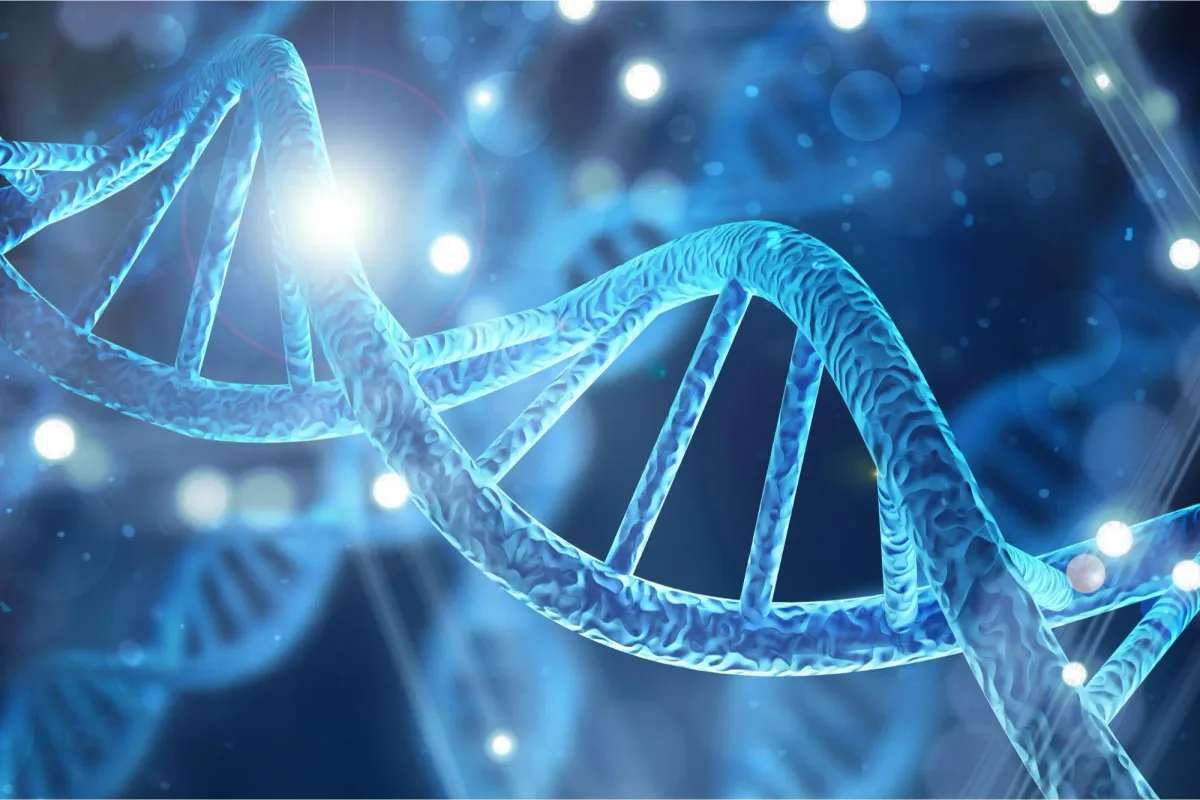
Get this: scientists just found a hidden layer of instructions in our DNA. It's like finding a secret message within a message, telling our cells how to prioritize genetic commands.
Turns out, our DNA doesn't just spell out what to build. It also whispers how efficiently to build it. This extra layer helps cells decide which genetic codes are the most streamlined, and it's all thanks to a key protein that connects these codes to how our genes actually get used.
The Secret Code in Our Genes
Our DNA uses four basic building blocks to write life's instructions. These instructions are read in groups of three, called codons. Each codon tells the cell which building block (amino acid) to grab when making a protein.
We're a new kind of news feed.
Regular news is designed to drain you. We're a non-profit built to restore you. Every story we publish is scored for impact, progress, and hope.
Start Your News DetoxHere's the wild part: sometimes, different codons can spell out the exact same amino acid. For ages, everyone thought these alternate spellings didn't really matter. We thought they were just genetic synonyms.
But we were wrong. Some of these "synonymous" codons help the messenger RNA (mRNA) — which carries the DNA instructions — stay stable and get translated smoothly. Others? Not so much. This means two genetic sequences can make the identical protein but act totally differently inside a cell.
Basically, if an mRNA has too many of the "less optimal" codons, it gets translated slower and often breaks down faster. But how human cells knew the difference was a total mystery.
Enter researchers from Kyoto University and RIKEN, led by Osamu Takeuchi and Takuhiro Ito. They cracked the code. Their findings point to a protein called DHX29 as the crucial player that helps cells read this hidden genetic information.
How It All Works
The team went on a genome-wide hunt to find out what controls how these codons affect gene expression. They snagged DHX29, an RNA-binding protein, as the main regulator.
When they removed DHX29, mRNAs with those "non-optimal" codons started piling up. This showed that DHX29 normally acts like a quality control manager, keeping these less efficient instructions in check.
Using some seriously advanced tech, like cryo-electron microscopy, they watched DHX29 directly interact with the cell's protein factories (ribosomes). They found DHX29 often latches onto ribosomes that are decoding those less-than-perfect codons. Then, DHX29 brings in another protein complex that specifically shuts down mRNAs packed with too many non-optimal codons.
This is huge. As co-author Masanori Yoshinaga put it, this discovery shows a direct link between the tiny choices in our genetic code and the big picture of how our genes get expressed in human cells.
This changes how scientists think about how our genes are controlled. This DHX29 system could impact everything from how cells specialize, to keeping our bodies balanced, and even how diseases like cancer develop. The team is now digging into how DHX29 affects health and sickness.
Osamu Takeuchi, the team leader, said they'd always been fascinated by how cells interpret the hidden info in our genetic code. Finding the exact molecular factor that lets human cells read and respond to this secret code? Pretty rewarding, he said. And honestly, it's pretty nuts.