Scientists at Tianjin University have created a device that produces donut-shaped patterns of light — and can switch between two different types on demand. The breakthrough matters because these stable, ring-shaped light structures could carry wireless signals that don't degrade or get scrambled as they travel through the air.
The patterns are called skyrmions, and they're unusually resistant to interference. Think of them like a sealed envelope for data: the information stays intact because the light itself holds a stable, defined shape. Most existing devices can only produce one type of skyrmion pattern. This new integrated platform can toggle between electric and magnetic versions using the same hardware.
"Such controllability is essential for real applications, where reliable selection and reproduction of a desired state are crucial for practical information encoding," said Xueqian Zhang, the corresponding author on the research published in Optica.
We're a new kind of news feed.
Regular news is designed to drain you. We're a non-profit built to restore you. Every story we publish is scored for impact, progress, and hope.
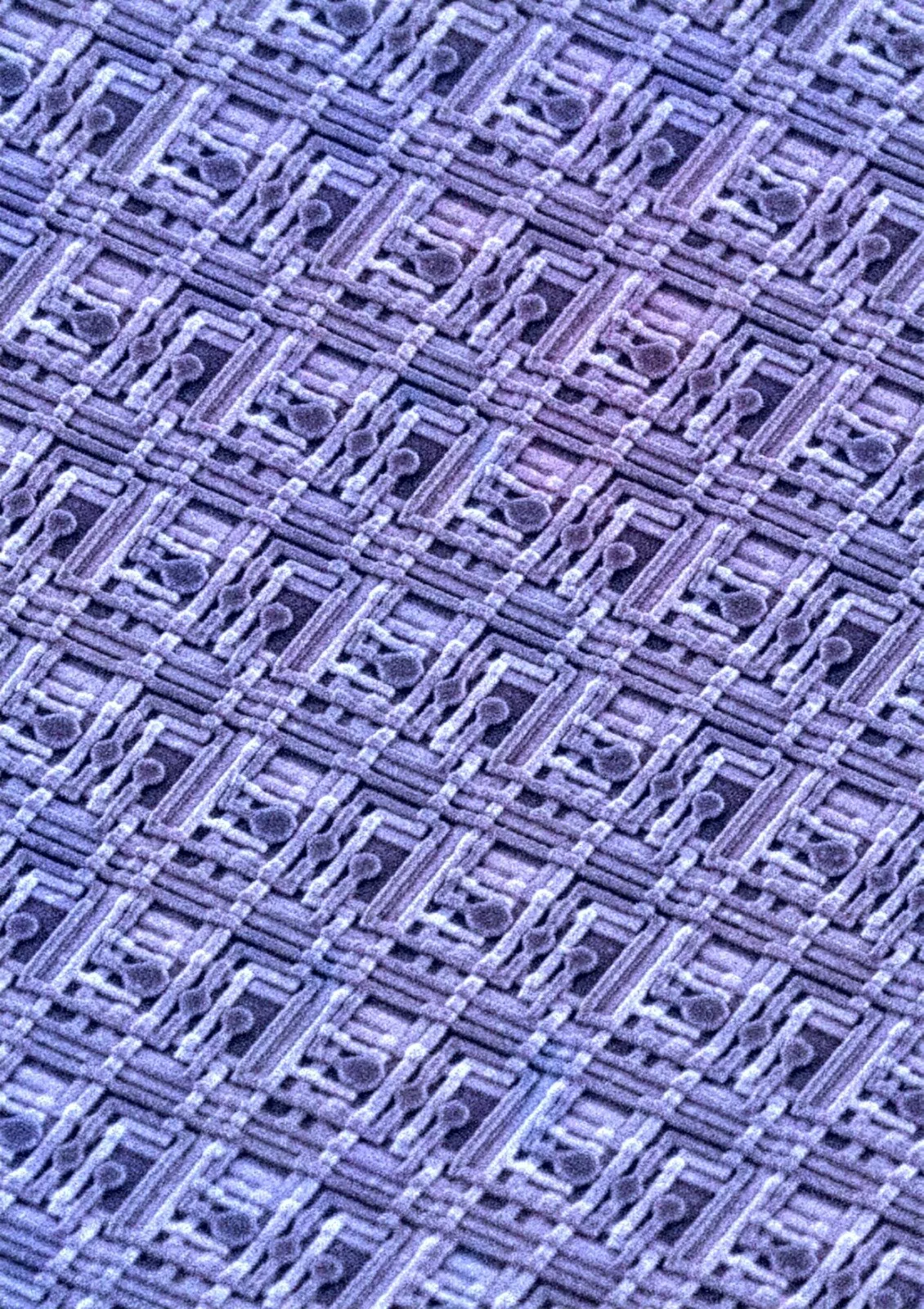
Start Your News DetoxThe team used a nonlinear metasurface — a precisely patterned layer of metallic nanostructures — to convert near-infrared laser pulses into shaped terahertz light pulses. Terahertz waves sit in the electromagnetic spectrum between microwave and infrared, and they're gaining traction for next-generation wireless and sensing systems because they can carry far more information than current radio frequencies.
To prove the device worked, the researchers built an ultrafast measurement system that tracked the light pulse at multiple positions and time points as it traveled through space. The measurements confirmed both skyrmion modes were present and that the device could switch between them reliably while keeping each state pure and undistorted.
The practical applications are still a few steps away. The team is now focused on improving long-term stability, shrinking the system, and expanding it beyond just two switchable modes. If they can add more controllable states, the device could encode even richer information into each light pulse — essentially giving wireless signals more lanes to carry data simultaneously.
What makes this work significant isn't just the novelty of the physics. It's that the researchers solved a real engineering problem: how to produce multiple types of stable light patterns and switch between them on a single, compact platform. That's the kind of controllability that separates laboratory curiosities from actual communication tools.