Penn State researchers have built a flexible battery inspired by how electric eels generate electricity — and it works without toxic materials or rigid casings. The breakthrough could power everything from implanted sensors to wearable devices and soft robots, opening doors for medical technology that moves and bends with the body.
Electric eels produce bursts of over 600 volts by stacking thin biological cells that work together in rapid sequence. The Penn State team replicated this architecture using hydrogels — water-rich materials that conduct electricity. By layering four different hydrogel mixtures at microscopic thinness (20 micrometers per layer), they achieved power densities around 44 kilowatts per cubic meter. That's higher than any previous hydrogel battery.
"The electrocytes in electric eels are ultra-thin biological cells, capable of generating over 600 volts of electricity in a brief burst," explains Joseph Najem, the assistant professor who led the work. "These cells achieve very high-power densities, meaning they can produce a lot of power from small volumes." Earlier attempts at eel-inspired batteries produced limited power and needed mechanical support structures to hold together. The Penn State approach ditched the scaffolding entirely.
We're a new kind of news feed.
Regular news is designed to drain you. We're a non-profit built to restore you. Every story we publish is scored for impact, progress, and hope.
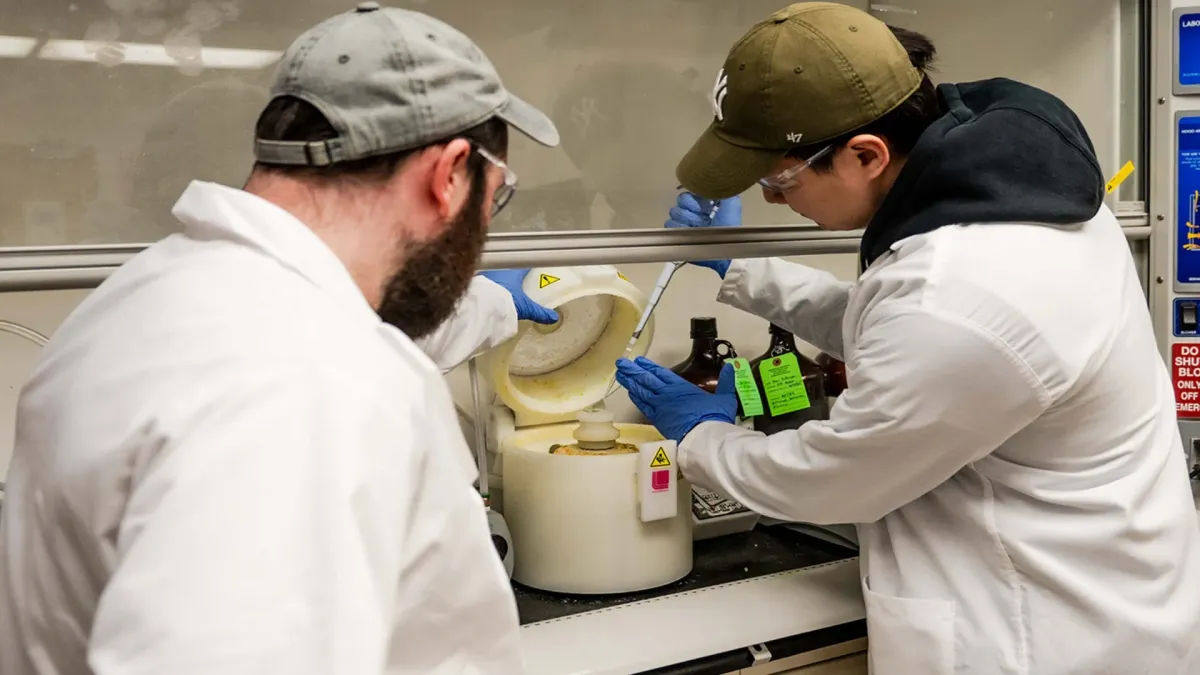
Start Your News DetoxThe technical challenge was making those ultra-thin layers actually stick around. Using spin coating — spinning a surface while depositing material — the team applied each hydrogel mixture in a precise, uniform way. But conventional hydrogel formulations would simply fly off the spinning surface. The researchers tuned the chemistry instead, adjusting viscosity and mechanical strength until the layers held firm. "Optimizing the viscosity and mechanical strength of our hydrogel was essential to making this approach work," says Wonbae Lee, one of the doctoral candidates on the project.
What makes this battery genuinely useful for medical applications is what it doesn't contain. No toxic chemicals. No rigid support structures that would make it incompatible with soft tissue or flexible skin. The hydrogel remains stable in air for days, retains its flexibility, and operates across extreme temperatures — from -112 to 80 degrees Fahrenheit — without freezing or degrading.
The immediate applications are clear: powering implanted medical sensors that need to flex with the body, controlling soft robotic systems, and running wearable electronics that move naturally with skin. Future versions will aim for even higher power density and the ability to recharge efficiently or even self-charge using available resources.
The research was funded by the Air Force Office of Scientific Research and published in Advanced Science. What started as a question about how nature solves the power problem may soon reshape how we design medical devices that work inside and around the human body.